

Could Humans Ever Become Venomous?
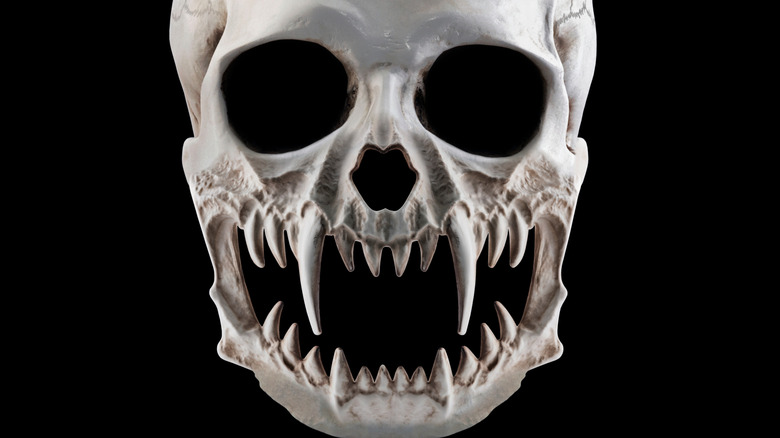
Human evolution has produced some of the most remarkable adaptations in the history of living creatures. But while we as a species are unique in so many ways, there are multiple examples of animals that have developed adaptations which have thus far eluded humans altogether. Venom is one of those adaptations that humans never managed to pick up, though such a thing isn't technically impossible.
More generally speaking, an adaptation refers to a trait or physical feature that is developed via evolution and confers some sort of advantage that helps a species survive in order to reproduce. Often, this can take the form of defensive features, and in the case of venom, only a select few creatures can claim to have developed such a feature. These include certain snake species, jellyfish, spiders, and more, but thus far, primates such as ourselves have mostly evolved without developing a venomous bite. In fact, the only venomous primate in existence is the slow loris, which mostly uses its lethal bite as a defense mechanism against its own kind, marking a rare behavior in mammals.
There are, however, multiple venomous mammals, including the duck-billed platypus, the shrew, and the European mole. So far, though, humans have remained entirely non-venomous. Does that mean that in the far distant future we won't find ourselves with the ability to produce toxic substances that can paralyze our enemies? Well, sort of, yes. But you might be surprised to hear that humans actually have the potential to develop venom, it's just that our evolutionary journey would have to take us in the right direction.
Venom is an amazing evolutionary feature that humans haven't needed yet
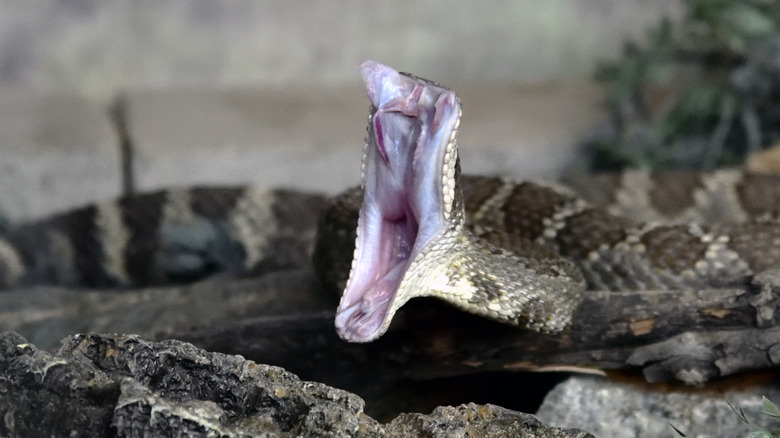
As a 2013 review in the journal Trends in Ecology and Evolution notes, venoms are essentially "biochemical weapon systems" that protect animals from predation or allow them to hunt prey more effectively. The ability to use such lethal "weapon systems" is a relatively rare and unique feature, but venoms actually developed out of genes used for entirely different, more common functions. What's more, these genes exist in both venomous and non-venomous animals, with immune system proteins being one example of genes that gave rise to venoms. Remarkably, separate species evolved their venoms entirely independently, despite there being similarities between the different types of venom in the animal world. Snakes and bees, for example, have created venoms that can block blood from clotting, but both venoms evolved independently.
Even more striking than the way in which venom has evolved in different animals is the idea that we humans possess the tools necessary to produce our own venom. Research published in the journal Proceedings of the National Academy of Sciences in 2021, showed that humans have genes that could, in theory, evolve over time to make us venomous, it's just that thus far we haven't needed to do so in order to survive.
Research reveals we have the genetic framework for venom
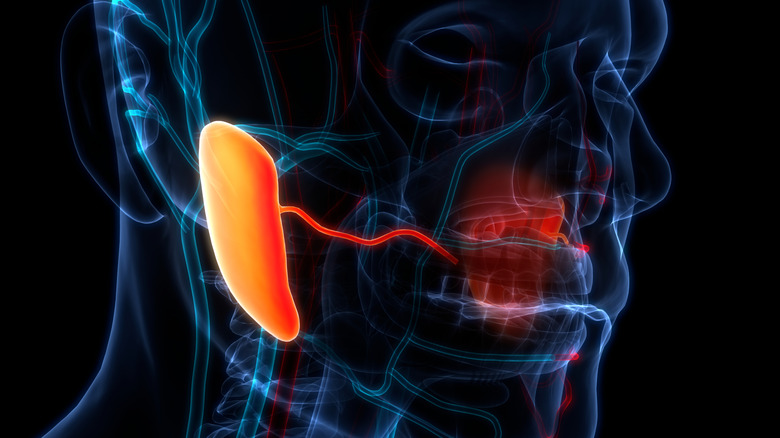
In the PNAS study, entitled "An ancient, conserved gene regulatory network led to the rise of oral venom systems," Agneesh Barua, a doctoral student in evolutionary genetics at the Okinawa Institute of Science and Technology in Japan, and co-author Alexander Mikheyev, an evolutionary biologist at Australian National University, looked at a gene regulatory network which they termed the "metavenom network." It is composed of more than 3,000 "housekeeping genes" which aren't responsible for producing venom but form the basis of venom systems in venomous animals. As the researchers' study showed, these housekeeping genes are actually conserved between venom glands of snakes and salivary glands of mammals.
This means that non-venomous mammals have retained the underlying foundation for a system that could deliver venom via a common regulatory core. Based on this, the researchers proposed that evolutionary processes could give rise to venomous animals from their nonvenomous ancestors. That includes us humans.
To make this remarkable discovery, the team started by looking at the genome of a Taiwan habu viper (Trimeresurus mucrosquamatus), which provided a way for the researchers to see which other genes the venom genes were associated with. They soon discovered the group of housekeeping genes, which are also common in tissues from all amniotes — vertebrate animals including mammals, reptiles and birds which produce a protective membrane called the amnion around their developing embryos. In humans, these genes are found in our salivary gland, which means we have the framework for a venom system in our own mouths. What's more, we already produce a protein found in some venom systems: kallikreins. So, does this mean we'll be spitting toxins in the near future? Not exactly.
How likely is it that humans will become venomous?
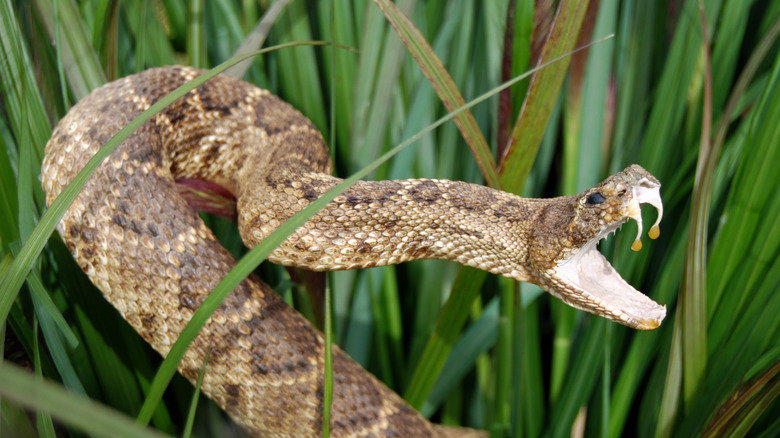
Toxicity might be written in our genes, but we're a long way from developing the ability to secrete venom. As we know, venom typically arises as a way for animals to enhance their ability to prey on other animals, or as a protection mechanism. In order for humans to evolve their own venom, then, an incredibly long process would have to occur, beginning with a complete breakdown in the way we find and consume food. Thus far, humans have developed their own methods for securing sustenance and haven't needed to evolve venom in order to incapacitate prey. Should that change in any significant way, we could theoretically start to evolve a more venomous bite.
Put simply, venoms evolve based on how animals live. Since we have multiple ways of finding food and surviving, our bodies simply don't have a requirement to produce venom, and while we have the genetic framework for such a feature, we haven't needed to develop it to produce toxins. Were we to do so (which is incredibly unlikely), such a process would take millions of years. Still, it is fascinating to know that we share a genetic framework with venomous animals. What's more, the PNAS paper provides more insights into how genes control expression in different tissues, which could prove useful in increasing our understanding of diseases like cancer whereby tissues grow and produce unwanted products.