

The Gross Things Mold Spores Can Do To Your Body
We may receive a commission on purchases made from links.
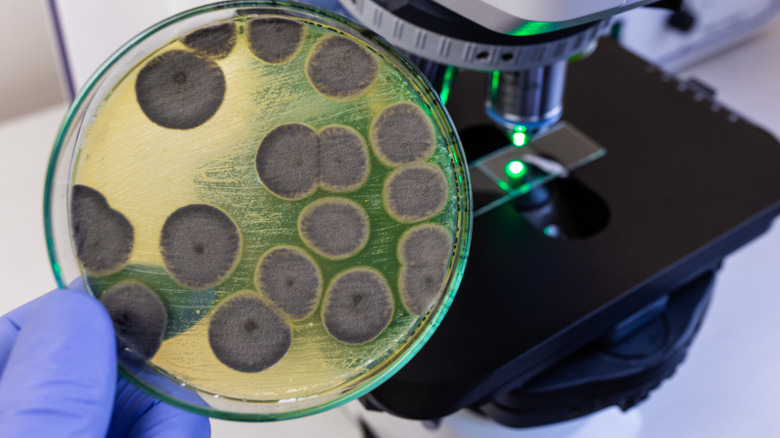
Mold. Due to its negative associations, just reading or hearing this word can make your heart skip a beat, as it can cause some serious issues with structures and human health. Yet mold itself isn't anything novel, as this type of fungus has existed on Earth for several million years. It can be found both indoors and outdoors with mold spores thriving in virtually any moist environment. These microscopic cells can drop onto surfaces and grow into visible mold in as little as one day, which can be especially dangerous inside buildings. It's also possible to breathe in mold spores, which can cause a multitude of problems ranging from respiratory issues to invasive mold infections.
It's important to understand that everyone has different levels of sensitivity to mold. Underlying health conditions can increase your risk of developing adverse reactions to mold spores, including allergies, asthma, and autoimmune diseases. Young children and older adults are also particularly vulnerable to the effects of mold. Being aware of some of the most common symptoms of mold exposure can help alert you if there might be growths in your home or workplace so you can eradicate this nasty fungus ASAP.
When mold forms on a surface, it can grow into spots both small and large, and in varying colors. It can be helpful to know the difference between white and green mold, for example. Yet black mold (Stachybotrys chartarum) is the most dangerous to human health. Before mold spores can stick to surfaces and grow into these though, they are first airborne. In fact, any presence of mold around your home or work areas likely means the spores are in the air. When you breathe in spore-containing air, you're essentially inhaling these potentially harmful fungi.
How your body might react after inhaling mold spores

The exact way mold spores can affect your body depends on the type of mold, the extent of exposure, and whether you're prone to severe reactions. With black mold, the onset of symptoms — which depends on your level of sensitivity — can happen immediately after inhaling spores. If you do experience symptoms, the most common include sneezing, congestion, runny nose, headaches, dizziness, and red, irritated eyes. Many of these symptoms point to signs of an allergic reaction to mold, which is the result of an immune system reaction that causes your body to treat the mold spores as invasive substances. Some people might also develop skin rashes or asthma attacks.
Even if you don't have mold-specific allergies, you might still experience symptoms of irritation as a reaction to microbial volatile organic compounds produced by the mold. While not as common, mold spore exposure can even cause fungal lung and eye infections. Inhaling small amounts of mold spores may not be an issue for some people, but exposure to a large amount may increase the risk of adverse health effects.
In severe cases, breathing in mold spores can cause a potentially deadly condition called an invasive mold infection. This primarily affects people who are immunocompromised, where mold spores that are inhaled can quickly impact body tissues, blood, and even vital organs. While these types of infections sometimes develop from exposure to mold spores via open wounds, this is less common. Once an invasive mold infection develops, it can quickly lead to a life-threatening situation. Some of the most common symptoms of this serious infection include shortness of breath, cough, fever, sinus issues, and skin ulcers.
Ways to decrease the risk of mold's effects on the body
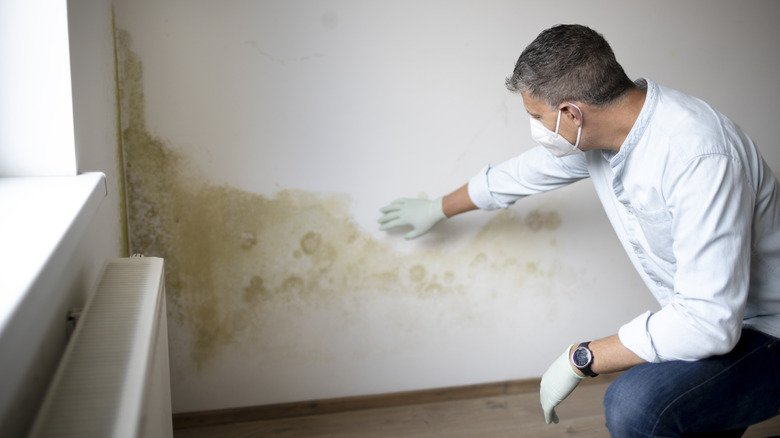
The only way to avoid the effects of mold spores on your body is to try to reduce your exposure as best as you can, especially for people who are most vulnerable. Know that, due to their prevalence, it may be impossible to avoid mold spores entirely. Also, while there's not a lot you can do about mold spores in the natural environment, remember that indoor mold is in your control. Rather than trying to identify the mold though, the Centers for Disease Control and Prevention recommends erring on the side of caution and getting rid of any and all types of suspected mold.
Reducing moisture can also help reduce your exposure to mold spores. Fix any leaks around pipes, and keep indoor humidity levels below 50% (you might also want to consider other ways high relative humidity impacts your body). Running available exhaust fans while showering can also help to keep mold at bay in bathrooms. If you do find mold, clean it right away with soapy water. A solution of equal parts laundry bleach and water can also help remove more stubborn spots. Always wear a mask and other protective gear before cleaning mold on your own, and never allow a loved one with respiratory or autoimmune diseases to take on the task. Be aware that widespread issues may warrant the help of a professional mold removal company.