

The Most Effective Ways To Sleep Better On An Airplane, According To Science
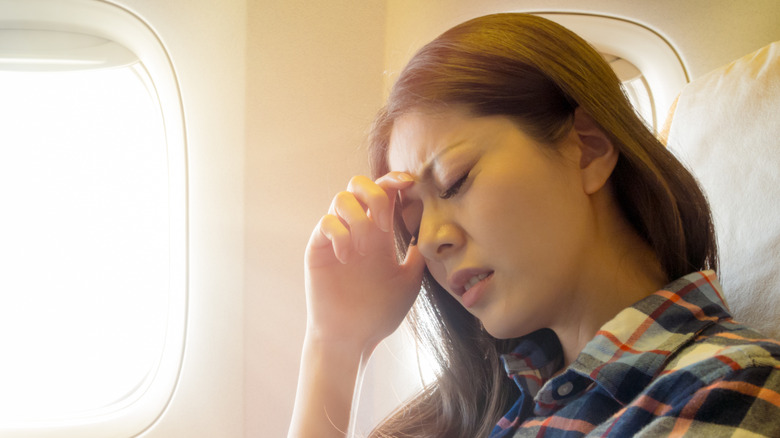
For many of us, sleeping on a plane is impossible. You might try leaning forward on the meal tray or reclining your seat back by the 2 extra inches allotted to you, but all you can manage are fitful bursts of shallow sleep. According to sleep scientists, there's a reason for the struggle. The cabin of a passenger plane hinders our brains' ability to sleep, mostly due to the lights, noise, temperature, upright seating, and crowding. Fortunately, those same scientists have several tricks for fighting back against the stimulating environment, and it's not sleeping pills.
In fact, pills, alcohol, and other drugs can often do the opposite of their intended effect. According to sleep specialist Dr. Virginia Skiba of Henry Ford Health, even sleeping pills should usually be avoided during a flight. The active ingredient in most "sleep aids" is antihistamines, such as found in popular brands like Benadryl, ZzzQuil, and Unisom SleepGels. Unfortunately, these come with some unpleasant side effects, including the "sleep aid hangover." Indeed, you may feel groggy after the antihistamines wear off, and if your flight is less than 10 hours, that means you'll likely feel more unrested once the plane finally lands.
Avoiding caffeine and alcohol is also key to getting quality shut-eye during a flight. Coffee can promote healthy aging better than water or milk, but its caffeine blocks adenosine, a chemical responsible for alerting your brain when it's time to sleep, from binding to receptors. For most people, it takes several hours to metabolize just half of the caffeine in their system. But if you want to swap your pre-flight coffee for a cup of wine, think again. Alcohol, too, hinders sleep quality, since it reduces time spent during the REM stage of sleep. So if you want to rest well on a plane, stick to water.
Why masks, earplugs, and blood flow make all the difference
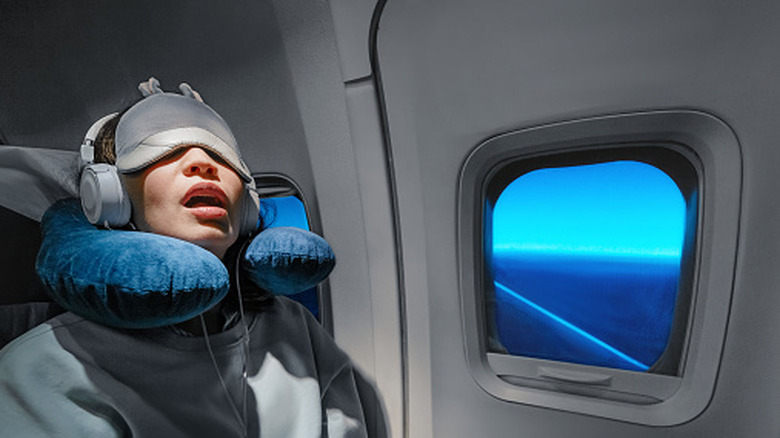
Between the lights, chatter, roar of the plane, and the frustratingly tight quarters, it seems everything around us on an airplane goes against our biological need to sleep. After all, humans evolved to sleep at night, when it's dark, quiet, and comfortable. That's why sleeping with lights on has been linked to unsettling effects and all sorts of problems, primarily because it confuses and disrupts our circadian rhythm. According to sleep scientists, a comfortable sleep mask on a plane helps restore the darkness that our brains associate with nighttime rest.
Our brains also evolved to associate quietness with nighttime. Our ancestors had to wake up quickly to a sudden sound in case they were being preyed on by some prehistoric predator, so the constant noise of an airplane cabin keeps many of us on high alert. The simplest remedy is a pair of earplugs or noise-canceling headphones. For those who prefer to sleep with music on, it's probably best to avoid spoken dialogue that might wake you up, and keep the volume low.
Then there's the problem of the cramped seating. Needless to say, we aren't evolutionarily hardwired to sleep sitting upright (though the modern world may have killed our hardwired habit to sleep twice per day). In fact, long hours spent sitting with tight shoes on can cause nerve compression and restrict blood flow to your legs, which disrupts quality sleep. That's why experts recommend loosening your laces or removing your shoes on a long flight, as well as avoiding crossing your legs. They also recommend the window seat, since it allows you to rest your head against the window, taking strain off the neck and upper back muscles. Clearly, getting rest on an airplane is a battle against instincts, so every little trick helps.