

What It Means When Your Tap Water Suddenly Smells
Having safe, clean water available at the flick of the wrist is a modern wonder. While most of us rarely give this convenience a second thought, sometimes things can go wrong. On a normal day you might smell a vanishing odor of chlorine as you fill your glass. But what does it mean if your nostrils are overwhelmed by a sudden smell from the sink? Most of the time foul-smelling water is not unsafe, but it can indicate problems with pipes, plumbing fixtures, or even your water supply.
Figuring out what is causing your tap water to smell can be a little complicated, but with some detective work you can usually narrow down what's going on. If the smell comes only from one faucet, then the problem is most likely with either that fixture or the pipes that run water to it. If you smell the odor at the sink, but not in a glass of water after you walk away, your issue is with the sink's drain. If water from all of the faucets smells at first but goes away after running the water for a while, you probably have something going on in the pipes in your house. But if the smell is persistent, then it might be a water supply problem. At the same time, the type of odor you smell can shed light on what might be causing it.
What's that smell?
One of the most common smells people find in their tap water is the odor of chlorine. Water from public utilities is often treated with chlorine to keep germs from making people sick. Public water supplies usually contain between 0.5 and 2.0 parts per million of chlorine; however, water with up to 4.0 parts per million is safe to drink, even if its smell is unpleasant. Chlorine will evaporate from water over time, reducing the smell.
Another common tap water smell is a sulfur or rotten egg odor. Most of the time this is caused by bacteria that grow in an anaerobic environment. People using private well water might find their water smells if the groundwater contains sulfate-reducing bacteria or if the well isn't adequately protected from contamination. Bacteria can also cause tap water to smell musty or fishy. This is usually because of bacterial growth in the drain, though contaminated well water can also lead to these smells. In most cases these kinds of odors aren't a health risk.
However, tap water that smells like petroleum or gasoline is a serious problem. This is a sign of contamination from something like an industrial spill or leaking fuel from a storage tank nearby. Petrochemical contaminants can cause headaches, dizziness, and nausea. Long-term exposure can lead to serious health issues like increased cancer risks.
Fixing smelly water problems
The steps to fix a smelly water problem depend on what is causing the problem and whether water is coming from a private well or a public water supply. Odors coming from drains can be handled through cleaning with either a commercially available product or hot water, vinegar, and baking soda. Smells that persist after cleaning may indicate a problem with plumbing hardware that needs repair. In the case of odors caused by bacteria, especially for those using well water, treating water with chlorine can often fix the problem.
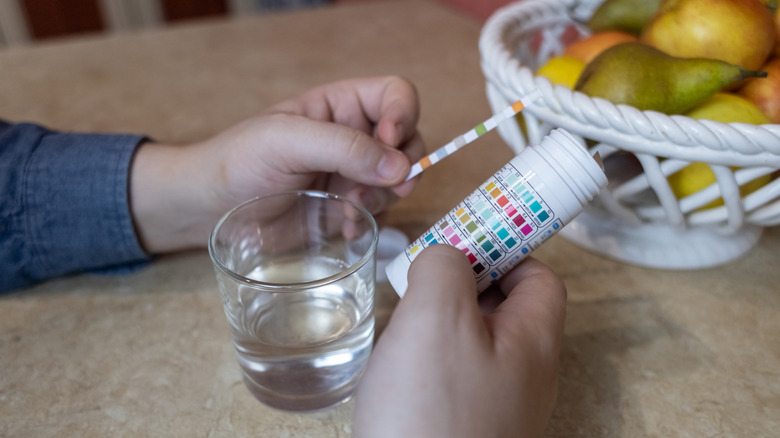
While smelly water is usually not a health risk, many harmful contaminants have no smell or taste. Public water supplies are routinely tested and people using private well water should regularly test their water for hydrogen sulfide, bacteria, and other substances. There are several test kits sold to the public, and testing water is an important first step before trying to correct any problems. People using public water should call their utility company if they have any concerns, especially in the case of petroleum-like odors.
For chlorine or other odors not related to plumbing or unsafe water supply problems, one popular option is to use water filters. Whether at the sink or in a pitcher, activated carbon filters can remove many of the compounds that cause water to smell or taste bad. Odors often aren't a health and safety issue, so having a filter can make it easier to appreciate the modern wonder of clean running water.