

Scientists Discovered Something Unusual Deep In Canada's Rocks - And It Could Change Everything

A recent discovery of naturally occurring hydrogen gas in Canada could have a big impact on curbing global warming. In 2026, scientists from the University of Ottawa and the University of Toronto revealed just how much hydrogen gas leaks out of the ground in the ancient rock layers scattered throughout the northern Canadian Shield region — and it's a lot. Many of the old mines in the region slowly leak hydrogen gas in small quantities which, when combined, suggest a vast source of hydrogen fuel.
The scientists tested 15,000 boreholes in a single mine, and each borehole averaged 18 pounds of hydrogen per year. It might not seem like much, but when you crunch the numbers, that single test mine leaks an annual total of 140 tonnes of natural hydrogen gas. That's enough energy to power around 400 local homes using the "white hydrogen" that the team discovered.
Some experts think of hydrogen as the perfect fuel, especially when compared to fossil fuels, which make up over 80% of our global energy production. But unlike coal, petroleum, or methane, hydrogen gas combusts with oxygen to produce simple water vapor and heat, making it a "clean" energy source. Unfortunately, it's really hard to find hydrogen gas in its natural form and capture it, so most of the time, it's synthesized through a costly process of electrolysis — which typically requires fossil fuels anyway.
For now, most economists regard hydrogen gas as a minor player in the shift towards a fossil-fuel-free future: It's too expensive to synthesize and too rare to extract. Using the gas also comes with its own obstacles. Exploiting natural hydrogen gas would require infrastructure for piping, transportation, processing, and the generators themselves. Still, if Canada can demonstrate that hydrogen gas is a viable energy source, global energy production could change drastically.
Why the most abundant element makes for such a rare gas on Earth
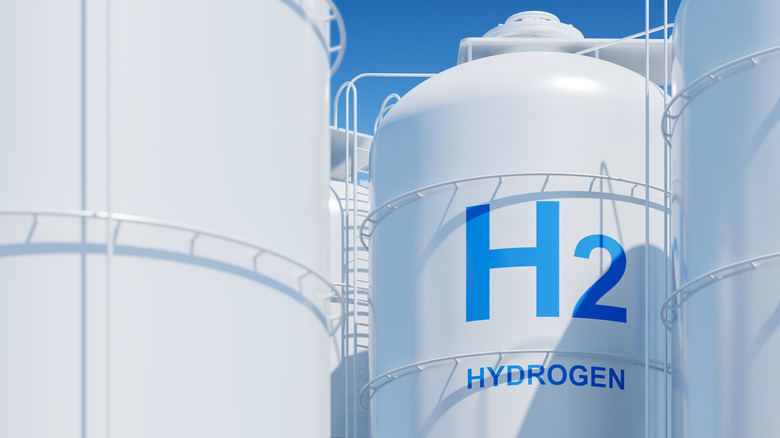
Hydrogen is the most abundant element in the universe by a vast margin. Around 73% of the visible matter in the universe (and our solar system) is made of the stuff, and it composes most of our sun and much of the interstellar clouds of gas that permeate the galaxy — including the "Cloud-9" discovery that might unlock secrets about the dark universe. In fact, almost all energy sources on Earth originate from the fusion of hydrogen in the sun, including solar, wind, and fossil fuels. On Earth itself, however, hydrogen is usually locked away in the molecules of other gases, solids, and liquids — most famously H₂O.
This scarcity of hydrogen gas, or H₂, is largely due to the highly reactive nature of it on Earth. Small sparks and simple static electric shocks from your clothes or body are enough to combust the gas when it's in the presence of oxygen. At the point of combustion, other chemicals in the atmosphere and earth mix with the freed atomic hydrogen particles, forming new bonds. These new molecules can be gases, salts, and metals, which bind the hydrogen atoms into less-reactive states. Thus, natural reservoirs of pure H₂ gas in the Earth's crust are rare, since the molecule can't sit still for long without reacting with other molecules.
The hydrogen gas recently discovered in Canada, however, may hint at a greater abundance of H₂ on Earth than previously imagined. For starters, its location in the Canadian Shield wasn't an accident. The region represents one of the largest continental shields in the world, an area covering millions of square miles and composed of Precambrian rock formed 500 million to 3 billion years ago. It's within these ancient rocks that stable, "white" hydrogen may be lurking in vast quantities.
The hurdles to getting natural hydrogen gas from the ground
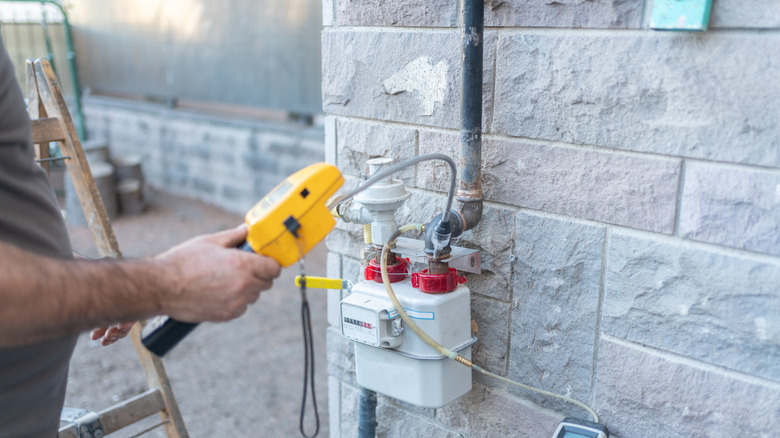
So-called "white" hydrogen gas could be found in many places across the world, especially in the continental shield regions that expose iron-rich, ancient rocks from the Precambrian period. These solid and often fissured rocks may generate their own hydrogen gas from water, in a natural version of the synthesized H₂ we generate through electrolysis. Instead of depending on electricity, however, the iron in these rocks may strip oxygen atoms from underground water, producing pure, clean H₂ gas in the process.
This naturally formed H₂ collects in deep reservoirs underground, often in the same places where minerals are mined. After all, the iron and water required for generating hydrogen gas are in abundant supply in the ancient rock layers of the Canadian Shield region, and the chemical process that creates the gas takes a long time. This is why the fuel source is so slow and steady, yet also dispersed and maintains a consistent output.
These underground reservoirs can be drilled into and tapped to extract the hydrogen gases, but other gases are often mixed in. Thus, drawing it from the ground is only the first hurdle in collecting hydrogen. The process includes a purification process to rid the gas from other natural gases, and the technology for generating energy from H₂ isn't well-funded — or extensively tested. Nonetheless, the prospect of a fuel source that emits only water vapor is an exciting discovery.