

Scientists Discovered Unexpected DNA Similarities Between Dogs And Humans
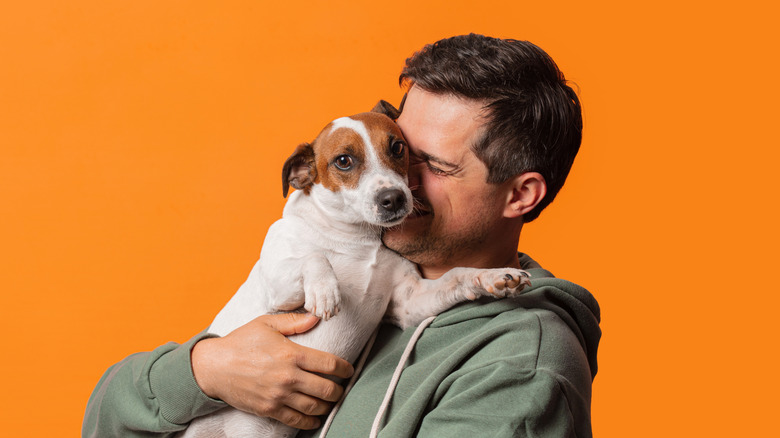
Our connection with dogs runs deep. After all, dogs were one of the earliest domesticated animals, if not the very first. There is a reason they received the moniker "man's best friend." Many of us see our dogs as family, anointing them with titles like "fur baby," and celebrating the day they came into our lives with dog biscuits and new toys. But are our dogs actually our relatives? Evolutionarily, we are somewhat closely related, and we have significant overlap in our DNA as a result. These resemblances can be useful in understanding certain health and even behavioral phenomena in both humans and our furry friends.
DNA is the code our cells follow, and a large part of what makes us who we are. And we have a lot of it. The human genome contains 3.2 billion base pairs — those little circles that you see in a typical 3D DNA model — whereas the dog genome contains about 2.5 billion base pairs. Previous research has suggested that humans and dogs share approximately 84% of the same DNA. Genes are sections of our genetic code that provide the instructions to make proteins, and we share about 17,000 of them with dogs. Of course, there are many morphological, behavioral, and biological differences between our best friends and us, but we can learn a lot of things from what we share.
Sisterhood of the traveling genes
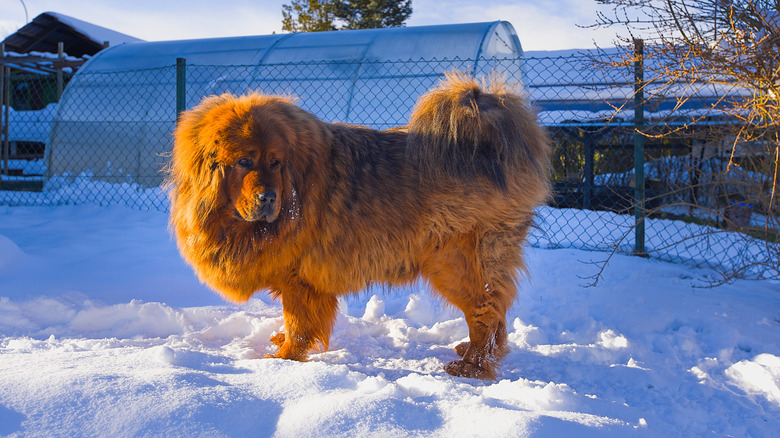
The Tibetan mastiff is a majestic and large dog breed that sometimes appears more bear than dog. Covered in layers of fluffy, long fur, these dogs were bred by nomadic people in Tibet and became valued guards of individuals who lived in the Himalayas. These mountains reach high into the sky, where oxygen becomes less available. Thus, living at high altitudes can lead to some nifty adaptations. Researchers found that Tibetan mastiffs and humans living in the Tibetan mountains both had a mutation in the EPAS1 gene, which encodes for a regulatory protein that helps the body respond to low oxygen levels. These mutations seem to help increase the protein's efficiency. So, the people and dogs of the Himalayas appeared to develop a genetic convergence that improves their response to the low oxygen levels of their surroundings. This would be an example of the influence that one's environment can have on genetic sequences.
If you have a dog, you might have found that they love french fries, just like many humans. Our shared affinity for these potato-based snacks is permitted by our ability to digest starch. Thanks to the AMY2B gene that is conserved between our species, we can produce the pancreatic amylase enzyme, which is responsible for breaking down starch. Most dog breeds possess this gene, which researchers hypothesize derives from the agricultural shift that occurred during prehistoric times. This means that canine ancestors likely evolved this gene prior to their domestication.
Genetics and behavior
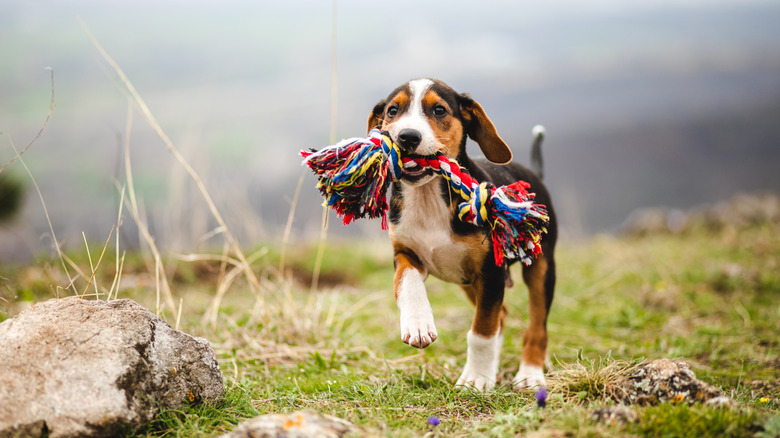
Studying the genetic makeup of dogs can also help us understand the influence of DNA on some behavioral traits. A study published in the Proceedings of the National Academies of Sciences in 2025 observed how certain genes were associated with specific behavioral phenotypes, which are externally represented traits. For instance, the gene ASCC3 was correlated with non-social anxiety in dogs. This is when dogs appear to panic in response to elements of their environment, such as loud noises. You might have witnessed such behavior from your pup when a loud car rushes past or in response to a common worst enemy: the vacuum cleaner.
Interestingly, genetic and phenotypic association in the dogs from this study actually correlated with some human psychological tendencies. As an example, the gene mentioned above is associated with neuroticism and anxiety in people. Another interesting parallel that was identified in the study was that of the ROMO1 gene. This gene was associated with the dogs being easier to train. Meanwhile, in humans, the ROMO1 gene is associated with intelligence, but also depression and emotional sensitivity.
It might be surprising to learn that we have so much genetic overlap with our furry companions. There are, in fact, many conserved genes among mammals, which is one reason that researchers use non-human animals for research into human health and behavior. Investigating the genetic correlates of our ancestral relatives has extensive merit in developing a better understanding of our shared traits.