

The Bizarre Medical Procedure From The Early 1900s We Would Never Do Today
It is only natural that humans have searched for remedies to the maladies that affect us for ages. Fortunately, medical science has advanced such that we are better able to investigate the biological mechanisms underlying a disease and develop corresponding treatment. Although many mysteries continue to pervade health sciences, the progress has been astounding. Particularly when we reflect on what constituted normal practice in the previous century, one becomes grateful for these advancements. After all, if you were to suffer from neurosyphilis in the first half of the 20th century, you might very well have been presented with the "cure" of malaria. This treatment would even go on to win the founding scientist a Nobel Prize.
During the 19th century, the sexually transmitted infection syphilis was pervasive in European society. Approximately 15% of men throughout the continent were thought to have the disease. If syphilis went untreated, it could spread to the brain and result in neurosyphilis. The neurological damage would often appear as a form of psychosis, termed general paresis. Neurosyphilis was very common in mental treatment facilities during the early 20th century, with roughly 20% of the patient population having the diagnosis.
Playing with fever
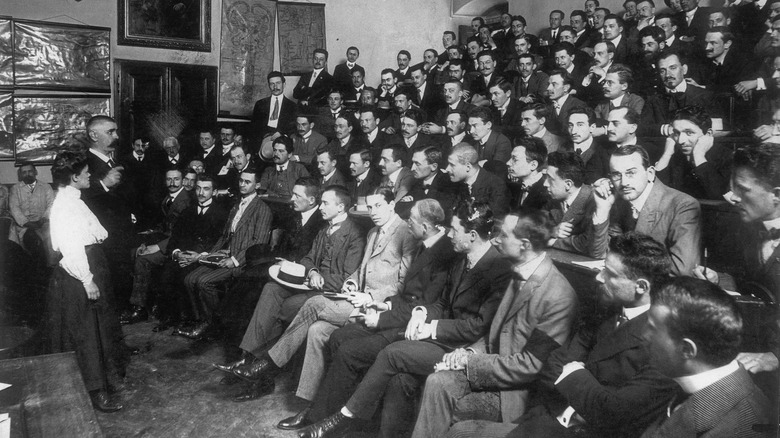
Julius Wagner-Jauregg was born in Austria in 1857 during the time of the Austro-Hungarian Empire. By 1880, he had earned a doctorate and been introduced to the concept of experimental animal testing, which was not yet common practice in research. Though his thesis had revolved around increased heart rate, he took a job as a psychiatrist's assistant, and by 1887, Wagner-Jauregg was running the clinic. It was in this year that Wagner-Jauregg also became interested in the concept of treating mental ailments with fever.
He investigated the effects of various fever-inducing treatments, including tuberculin, before achieving notable results through malaria in 1917. Wagner-Jauregg had initially suggested malaria because it could be treated with a solution known as quinine, supposing that the benefits of malarial fever could be reached while mitigating its most detrimental effects. Nonetheless, it has been reported that approximately 20% of his patients died during this treatment.
On his path to Nobel Prize glory, Wagner-Jauregg demonstrated the high risk of such treatments for neurosyphilis. In 1918, three of his patients died after he incorrectly inoculated them with Plasmodium falciparum, a far more lethal strain of malaria-causing protozoa. Moreover, Wagner-Jauregg appeared to favor harsh treatments, including extreme electroshock therapy, and was even indicted for the torture of patients in 1920. This information, along with the fact that Wagner-Jauregg would go on to join the Nazi party, makes it difficult to separate the intensity of his treatments from his seemingly personal disposition towards cruelty.
Why did it work sometimes?
Although it was a very risky treatment with a relatively high mortality rate, malariotherapy was somewhat successful in treating neurosyphilis, with a remission rate of roughly 25%. While Wagner-Jauregg was certainly far from the mark on many things, he was onto something with this fever approach.
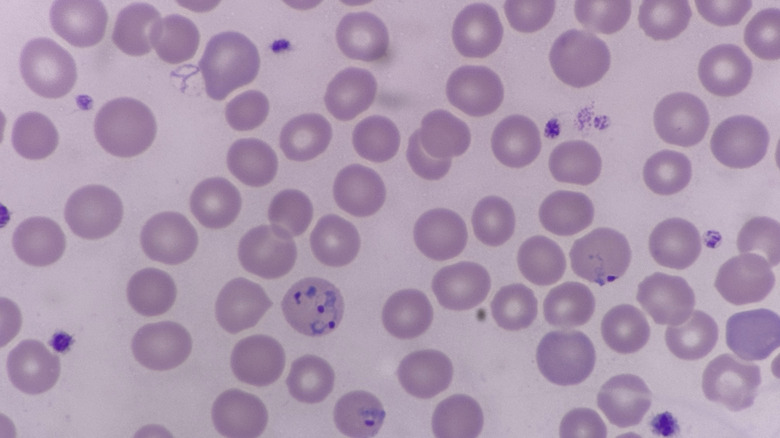
Malaria is caused by parasitic protozoa from the genus Plasmodium. These protozoa infect red blood cells and cause them to accumulate toxins, eventually bursting. This results in the spread of more of the parasitic organisms as well as the release of toxins. Such an event triggers a big immune response, bringing about that characteristic fever.
Malarial fevers can reach pretty high temperatures, ranging up to 41 degrees Celsius (roughly 106 degrees Fahrenheit). While the protozoa that cause malaria can survive this temperature, the type of bacteria that causes syphilis (Treponema pallidum) cannot. Basically, by inducing malarial fever, a patient's internal temperature can become hot enough to remove the syphilis-causing bacteria.
However, our bodies need to maintain a pretty tight homeostatic temperature to continue operating, and our immune response contributes to that. So, while the significant fever might take out syphilis, it can also cause great overall harm to the body, which is part of the reason Wagner-Jauregg's treatment had such a high mortality rate. Thankfully, we live in the era of antibiotics, which are much safer and more effective at treating syphilis. Penicillin became the recommended treatment for syphilis in the 1940s, making this archaic method appear extremely bizarre.