

'It's A Ticking Time Bomb': The Science Behind South Dakota's Proposed Uranium Mines (And Possible Pollution)
In situ recovery (ISR) is a method of uranium extraction that typically draws from sandstone with high amounts of uranium. Often, these are located within aquifers, which are groupings of rock or sediment from which large quantities of water can be drawn. In the United States, there are 68 functioning aquifers that supply almost half of the drinking water for the whole country. While ISR is generally more environmentally friendly than other mineral extraction techniques, it can lead to the contamination of water downstream if it is not properly contained.
In 2014, the Nuclear Regulatory Commission issued a license for the Dewey Burdock Project to extract uranium through ISR. Residents of South Dakota, where the project is to take place, have raised the alarm about how this could affect their communities, particularly if the water conditions cannot be restored. While the project has been delayed by a series of lawsuits, a recent executive order issued by the Trump administration to increase domestic mineral production, including uranium, has brought the issue back to the forefront.
Uranium is considered valuable for its use in nuclear energy, with the United States obtaining 20% of its electricity from nuclear reactors that rely on this element. However, most of the uranium used in the U.S. is supplied by other countries. In 2022, 95% of the nation's uranium was purchased from another country. Thus, domestic production has been made a priority. However, can this be achieved without a significant environmental threat?
In situ uranium recovery
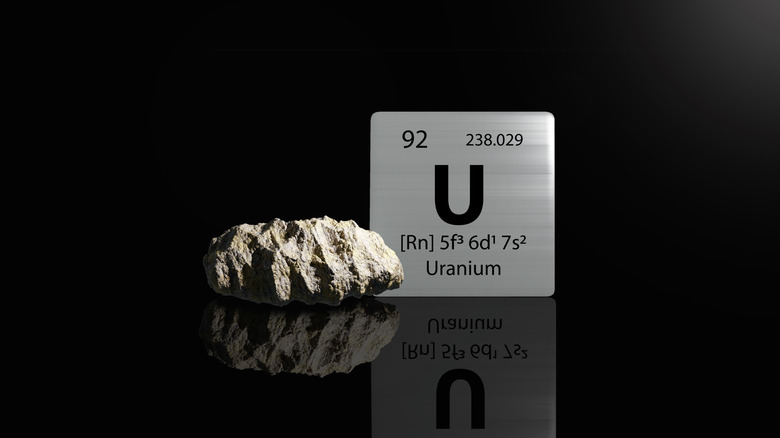
Uranium extraction has been investigated since the element's discovery in 1789. Martin Heinrich Klaporth isolated uranium oxide, a yellow substance, from pitchblende — the same mineral ore from which Marie Curie would go on to isolate radium. Nearly 200 years later, researchers in the U.S. discovered that uranium could be found in groundwater. When uranium found in sandstone comes into contact with water that is high in oxygen, it is oxidized. This oxidation converts uranium into a soluble form, such that it can move through the water. However, when the oxidized uranium is reduced through low-oxygen exposure along with some organic matter, it becomes insoluble. Thus, it can then be extracted in its precipitated form.
ISR utilizes this chemical process to gather uranium from sandstone. Wells are dug around the area in which mining will be conducted, and an oxygen-rich solution known as lixiviant is injected into those wells. For the Dewey Burdock Project in South Dakota, 1,461 of these injection wells are expected to be dug. Additionally, 850 wells are anticipated in order to withdraw this lixiviant solution.
After the drawn content is processed, the wastewater will be disposed of in a lower portion of the ground, thought to be a containment or semi-containment zone. Projections suggest that this operation will extract approximately 7,000 tons of uranium while generating between 250 and 340 million gallons of wastewater.
Possible uranium pollution in the water
The waste created through ISR is highly radioactive. Therefore, the containment zone in which the wastewater is disposed must be surrounded by highly impermeable geologic layers in order to protect the aquifer from contamination. But the concerns that many of the activists and geologists in opposition to this ISR project in South Dakota have expressed revolve around the feasibility of this containment.
The same area of South Dakota has been mined for uranium before. These were before ISR techniques were widely available, and thus involved the formation of boreholes, which are holes dug deep into the Earth for resource extraction. Local geologists have discovered that many of these boreholes are uncased, redrilled, or poorly closed. Additionally, some of the containment layers have been noted as thin or even nonexistent. Although the groundwater is supposed to be returned to its pre-ISR conditions once the project is finished, these issues bring into question whether that will actually be possible.
Sarah Peterson, the founder of the local environmental activism group called It's All About the Water, said, "It's a ticking time bomb," according to an article published in Science. Moreover, some of these drilling sites are near culturally valuable Indigenous sites. Anissa Martin, a local resident opposing the project, was reported by the South Dakota Searchlight as saying, "So I ask you, where will we go ... when we have no water in the Black Hills? And I ask you, what water will you drink?"