

The Kids Who Built Nuclear Reactors At Home
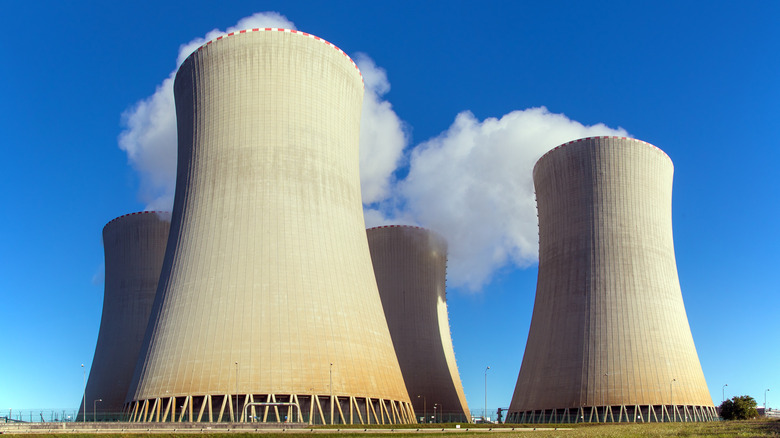
Ever since humanity's first sustained nuclear reaction at the University of Chicago in 1942, building a nuclear reactor has been rightfully seen as a major technical achievement. Building a large-scale nuclear power plant that can be used to power a city remains the realm of large organizations. However, very small reactors are within reach of those with enough motivation and resources. This includes a handful of kids who built nuclear reactors at home.
Commercial nuclear power is achieved through the process of nuclear fission. This is where the atomic nuclei of elements like uranium are split to release energy and neutrons. While complicated, nuclear fission can produce more power than it takes to start a reaction. In contrast, nuclear fusion, in which isotopes of hydrogen are fused together to form helium and release energy, has yet to produce enough power to be commercially viable. However, it is possible to make a nuclear fusion reactor at home, while homemade fission reactors are more complex.
The Radioactive Boy Scout
One famous attempt at building a backyard nuclear reactor happened in Michigan in the early 1990s. David Hahn, a 17-year-old Boy Scout who earned his Atomic Energy merit badge in 1991, turned his fascination with science toward building his own reactor. He became interested in building something called a breeder reactor that can use naturally occurring uranium and thorium to power a nuclear reaction by first converting them into fissionable isotopes by bombarding them with neutrons.
Hahn posed as a university professor, writing letters to multiple nuclear-related organizations to find the best way to obtain the uranium, thorium, americium, and radium he needed. He disassembled smoke detectors, which use alpha radiation from americium to detect smoke particles, to build a neutron gun that he could then use to turn thorium into a fissionable isotope of uranium.
However, his work came to a halt before he finished his reactor because the elements he was working with were putting out an unsafe amount of radiation. One night Hahn was detained by police and had his car searched. He told the police the toolbox in his car's trunk contained radioactive material. Soon after, state officials took the toolbox away for disposal and started a search for radioactive contamination at his home. It's unclear how many people may have been exposed to harmful radiation levels, but some estimates found that as many as 40,000 people may have been exposed to radiation.
Rising Stars in Fusion
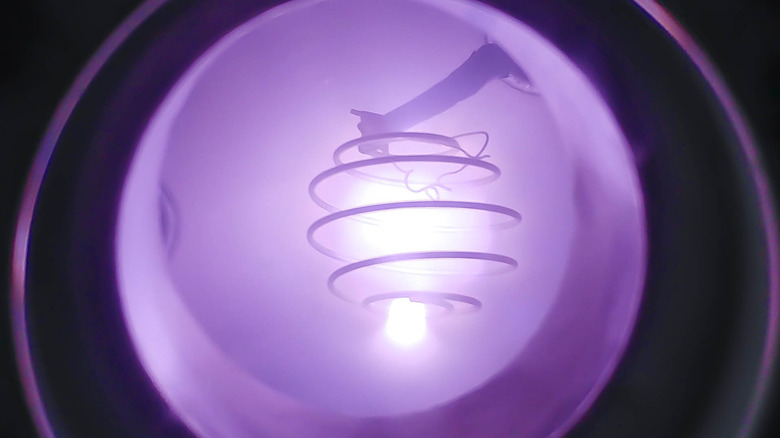
While Hahn was never able to build his own nuclear reactor, a series of kids over the years have built homemade fusion reactors. These small-scale devices are known as fusors and work by forcing atomic nuclei together inside a vacuum chamber under high voltage. A fusor doesn't produce enough power to be usable, but it can create fusion reactions that can be measured.
At the age of 10, Nevada resident Taylor Wilson got interested in nuclear science. By the time he turned 14 in 2008, Wilson had built a fusor that joined atoms of deuterium to form helium-3 and an extra neutron. After experts verified that his device worked, Wilson was recognized as the youngest person to ever achieve nuclear fusion by Guinness World Records.
Wilson later gave a TED Talk about his experiences, inspiring 10-year-old Jackson Oswalt to try breaking the record. After around two years of designing, building, and testing his own fusor, Oswalt produced a nuclear fusion reaction just two hours before he turned 13. With this, Oswalt broke the record for youngest person to achieve fusion in 2018.
Since earning their records, Wilson and Oswalt have continued working in science and technology, focusing on nuclear physics and AI. Meanwhile, other young people keep trying to break the youngest-to-achieve-fusion record by building their own nuclear reactors at home.