

Why Death By A Cigarette Snail Is One Of The Worst Ways To Die
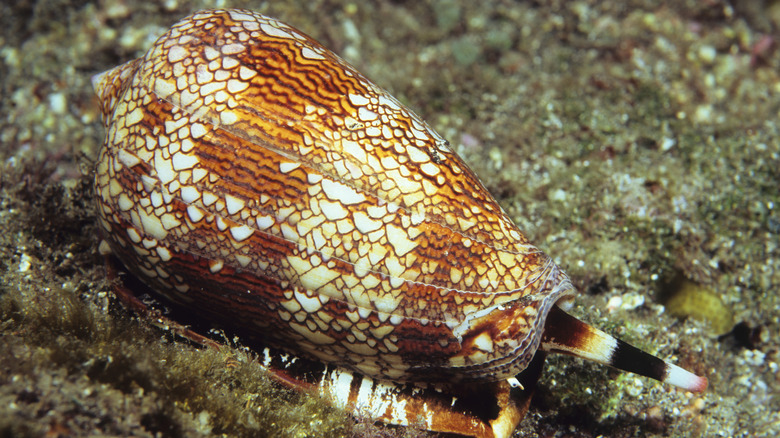
As summer makes its way across the Northern Hemisphere, beach season begins. Drawn to the calming sounds of ocean waves, the refreshing feeling of a nice sea breeze, and the opportunity to relax in the warm sand, people are driven to the water when the days grow longer. This season also attracts appreciation for the beauty and diversity of marine life, with some collecting seashells to bring a bit of the ocean home. This summer, you could find yourself walking along the beach or scuba diving, but you might want to avoid picking up that pretty, cone-shaped shell. Resting inside this beautiful ocean relic is what is commonly known as a cigarette snail, equipped with enough venom to kill 700 people.
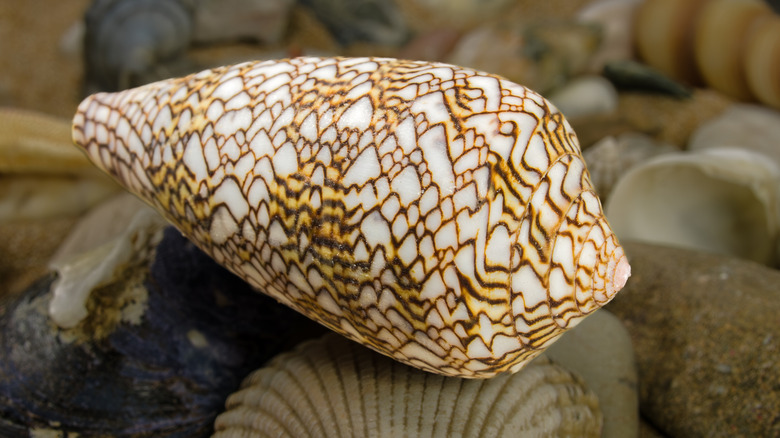
Referring to species from the family Conidae, cigarette snails are also called cone snails. While this latter title might appear rather intuitive, given the cone-like shape of their intricate shells, the former title is a bit more ominous. It is said that if you were stung by this snail, you would perish before you had time to smoke one last cigarette. While deaths are relatively rare, this has to be one of the most terrifying ways to leave this planet. If you are stung, early symptoms might begin with weakness and altered vision. But this can escalate to paralysis or coma and, finally, a breakdown of the respiratory or cardiovascular system, leading to a horrifying death, as you lie unable to move or speak.
That's one shell of a snail
Cone snails are predatory and often consume worms, other snails, or fish. Evolutionarily, these species seem primed for effective hunting. Mostly, cone snails rely on a structure known as a siphon to perceive their environment. This structure sticks out from the shell and provides respiratory benefits to the snails as well, almost like a snorkel. When the cone snail detects a potential meal, a venomous tooth is moved into the proboscis, which is another elongating appendage. The tooth is often described as harpoon-like, and cone snails use it to sting and inject their prey with a powerful venom that rapidly causes paralysis. After the harpoon-like tooth is deployed, many cone species will then use it to draw the paralyzed prey in to be engulfed.
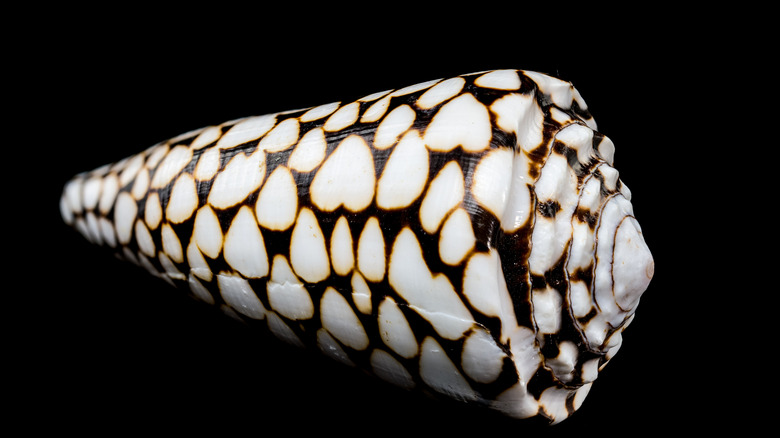
There are over 600 species of cone snails, and they are not equally dangerous to humans. Only two species have reportedly resulted in human death: the geographic cone (predominantly found along the coasts of Australia) and the textile cone (mostly located along the Australian coasts and the eastern African coast). Along with the diversity of species, there is a rich diversity in the venom that these snails produce. Their venom is generally characterized by peptides known as conotoxins. Each snail produces over 100 of these conotoxins, and only 5% of them are estimated to overlap among species. Moreover, only a few of these toxins have been characterized fully. Such diversity and mystery make the development of an antidote a significant challenge.
Can what kills us save us?
The complicated nature of these conotoxins also makes it difficult to understand exactly how death occurs in humans. As mentioned above, not many of these have been completely characterized, and from those that have, 20 different biological targets have been identified, ranging from ion channels to G protein–coupled receptors. Additionally, while very scary, there have not been a lot of human fatalities recorded. A review from 2016 showed that there have been a total of 36 recorded deaths from cone snails. Researchers are unsure whether these deaths have been a result of cardiovascular damage or damage to the respiratory system.
It is important to note that, while certainly powerful and frightening, not all stings will result in death. Some of these stings might be restricted to a painful sensation. Additionally, we are fortunate not to be a target species for the cigarette snail, leading to relatively rare toxic encounters. Just don't provoke the pretty shell.
Additionally, while these snails can present one of the worst ways to die, they might also lead to medical innovation that could save lives. Some researchers have identified promise in these particular mollusks for pharmacological development. For instance, a drug based on cone snail venom was approved in 2004 to treat chronic pain. Another potential pharmacological benefit might be derived from the cone snail insulin, which takes effect much more quickly than human insulin.