

The One Problem With Air Travel Scientists Still Can't Figure Out
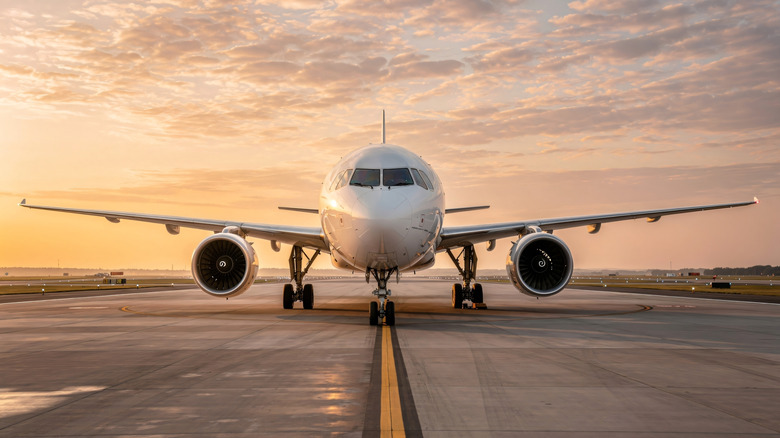
Air travel has become a vital part of the world's economy, moving people and cargo all over the globe. Improvements in aircraft design have made planes more comfortable and fuel efficient. And networks of advanced air traffic control systems help make flying one of the safest ways to travel. However, there is one problem with air travel that scientists still can't figure out: turbulence.
Turbulence is a phenomenon in fluid dynamics caused when a smooth flow breaks into smaller swirls, which then develop into smaller and more chaotic eddies. In air travel, turbulence causes irregular upward and downward movement in an aircraft. This can make flying uncomfortable for passengers, make planes harder to control, and in extreme cases can even cause damage to aircraft.
Light turbulence, which amounts to a slightly bumpy ride, is what most travelers will encounter. Moderate turbulence involves a plane suddenly moving 10 to 20 feet up or down, and aircraft can move up to 100 feet or more during severe turbulence. Incidents of severe turbulence increased by 55% from 1979 to 2020, and pilots in the United States report more than 5,000 cases of severe turbulence each year.
What causes turbulence
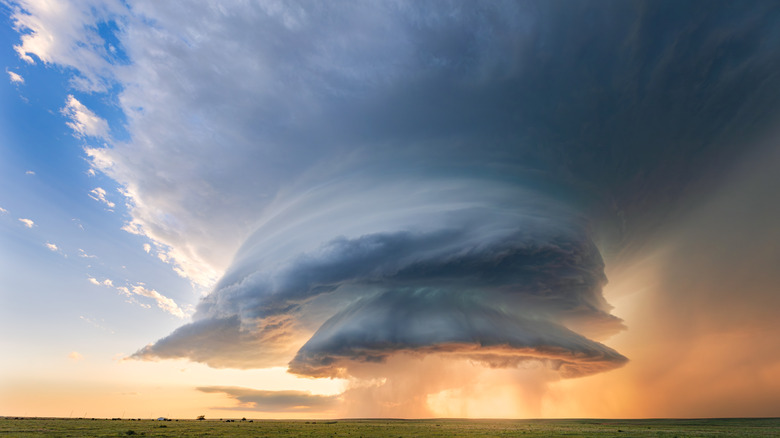
Turbulence can have several causes. One of the most common causes is uneven heating of Earth's surface causing strong updrafts and downdrafts in the air. Disruption of air flow along boundaries where warm and cold air masses collide, such as those exhibiting the weather conditions at a cold front, is another turbulence cause. Obstacles like buildings, trees, and even mountains can also disrupt the flow of air, as anyone who has flown in or out of Denver can confirm. Other aircraft can also cause turbulence, with swirling air off of wingtips affecting following aircraft even miles behind.
Smaller aircraft are more likely to be affected by turbulence than heavier planes. This is why pilots of small, private planes tend to avoid flying in the hottest part of the day when turbulence from surface heating is likely to be greatest. And as global temperatures increase with climate change, it's expected that plane turbulence will get worse. Higher temperatures would increase the strength of updrafts from surface heating and add energy to the atmosphere, potentially strengthening storms.
Having a better understanding of turbulence would enable better turbulence forecasts, improving passenger comfort and safety and improving aircraft efficiency. However, while the mathematics of fluid flow at a large scale are straightforward, things quickly get more unpredictable at smaller scales. This is something that scientists are working to handle.
Finding a smoother ride with science
Scientists have used the Navier-Stokes equations to describe how fluids flow since the formulas arose in the early 19th century. These equations use the velocity, viscosity, and density of fluids along with temperature and the force of gravity to quantify fluid flow. Modern computing hardware allows scientists to build high quality mathematical models of the atmosphere; however, building a model with a high enough resolution to predict turbulence at the scale of an individual plane will likely remain impossible.
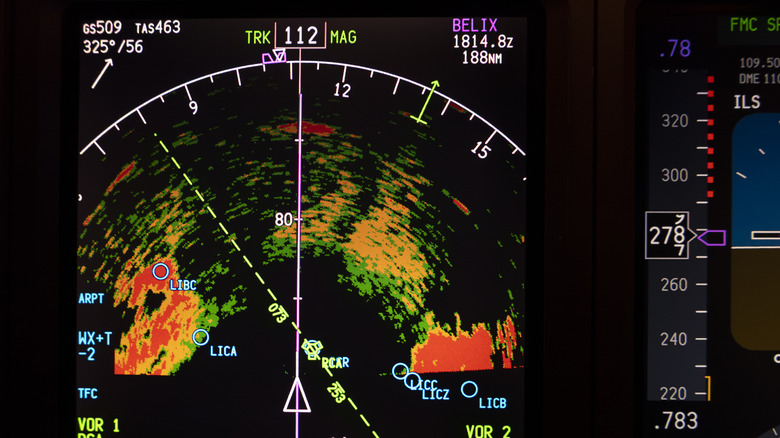
The National Oceanic and Atmospheric Administration developed a model that can predict wind flow in cells about eight miles on each side. However, this is still far too large to model turbulence at a small enough scale. Some researchers are taking these models and observations of wind velocity, pressure, and temperature to predict where turbulence might occur. These models, together with weather radar, can help pilots and air traffic controllers keep planes away from turbulence. Similarly, researchers are developing laser-based sensors that can detect hard-to-predict clear air turbulence, though the prototypes are still too large and expensive for widespread use.
Turbulence is a complex physical process that scientists are still working to figure out. But with new technologies and improved data gathering, it may be possible to make flying a little less bumpy in the future.