

Long-Term Side Effects Of Aleve That Aren't Widely Discussed
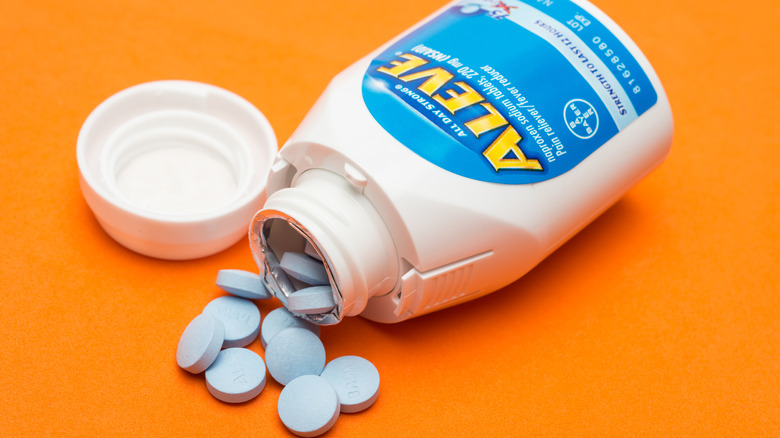
When you're in pain, how often have you reached for over the counter (OTC) medications without thinking much about the side effects? Naproxen sodium (brand-name Aleve) is one example that's widely available. While this medication can indeed offer some people relief from pain, inflammation, and fever, this doesn't mean Aleve is without risks. You might already be aware of bleeding and ulcers as commonly noted long-term side effects, but the possibilities don't stop there. Other long-term side effects from certain NSAIDs like Aleve may even include heart attack, stroke, and kidney damage.
Aleve is a type of nonsteroidal anti-inflammatory drug (NSAID), which is the same class that includes aspirin (Bayer) and ibuprofen (Advil). While Aleve and these other types of OTC NSAIDs are arguably not as strong as prescription formulas, they can still pose significant health concerns. In fact, this type of NSAID may raise your blood pressure (hypertension) and increase the risk of blood clot formation (thrombosis). The risk of these types of side effects with Aleve increase the longer you take them, and with higher doses.
It's also worth noting that such effects are not associated with aspirin, though they are with Aleve and other types of NSAIDs. In fact, aspirin is sometimes recommended as a protective measure against heart attack and stroke, although it still poses bleeding risks.
How Aleve can increase heart attack, stroke, and kidney damage risks

Aleve and many other types of NSAIDs can increase the risk of heart attack and stroke, even in people who do not have a history of heart disease. Such effects can eventually lead to the formation of blood clots associated with heart attack and stroke. Hypertension can also increase the risk of these types of thrombotic events (separately, there's even a specific blood type that may increase your risk of stroke). The overall incidence of heart attack and stroke from Aleve is relatively rare, with less than 0.01% of users affected. However, such events have also been deadly in some cases. Needless to say, these risks are definitely worth considering before taking Aleve to manage long-term pain and inflammation without speaking with a doctor.
The specific functions of human organs support both short-term and long-term health, and the filtration capabilities of your kidneys are no exception. Unfortunately, kidney damage is another long-term concern associated with Aleve use. This side effect is also attributed to hypertension. Chronically elevated blood pressure can place stress on your kidneys due to blood vessel damage and restricted blood flow. Having both hypertension and kidney damage can cause a vicious cycle — not only does high blood pressure lead to fluid buildup in your body, but the inability of these organs to get rid of excess fluids also raises blood pressure even further. Hypertension is also the second most common cause of kidney failure among U.S. patients.
Ways to protect yourself from possible long-term side effects of Aleve

It's advisable to discuss potential side effects of all medications you take with a doctor — whether these are OTC NSAIDs like Aleve, or prescription formulas. If they give you the go-ahead to take Aleve, they will likely recommend that you use the lowest dose available to start. You can also reduce your risk for long-term side effects by taking Aleve for the shortest amount of time possible; it's possible to take Aleve for occasional pain relief, avoiding serious long-term effects. This is unfortunately not the case with daily and continued use. The longer you take Aleve, the longer your blood pressure stays elevated, which may become dangerous over time.
Aleve and other NSAIDs may also not be the best choices for pain relief if you have certain underlying health conditions, though. Based on the aforementioned long-term risks, hypertension, ulcers, heart disease, kidney disease, and history of stroke are all contraindications. NSAIDs like Aleve are also not recommended for people who are pregnant, as well as those with bleeding disorders, gastrointestinal diseases, high cholesterol, and unmanaged diabetes. In such cases, it's a good idea to talk with a doctor about possible alternatives to Aleve. Options might include other pain relievers or topical formulas instead of oral medications, if applicable. If you currently have hypertension, it might also be worth asking about the types of lifestyle habits and supplements that may help reduce high blood pressure.