

The 'Brain Rot' Phenomenon Is Easily Explained By Science

Scrolling through endless content has become a daily pastime for many of us. Sometimes this is used as escapism, and others it is simply a way to stave off boredom. Both of these pursuits can lead to engagement with meaningless content: brain rot. You might be surprised to learn that the first recorded use of that particular phrase comes from Henry David Thoreau, when he writes in "Walden" about society's predilection for simplicity above complex thought. But there is potentially some science behind this phenomenon. While we know that screen time and social media affect your brain, recent studies have revealed that engaging with online media for extended periods of time is connected with cognitive overload and reduced emotional sensitivity.
Brain rot has been characterized by a sense of mental fogginess and difficulty concentrating. Excessive screen time is correlated with poor mental health outcomes, which is why you want to avoid being on your smartphone too much. However, screens are increasingly a component of modern life. While screen time is not inherently bad, studies suggest that the type of content matters. For instance, the use of educational digital tools is associated with positive social and cognitive outcomes in children. On the other hand, some statistics indicate that people between the ages of 8 and 18 spend roughly 7.5 hours of screen time specifically on entertainment. While it might sound counterintuitive, such prolonged engagement with mindless content can actually be overstimulating and lead to cognitive overload — the feeling you get after being exposed to so much information that it becomes paralyzing.
Attention and working memory

Scientists are concerned that engaging with low-quality content could inhibit critical evaluations of media. Moreover, this reduction in insightful viewing could also generate difficulty in the ability to distinguish a credible source from one that is non-credible. This skill is incredibly important, particularly as misinformation and disinformation flood the social networks where we spend much of our time.
Additionally, some emerging research suggests that the wealth of short-form content that we are encountering, much of it with an incentive to endlessly scroll, can lead to a reduction in attention span. There is also some indication that watching short-form video content without intention disrupts working memory, which is the process in which the brain holds onto small pieces of information for interpretation. For instance, when you misplace your keys, your working memory helps you sort out the last place that you saw them. This ability is very important for critical thinking and problem-solving.
The cognitive load theory might provide some insight into the effects that large amounts of mindless media have on our attention and memory. According to the theory, our working memory has a limit to the amount of information it is able to process at once. Therefore, frequent streams of information that might not be useful can overload this system, making the formation of working memory a greater challenge and drawing attention in multiple directions. This might explain why you feel mentally tired after long periods of screen time.
Content moderation
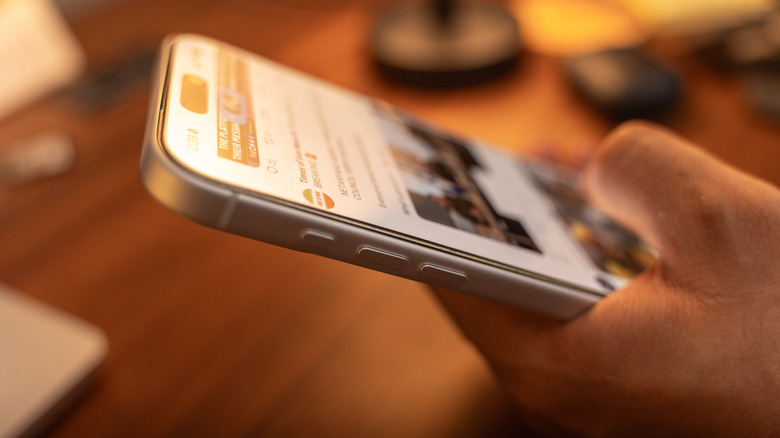
There is nothing inherently wrong with engaging in content that might be considered low-brow. You shouldn't feel bad for wanting to dedicate some time to mindless entertainment after a long day at work or school. In fact, in moderation, silly media can actually be beneficial. For instance, a study from 2003 revealed that 20 minutes spent watching an episode of "Friends" was equally effective at reducing psychological distress as 20 minutes of exercise. However, consistent exposure to short video content, like we might see on TikTok, can reduce the ability to even pay attention for the length of time it takes to watch an episode of TV.
As with most things, moderation is key. One therapist, Maris Loeffler, compared passive screen time to eating sugar in an article from Stanford Lifestyle Medicine. It might be something that our brain craves, due to the pleasant rush we get at first, but too much can leave us feeling groggy and unnourished. Additionally, the time of day at which we mindlessly scroll is relevant, with many researchers suggesting that reaching for your phone first thing is a morning habit to avoid.
Much more research is necessary to understand the exact biological effects that the type of content we enjoy has on our brains. This is especially important when it comes to how these effects vary at different stages of development. So, while there is no immediate need to put down your phone, consider being intentional with your screen time.