

The Hidden Danger Lurking Inside Popular NeeDoh Toys
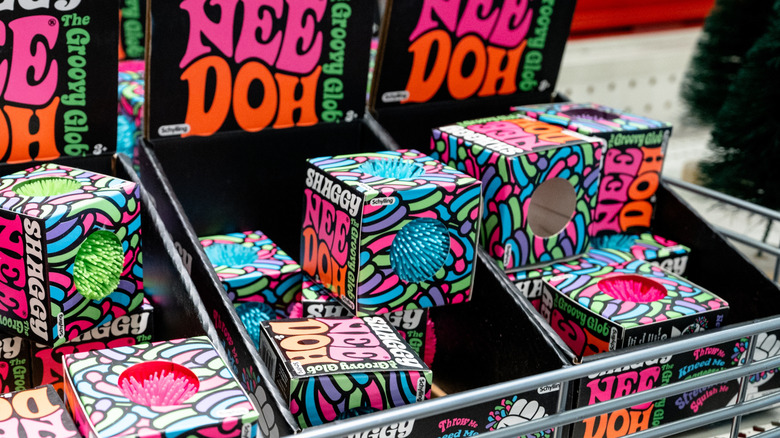
In June 2026, a teen in New Mexico suffered third-degree burns across her arm and leg after her squishy toy burst in her hand. The toy had sat in the car for over four hours before the 13-year-old came back to grab it, and one strong squeeze was all it took for the superheated inner gel to burst out and scald the young child. The event was captured in a Snapchat video, in which the girl's mother and others are heard trying to help the panicking child treat the deeply burnt skin on her arm. The toy was a NeeDoh fidget toy, though the name is just one brand of many in the market for the gel-filled novelties.
Across America, cases of people being burned after heating up gel-filled toys have bloomed in recent months, and it appears most victims are children. Most tragically, a 7-year-old girl in Missouri was placed into an coma after suffering third-degree burns across much of her body. She had microwaved a NeeDoh squishy toy and survived the ordeal with permanent scars. Heating up squishy toys is a common allure, since the contents become more malleable when hot. But too hot, and the innocent toy can turn dangerous.
The growth of squishy toy injuries has followed the growth in popularity of the tactile toys among youngsters, and the NeeDoh brand fidget toys have been especially popular since their release in 2017. Squishy toys' popularity was accelerated by ASMR videos targeted towards kids. The sensory toys are simple in design yet highly effective at capturing young children's attention, allowing them to squeeze the toys to flex their hands, kind of like the reason you can't resist cracking your knuckles. Such stress relief remedies have been around for a long time, though the latest designs can cause serious burns if handled improperly.
An innocent nontoxic product that can suddenly burst and burn
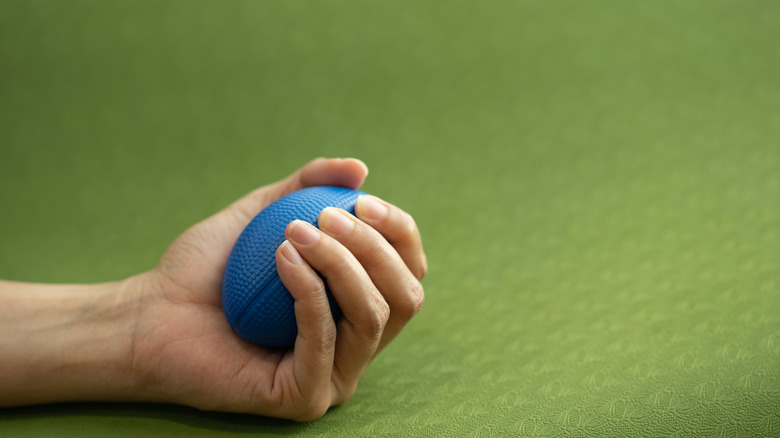
NeeDoh squishy toys reportedly use nontoxic materials. The parent company Schylling warns, "DO NOT leave in car or direct sun; contents may become hot. Do NOT heat, freeze, or microwave" (via RochesterFirst). The company then goes on to explain how its most popular NeeDoh product, The Nice Cube, is made of a nontoxic thermoplastic casing and a squishy inner gel filling made of maltose, a type of sugar syrup. Other NeeDoh products use the same thermoplastic rubber casings, though they usually contain polyvinyl alcohol for the filling.
The danger is not in the toxicity of the materials. When considering the factors that affect thermal conductivity, it suffices to say that while the toy's outer thermoplastic isn't highly thermoconductive, it does become more malleable and mushy when heated. This is because the carbon polymers that make up the outer casing stretches them, which weakens the polar bonds between them. The molecules gain greater mobility with greater temperature, so polymer chains can easily break apart. At high temperatures, one tight squeeze is enough to burst the weakened thermoplastic casing, allowing the more thermally conductive inner gel to spill out.
In any case, NeeDoh squishy toys are as nontoxic and as basic as could be expected, and their imitators, competitors, and off-brand varieties also typically use the same plastic-based, nontoxic materials. For those fearful of the thermoplastic polymers used in such toys, fear not: in terms of toxicity, they are safe for kids. In fact, the design isn't much different from that of the classic stress balls which once populated office desks throughout corporate America, though they're now marketed towards youngsters as "tactile fidget toys." The design, however, is more heat-absorbing than ever, even as the brand tries to modify the product to meet demand. Clearly, kids can find a way to make even nontoxic toys dangerous.