

Common Tattoo Myths That Have Been Dispelled By Science
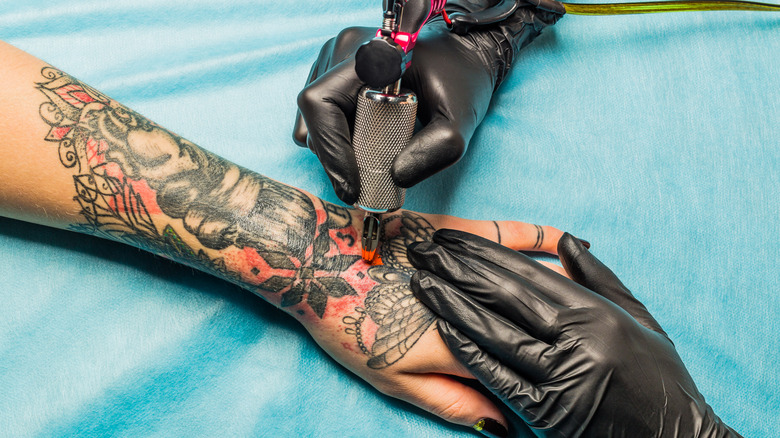
Tattoos remain popular in the U.S., with the Pew Research Center estimating that 32% of adults have at least one tattoo based on 2023 survey data. They also found that 69% of survey participants underwent the inking process to honor a person or important thing in their lives. Other common reasons include making a statement, or simply wanting the artistic qualities on their bodies. No matter what the reason for getting a tattoo, the fact is that this once seemingly fringe practice in American society has undoubtedly gained more widespread acceptance in recent decades. Unfortunately though, myths about tattoos and various health risks have also run rampant alongside the increasing number of people seeking this form of body art. Some of the most common tattoo myths involve cancers, sun exposure, diagnostic imaging interference, and more.
First, one of the more popular tattooing myths involves an increased risk of cancer. In particular, some people have highlighted fears about a possible connection between tattooing and lymphoma. This type of cancer begins within cells of your lymphatic system. There are well-established risk factors including a weakened immune system or an autoimmune disease, certain infections such as hepatitis C or HIV, and a family history of lymphoma. Getting a tattoo is not among them, but researchers have raised questions over the possibility of tattoo ink deposits causing long-term issues in the lymphatic system.
One such case-control study in 2024 from eClinicalMedicine attempted to determine whether tattoo ink could be linked with lymphoma development based on retrospective data collected in patients with histories of both malignant lymphoma and tattoos. While the authors did find a possible association between the two, they could not confirm that tattooing directly causes lymphoma. This area of research is still worth investigating, but as of right now, the possibility of getting lymphoma from a tattoo is unsupported by any solid scientific evidence.
Tattoo myths about skin cancer and sun exposure risks

Lymphoma isn't the only type of cancer connected to tattoo myths. Some researchers have also raised concerns over whether heavy metals in tattoo ink could promote cancers of the skin. As of right now, there is no definitive link between skin cancers and tattoos, though scientists do continue to study the possible risk. One such study from 2025 published in the European Journal of Epidemiology evaluated whether tattoos were a cause of increased melanoma rates among the Swedish population. While the authors noted tattoos might possibly be a cutaneous melanoma risk factor, they also said there's not enough evidence to confirm that tattoos necessarily cause this type of skin cancer directly. Overexposure to ultraviolet (UV) rays from the sun remains one of the biggest risk factors in skin cancer development – this is regardless of whether you have a tattoo or not.
There's another unfortunate misconception about skin cancer and tattoos. But rather than believing that tattoos might increase the risk for skin cancer development, some people might erroneously think that their inked skin might offer protection from harmful UV light. While tattoo ink might make it more challenging to spot changes in your skin that might point to early signs of cancer development, your skin is just as vulnerable to UV ray damage as non-tattooed skin. Unfortunately, many common tattoo ink colors can disguise potential skin issues more than others, with black, red, and blue the most likely offenders. For this reason, dermatologists take extra care examining tattoos when conducting annual skin checks, and they may also utilize specialized diagnostic tools called dermatoscopes to be able to see the areas more closely.
Other tattoo myths, and the real risks you should be aware of

Yet another myth is that a tattoo completely prevents your ability to undergo a magnetic resonance imaging (MRI) scan. While there have been cases of burns along tattooed areas of skin from an MRI, these are rare. A more concerning problem with an MRI is the potential that a tattoo might alter the imaging quality. However, neither of these issues automatically eliminate your ability to have a medically necessary MRI to help detect hidden conditions – you do need to let your doctor know about your tattoo(s) ahead of time, though.
Another common myth says that the only safe tattoo is one made with black ink. While the exact ingredients might vary between individual pigments, saying that black is the safest option is simply false. This myth likely gets its roots in the fact that some people are more sensitive to certain ink colors, such as red, blue, green, and yellow. Yet any reaction to a particular tattoo ink is highly individual and dependent on the ingredients, with subsequent allergic reactions more common in people with sensitive skin and/or allergies.
Despite all the myths surrounding tattoo safety, there are still some very real health risks to be aware of. These include infections, granulomas, scar tissue, and bloodborne diseases such as hepatitis B and C. You can ensure your own safety by getting tattoos from reputable studios that properly sterilize all their equipment and use quality inks. Always follow all aftercare instructions, too. Don't be afraid to ask the artist questions, and be sure to see a dermatologist in the case of any adverse reactions after getting a tattoo.