

The Full Moon Sleep Myth Is Actually Based In Science
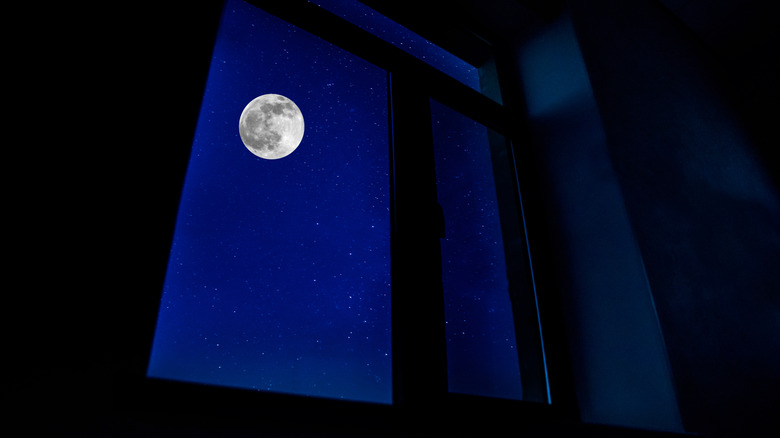
Arguably the most popular of the eight phases of the moon, the full moon is a coveted time when you have the opportunity to see the entire face of this important planetary body thanks to illumination from the sun. But during the moon's four-week journey orbiting the Earth, some people have claimed to feel different during key moon phases. This is particularly the case with full moon, which has evoked numerous myths and folklore over the centuries. Just some of these chanes include erratic behavior, increased fertility, and a higher rate of injuries, to name a few. Many people have also claimed that a full moon changes their sleep patterns — but it turns out this might not be a complete myth after all. While more research is needed on this end, some scientists have determined it is possible for some people to experience reduced sleep quantity and overall quality during a full moon.
There are a few hypotheses that could explain why some people experience sleep disturbances during different moon phases. The most well-founded theory is that the extra amount of sunlight reflecting during a full moon could possibly disrupt one's circadian rhythm. This also makes the most sense if you normally limit your exposure to artificial light at night. Notably, a study published in Science Advances suggests that exposure to the light of a full moon might result in delayed sleep onset. Other possible explanations include Earth's shifting electromagnetic field responses throughout different moon cycles, and sensitivity to the moon's gravitational pull (though this theory is debatable, with possible evidence just emerging). No matter what the exact cause, it's worth noting that most of the studies to date on this subject are not conclusive. Nevertheless, there is a real possibility that humans are more likely to experience sleep disruptions during a full moon.
What are the caveats behind the full moon and sleep theory?
Despite the emerging evidence that a full moon can possibly lead to poorer sleep, not everyone is on board with this theory just yet. One related review published in 2023 in the journal Cureus examined previous studies related to the moon and various purported impacts on human health, including sleep. Here, the authors reported mixed results. First, they noted that adults were more likely to experience the perception of reduced sleep quality and daytime tiredness around a full moon. Yet they also found a lack of evidence to support the theory that lunar cycles significantly affected sleep cycles in the population at large. The authors do not fully discard the full moon and poor sleep connection, but are instead advocating for more studies to support these theories.
Rather than focusing on whether the effect of a full moon on sleep is a myth or fact, it's worth considering that individual experiences might be a bit more subjective. Some people could very well get reduced sleep quantity and feel tired around this time. Yet other people might not be affected at all. For example, the increased amount of sunlight that's shone via a full moon might disrupt some individuals more than others. It's also possible that once you've experienced sleep disruptions during a full moon, you could be anticipating a repeat of this event during subsequent full moons. Indeed, feeling anxious about whether you're going to fall asleep can cause stress in the body that may inevitably keep you up at night.
What you can do to increase shut-eye – no matter the lunar phase
Before you accept the perceived fate of being doomed to get poor sleep every time there's a full moon, know that healthy sleep practices can go a long way during all lunar phases. Since there's a chance that a bright, full moon might keep some people up at night, it's important to keep your bedroom as dark as possible. Limiting exposure to blue light three hours before bedtime can also help by regulating your circadian rhythms via normal melatonin production. This might also reduce the urge to reach for sleep supplements and experience the possible "melatonin hangover" phenomenon.
If you do find yourself more sensitive to full moon-induced sleep changes, know that maintaining a sleep schedule might also help offset these effects. How much sleep you really need and the ideal sleep schedule can be individual based on your own age and chronotype. In general, most adults need between seven and nine hours of sleep with regular sleep and wake times every day of the week. Sticking with your own schedule can make the occasional lunar-based sleep deprivation easier to recover from. You can also consider talking with a healthcare provider or sleep specialist if you continue to struggle with sleep quality.