

Storm-Chasing Is A Risky Job, But Not For The Reason You Think
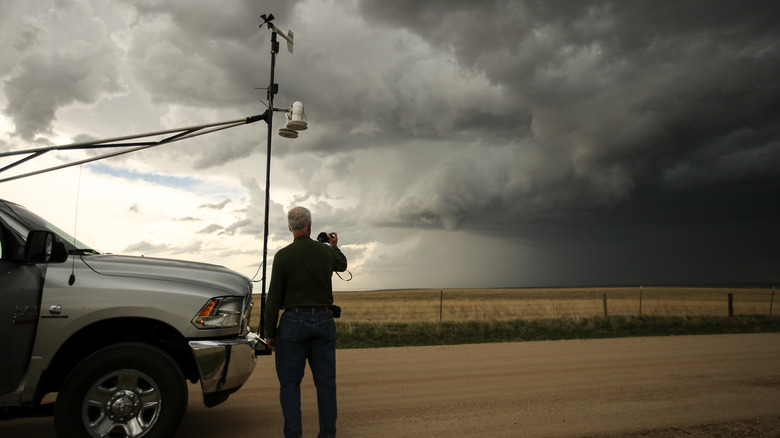
Advancements in radar and other weather technology have made some key impacts in the way meteorologists can forecast severe weather threats to help keep people safe. Yet storm chasers still play a vital role in meteorology, as they can see details on the ground that a radar might miss, as well as capture critical photos and videos. This job certainly isn't for the faint of heart though, as these professionals live up to their titles by traveling to literally chase potential tornado-producing thunderstorms so they can ultimately learn more about the characteristics of those tornadoes. The direct risks tied to these storms cannot be understated, and tornadoes' effects on people are wide ranging. Yet you might be surprised to learn that these are not responsible for the majority of storm chaser-related deaths. In fact, death by storm chasing is actually considered rare. Driving is in fact the most dangerous – and unfortunately most fatal – risk tied to storm chasing.
The first incident involving storm chaser fatalities by a tornado occurred on May 31, 2013 in El Reno, Oklahoma. On that day, an erratic-moving EF-3 tornado killed three storm chasers when they were caught off-guard in their vehicle as the storm unexpectedly shifted direction. Five other people also died on the road while either trying to escape or take shelter from the storm. The El Reno tornado remains the largest ever tracked, and it measured 2.6 miles wide. Aside from this tragic incident, however, almost all other storm chasing fatalities are thought to be attributed to car accidents.
Why driving is the most dangerous aspect of being a storm chaser
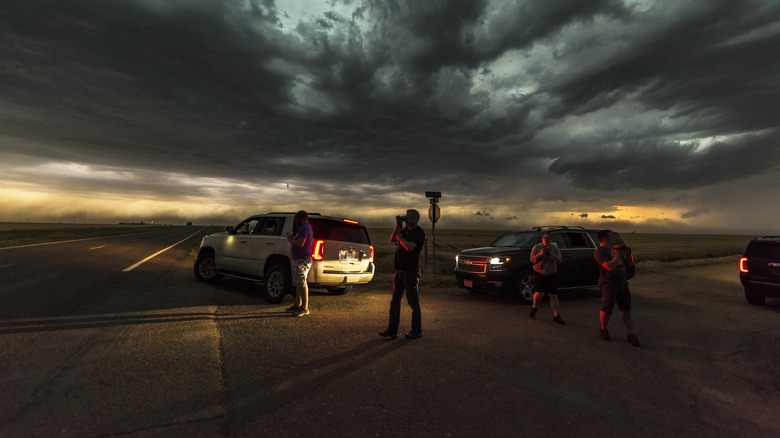
High winds, hail, and heavy rains from different weather conditions can make road conditions nearly impossible for anyone to navigate safely. This is also true for storm chasers. Unfortunately, storm chasers can sometimes get caught in these conditions in the middle of tracking storms, which can lead to car accidents on their own, or with other storm chasers. Also, since the majority of a storm chaser's time is spent driving to track down severe weather, they are already at an increased risk of vehicular accidents whether they encounter a storm or not.
It's also possible for storm chasers to encounter other types of road hazards as they make their best efforts to drive safely during inclement weather. Accidents may be caused by reckless drivers who might suddenly get caught in the storms themselves. Another possibility is that amateur storm chasers, tourists, or general thrill seekers might get in the way rather than heeding active warnings to shelter in place, making already-dangerous driving conditions even more hazardous. Such individuals might hang out on the side of the road when visibility is too low to see them, or they may drive recklessly during the storm out of inexperience.
Storm chasers arguably have a lot of dangers that they encounter on the job, but most of them make it safely with extensive preparation, precautions, and experience. You can help ensure their safety by staying off the roads during a storm and taking shelter as instructed. If you do get stuck on the road during severe weather without warning, do drive slowly, and avoid passing directly over downed tree branches or powerlines. Also, never attempt to drive ahead of a parallel-facing tornado in case it changes direction without warning.