

Algae Blooms In Lakes Are Doing A Lot More To Your Health Than You Think
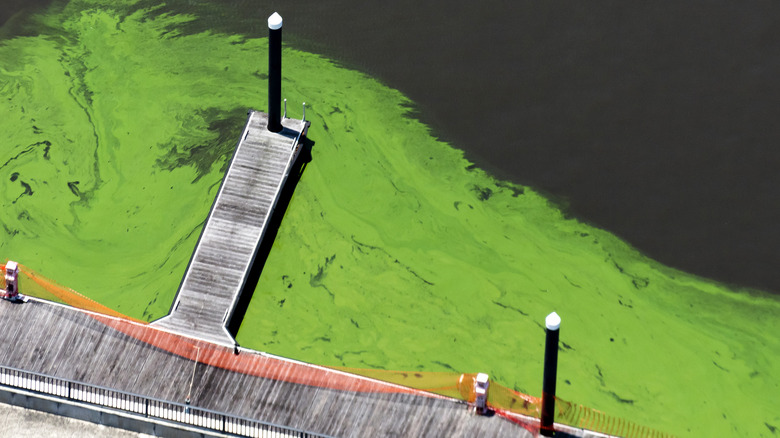
Lake time is often synonymous with summer, but any fun can quickly be derailed by unintentional algal bloom exposure. Algae are commonplace in freshwater ecosystems, including lakes. The ecological importance of algae cannot be overstated, with fish and other aquatic species relying on these organisms as food sources. Yet an overgrowth of certain organisms can create algal blooms, some of which can become problematic because of the toxins they emit. You might be surprised to learn that exposure to these toxins can lead to a host of neurological, digestive, and respiratory effects.
Also called harmful algal blooms (HABs), these events are most often associated with blue-green cyanobacteria. These algae-like bacteria can emit cyanotoxins, which are harmful to both humans and animals. HABs create a noticeable film or scum along the top of the water, with cloudiness underneath the surface. The presence of dead fish along the water's surface or the lakeshore is yet another sign that something is amiss, as this can indicate reduced oxygen from cyanobacteria overgrowth. Sometimes these blooms can emit musty or sulfur-like smells, too.
Algal blooms may develop during any time of the year when conditions are warm and sunny, but the National Park Service says they are most prevalent between August and December. You may also have noticed an uptick in algae issues in lakes in your area, or have heard about them nationwide. It's true that algal blooms are becoming much more common, with cyanobacteria directly attributed to human activities, such as excess nutrients from fertilizer usage and sewage. Increased rainfall can cause more runoff in lakes and other freshwater sources to fuel algal blooms, while warming temperatures from climate change can further exacerbate the process.
What happens if you're exposed to algal blooms?

While some algal blooms are non-toxic, exposure to HABs in freshwater sources like lakes can increase the risk of a variety of health consequences. This is especially true of blue-green cyanobacteria in the ecosystem, which can emit dangerous toxins within the water as well as in the air. Some possible signs and symptoms linked with the harmful effects of algae include acute digestive issues, such as nausea, vomiting, and diarrhea. It's possible to experience breathing problems as well, particularly in people who have underlying respiratory diseases such as asthma. Skin rashes may also develop upon exposure to algal blooms in lakes.
Aside from feeling unwell, algal bloom exposure can lead to more serious health problems. This is especially the case in children and pets, who may be at a higher risk of accidentally drinking affected lake water. Ingesting toxic algae can possibly affect internal organs, especially the liver. In severe cases, exposure can also cause seizures and other nervous systems issues. While rare, it's possible for cyanobacteria algal blooms to be deadly in some people. Researchers are even investigating the possibility of long-term impacts of HAB exposure, including alterations in cells and genes.
Swimming is perhaps one of the more obvious methods of exposure to toxic algae in lakes. However, this isn't the only way people are affected. Kayaking, canoeing, or boating in algae-infested waters can also be dangerous activities — even if you do not get in the water directly, you may still be impacted via water spray or toxin inhalation. Fishing from a lake with an active algal bloom can also be extremely hazardous, especially if you eat the impacted fish.
What to do if you're exposed to harmful algal blooms
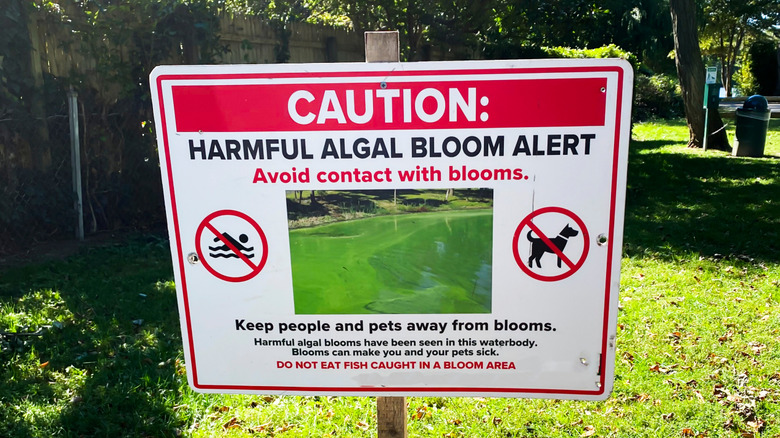
Whether you've swum in a lake with a suspected HAB, or if you've experienced more indirect exposure via inhalation, it's important to seek medical help as soon as symptoms arise. This includes feeling ill without any explanation after going to a lake or other freshwater source. If you have accidentally touched lake water with suspected algal blooms, wash the affected area with water and soap right away. Continue monitoring for adverse side effects.
More importantly, it's advisable that you avoid contact with lakes that have any suspected algal blooms to begin with. Never swim, fish, boat, or use a personal watercraft in any questionable body of water. While not all algae is harmful, it's unfortunately impossible to tell whether an impacted lake has a toxic bloom based on visuals alone. If any body of freshwater has a bluish-green sheen on its surface, or if the water has an unusual bright green tint, turn around and leave the area immediately. You can also check information from local authorities about whether a lake is safe for recreational activities beforehand. If, on the other hand, a lake is not under advisory and you see a suspected algal bloom, contact a park ranger, the U.S. Army Corps of Engineers, or your local environmental protection agency.
As you plan out your water-based activities, know that it's not just freshwater that can be impacted by algal blooms. Other types of algal blooms can range from shades of red to brown in color from diatoms or dinoflagellates, but these are more common in saltwater. In particular, dinoflagellates called Karenia brevis are notorious for creating "red tide" blooms in saltwater sources such as waters around Florida.