

Why Washing Berries With Vinegar Works Better Than Water
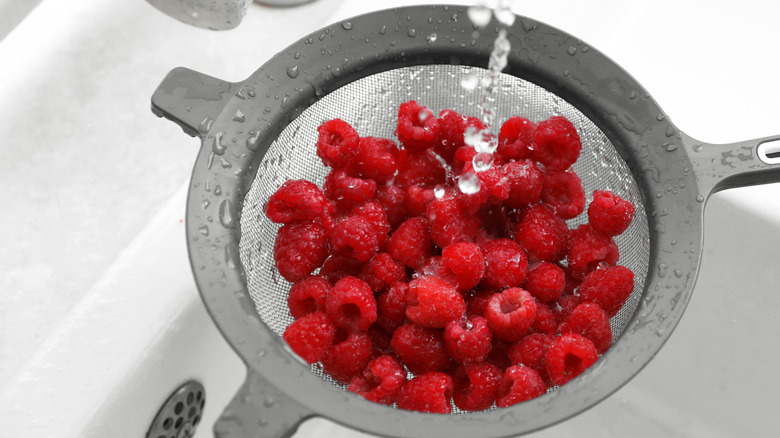
We all know that washing fresh berries before eating them is a crucial step to get rid of any dirt or microbes that may have made the journey from plant to packaging. Rinsing them quickly under the tap, however, may not do a thorough enough job, and cleansing them with vinegar is a more effective method if you want your berries to be truly clean.
As delicious as they are, fresh berries (raspberries tend to be particularly delicate) are not known for their robust and long-lasting nature. Often after just one day in the fridge, a few of the berries are starting to show the fuzzy signs of mold. This is where good old vinegar comes in. Ethanoic acid, which makes up around 4–7% of regular household vinegar, is very effective at preventing mold spores and other microorganisms from taking hold. Rinsing your berries properly with a vinegar solution can help keep the dreaded fluff at bay for a few extra days, giving you enough time to eat the fruit salad you had been planning.
A 2021 study published in Foods compared three methods of washing berries, and the effectiveness of each. Soaking in vinegar before rinsing in water was found to remove significantly more bacteria than rinsing in water alone. Washing with water then spinning for 20 seconds in a salad spinner was also more effective than water alone, but less effective than a vinegar soak.
How to effectively wash berries with vinegar
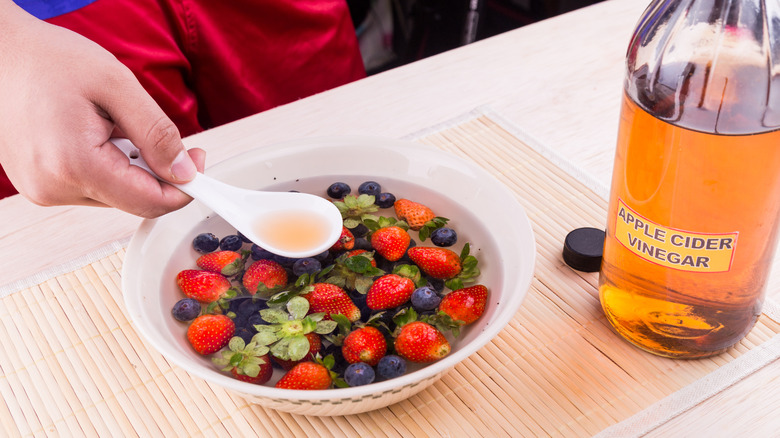
The key to washing your fresh berries is to use vinegar in a way that doesn't spoil their delicate flavor. Neat vinegar would be too strong, so diluting the vinegar in a 3:1 ratio with water is the best option. Add the berries to the solution and leave for up to 10 minutes to give the vinegar a chance to work its magic. The berries should then be rinsed for 30 seconds and then dried. Moisture is one of the key factors in mold growth in berries, so storing wet fruit in the fridge is never a good idea. Allow them to dry in a sieve then pat them dry with kitchen paper.
Berries must be stored in the fridge, even once washed, since below 40 degrees Fahrenheit the most common fungus that appears on them, Botrytis cinerea, will stop growing. The humidity and temperature of the kitchen counter represent the ideal conditions for mold to grow on the food, so store them in an airtight container to protect them as much as possible.
If you don't have vinegar handy when you have a craving for fresh berries, you can rest assured that washing thoroughly with water alone removes around 80% of dangerous microbes. However, the addition of the ethanoic acid solution takes this figure up as high as 97%, particularly in the case of blueberries. If you want to know that your berries are as clean as possible, and keep them edible for longer, washing them in vinegar solution is the way to go.