

The Rare 'Glass Bone' Disease That's Easily Explained By Science
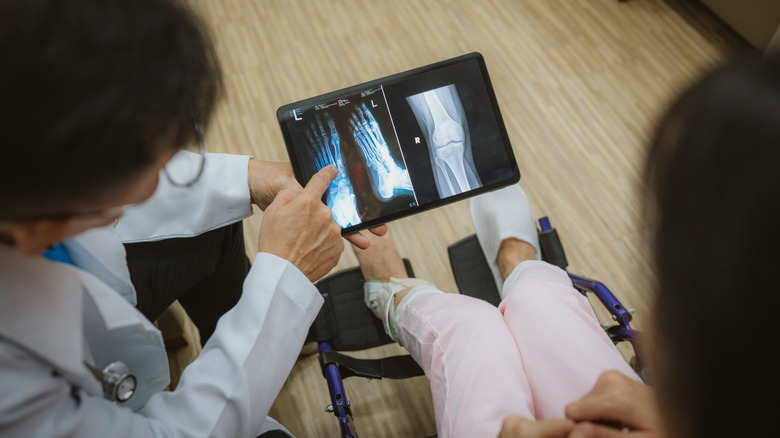
When you think about bone diseases, your first thought might be the decrease in mass, strength, and bone mineral density that are common features of osteoporosis. Yet osteoporosis isn't the only bone disease that can lead to weak or brittle bones. Such is the case with osteogenesis imperfecta (OI), a type of genetic bone disorder which is also sometimes nicknamed "glass bone disease." While considered rare, OI may lead to fractures and other complications, making an accurate diagnosis and treatment important in preserving quality of life and protecting the components of the skeletal system.
Also known as "brittle bone disease," OI is a condition that you're born with. It is rare among the U.S. population, and it's estimated that this bone disease affects between 20,000 and 50,000 people nationally, per the National Organization for Rare Disorders. With OI, a person might easily develop bone fractures, often without any apparent cause such as a fall or other type of injury. But aside from easily broken bones, OI can also cause bone deformities. Some types of OI are even severe enough to cause fractured bones before birth, while others may be so mild that a person experiences few fractures during their lifetime.
Who is at risk for 'glass bones' from osteogenesis imperfecta?
A person with OI is born with this condition, with many of the signs present at birth. As a genetic disorder, one or both parents carry specific OI-associated gene mutations that are then passed on to their children. While not as common, there are some instances in which OI develops from spontaneous gene mutations. OI is also thought to affect males and females equally.
The exact symptoms and overall severity of OI vary, with the condition being broken down into collagen and non-collagen types. Types I to IV are attributed to COL1A1 or COL1A2 genetic mutations that affect type I collagen in your bones. This can lead to insufficient amounts of collagen in bones and problems with connective tissues. These specific mutations also make up about 90% of all cases of OI, says MedlinePlus. Type II is considered one of the most severe forms, which can also be deadly in infants. Overall, OI type I is the most common and mildest form, with an estimated 50% of impacted children having this type, according to Johns Hopkins Medicine.
Yet in recent years, the list of OI types has expanded to include rarer forms V through XXI. While type I to IV may all be linked with mutations in COL1A1 or COL1A2 genes, all others are caused by different genetic mutations. Many of these rare types of OI cause disruptions in collagen molecule production, leading to impaired bone development. However, others don't involve genes that govern collagen at all.
How brittle bone disease is diagnosed and treated
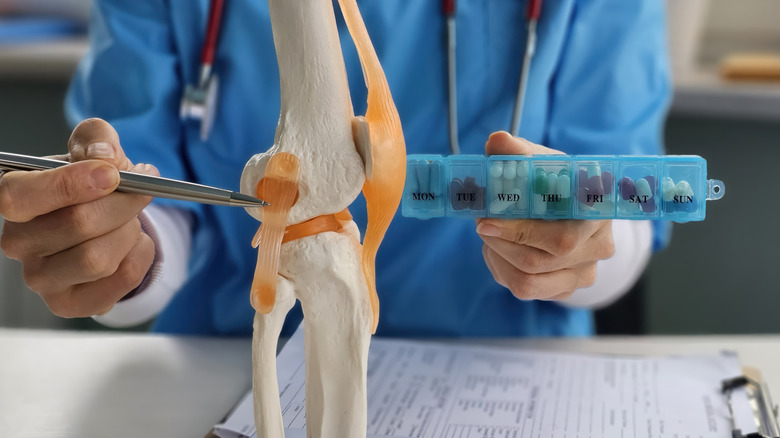
Some common signs of OI include bone deformities, unexplained fractures, and overall muscle weakness. However, since some of these can also be associated with other bone-related diseases, an accurate diagnosis is critical. While a doctor might suspect OI based on family history as well as symptoms accompanied by a personal history of fractures, genetic testing is the only definitive way to confirm this condition. Genetic testing can also provide crucial information regarding the exact types of gene mutations linked with OI. Babies or children with suspected OI might also undergo X-ray tests to get a better look at the bones, as well as bone density scans to measure bone mineral density.
There's currently no cure for OI, but treatments can be tailored to individuals based on the exact type of brittle bone disease they have. Examples include oral or intravenous drugs to help regulate bone resorption, as well as drugs to promote stronger bones. A doctor will also likely recommend regular exercise to help strengthen bones and muscles to reduce the risk of future fractures, Physical and occupational therapies can also help complement medical therapies, especially in babies and children. Surgery might also be considered with severe OI that causes repeat fractures or significant bone deformities.
Overall, brittle bone disease requires special care and adherence to follow-up appointments to help slow OI progression and improve overall quality of life. Treatment may also help reduce the risk of common complications, such as heart issues, dental problems, respiratory infections, hearing loss, and joint problems.