

These Antarctic Animals Are Considered Endangered As Of 2026 – Here's When They Could Go Extinct
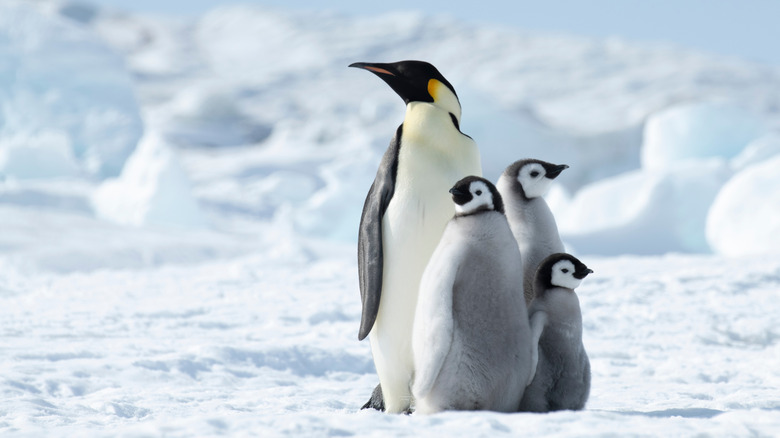
The International Union for Conservation of Nature (IUCN) maintains a Red List that outlines the extinction risk for various animals, as well as fungi and plants. Recently, two treasured animals from Antarctica were categorized by IUCN as endangered, which means that there is a high likelihood that they will become extinct in the wild. Both emperor penguins and Atlantic fur seals have experienced drastic population reductions. Atlantic fur seals have decreased in population by 50% since 1999, and the same fate is expected for emperor penguins by 2080.
The main driver of this population loss is climate change. In different ways, both species rely on colder climate conditions to maintain their lifestyle. As global temperatures are rising, losses of habitat and food sources have become detrimental. The Director General of IUCN, Dr. Grethel Aguiliar, even said in a press release, "The declines of the emperor penguin and Antarctic fur seal on the IUCN Red List are a wake-up call on the realities of climate change."
The frozen and floating portions of the ocean are known as sea ice, which is an important habitat to both Antarctic fur seals and emperor penguins. Since 2016, the amount of sea ice in Antarctica has seen a significant decline, with 2023 marking a record low, which has been attributed to warming temperatures. This can potentiate a very harmful cycle, as sea ice helps to cool temperatures by reflecting sunlight. Thus, the loss of sea ice from warming temperatures accelerates the rising heat of the ocean.
Emperor penguins
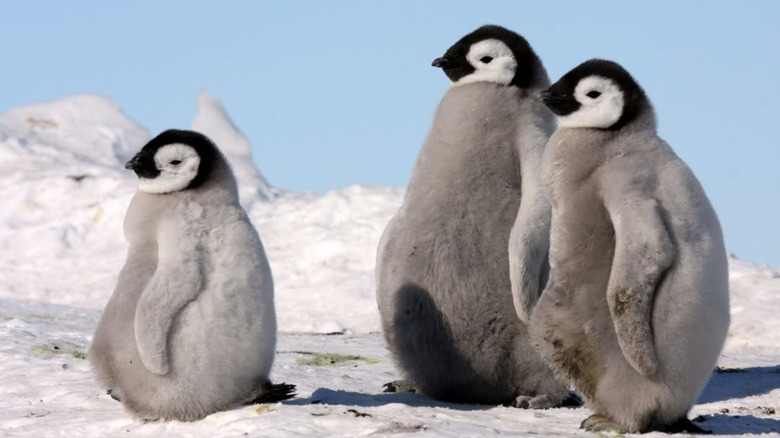
Between 2009 and 2024, emperor penguins experienced a population reduction of approximately 22%. These are the largest penguin species and can reach up to 4.3 feet tall. But perhaps their most notable claim to fame is that they were the inspiration behind the classic children's film, "Happy Feet."
Emperor penguins breed and take care of their young on what is known as "fast ice." The Antarctic is a small land mass surrounded by ocean waters. Thus, much of the sea ice flows with the ocean until it reaches warmer waters and melts. Fast ice is fastened to the coast, meaning that it is anchored for a period of time. Emperor penguins are unique in raising their young on the precarious ice, while most penguin species perform this fragile part of their life cycle inland.
These distinct characteristics make emperor penguins highly vulnerable to shifting climate dynamics. Chicks do not have waterproof feathers when they hatch in August, and they don't finish growing their waterproof feathers, which help them swim and keep warm on their own, until December. This is when the ice typically breaks, as it's summertime in the southern hemisphere, unlike in the northern hemisphere. Therefore, if the ice breaks too early, the chicks can drown. Unfortunately, such a devastating event was seen in 2022 when four of the five observed breeding sites in one particular region of the continent collapsed, and thousands of chicks died. Therefore, reducing the rate of global warming is necessary to protect this species.
Antarctic fur seals
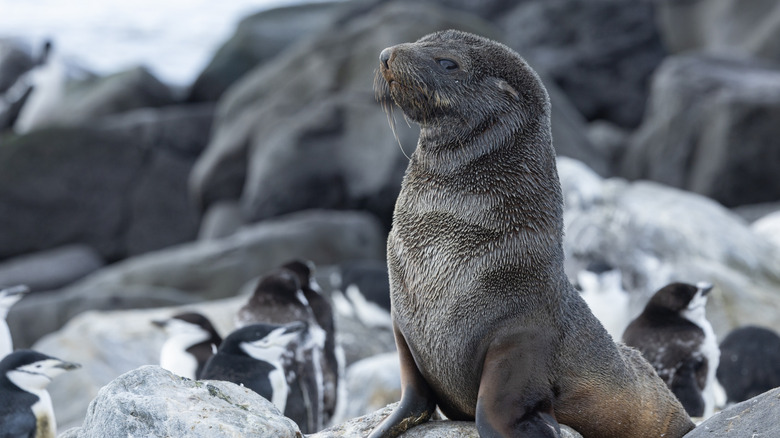
While emperor penguins are the largest of their kind, Antarctic fur seals are the littlest. Although smaller than the average seal, they have proven incredibly resilient, having already survived another major threat of extinction. Antarctic fur seals have thick, water-resistant fur that became prized lining for hats and coats. The trade of their pelts boomed with many seal hunters, predominantly from the U.S. and Britain, flocking to the area in the late 18th century. The hunting of fur seals was excessive, to say the least. In the year 1800, Captain Edmund Fanning reportedly killed 57,000 seals. Modern estimates suggest that 5.2 million Antarctic fur seals were hunted by 1812. So extensive was the hunting that Antarctic fur seals were nearly extinct in the late 1800s. But in the early 20th century, laws were passed that protected the breeding grounds of these seals, and the population began to recover.
Now, they are faced with the threat of a warming climate. The Antarctic fur seal's diet mainly consists of Antarctic krill, which enjoy the cold waters that receive cover from sea ice. As discussed above, sea ice is depleting, and that means krill are retreating to more hospitable waters elsewhere. This food shortage is most deeply affecting fur seal pups, who are more frequently dying before they reach one year old. In a press release from IUCN, the researcher Dr. Kit Kovacs said, "Monitoring of the effects of climate change in Antarctica is urgently needed."