

The Difference Between White And Brown Rice Is Easily Explained By Science
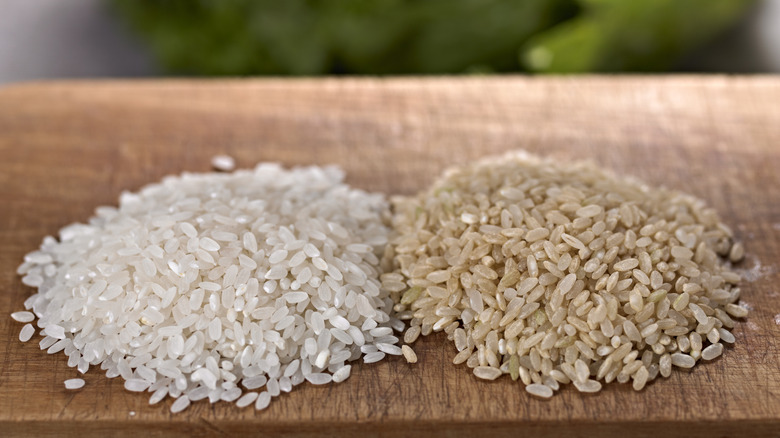
Whether you're cooking at home or dining out, you've likely had to make an important rice-related decision and answer the question: white rice or brown rice? You may be surprised to learn there are actually more than 120,000 types of rice varieties globally, with many classified by their grain size and aroma. Yet the white rice and brown rice varieties most people in the U.S. are familiar with are actually classified by their degree of milling. Brown rice is considered a more complete grain that's harvested without the husk, while white rice has even more parts removed during harvesting. Such basic differences not only lend themselves to distinct tastes and textures, but they also have varying nutritional offerings and potential impacts on your health, too.
First, it's important to understand the basic parts of a rice grain and how it's processed. All rice starts in a "rough" form, which is a grain consisting of a bran, germ, and endosperm, similar to parts of a wheat plant kernel. These are all encased inside an indigestible hull. During the milling process, the hull can be removed, creating what's known as brown rice. Rice can be processed even further down to include the endosperm only, with the end result being white rice. Unlike white rice, brown rice still contains the bran and germ — this is why it's also known as whole grain rice. As with other types of whole grains, brown rice is often considered to have a nutritional advantage over white varieties.
Why brown rice is often considered 'healthier' than white rice
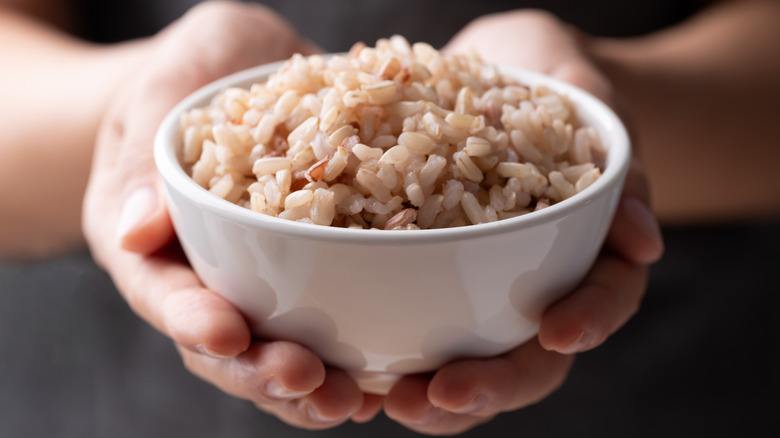
If you've been told brown rice is "healthier," this claim points to the fact that this variety is much more nutrient-dense. Since brown rice still has the bran and germ intact, each serving contains more fiber, vitamins, and minerals when compared with white rice. However, since the milling process strips white rice of many of these naturally-occurring nutrients, it must be fortified with certain vitamins and minerals. With this in mind, white rice may sometimes be enriched with more iron compared to brown rice after processing, though the latter is still a richer source of certain B vitamins, magnesium, and zinc. Both types of rice have a similar calorie count per serving, though white rice offers slightly more.
Another important aspect is the overall carbohydrate content of each type of rice variety, which is actually quite similar. You don't want to skip carbs entirely, which is one myth about weight loss people should stop believing. Unlike the starchy nature of white rice that offers less than 1 gram of fiber per 1-cup serving, brown rice has more than 3 grams. This ultimately means that your body digests brown rice slower, which is more advantageous for blood glucose in the body. Having said that, neither brown nor white rice is considered a low glycemic index food. Between the two varieties though, it's easy to see why white rice is rated high on the glycemic index and brown rice is considered a medium glycemic index food. People who eat more whole grains like brown rice also tend to have a lower risk of type 2 diabetes and heart disease.
When white rice may still be a better option
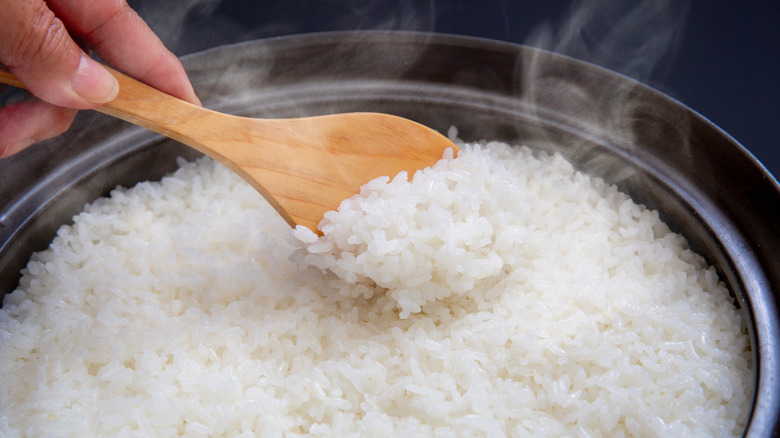
Despite brown rice's benefits, there are times when white rice might be a better option. Since white rice doesn't have the fiber that brown rice offers, it's more easily digestible. This can be ideal if you're dealing with acute gastrointestinal issues, or perhaps flare-ups associated with related conditions such as inflammatory bowel disease.
Another downside to eating too much brown rice is that it has a higher arsenic content, per 2023 research published in Frontiers in Nutrition. Organic rice is not immune to arsenic absorption either. Despite brown rice being associated with a lower risk of diabetes and heart disease, the authors note an association between arsenic and these chronic diseases, along with cancer and high blood pressure. You don't have to eliminate rice from your diet, but consider balancing it out with other grains.
Some might argue that white rice has more culinary versatility. Its starchy texture can make it better for absorbing sauces, and it doesn't compete with other flavors in your dish. On the other hand, some might feel the nutty flavor of brown rice doesn't go well with their meal. White rice could also be the more suitable if your most pressing need is time. Since white rice doesn't have as many layers to the grain as whole grain versions, it cooks much quicker.
If you have the flexibility to experiment with other types of rice, it may be worth going beyond traditional white and brown varieties. Depending on your taste preferences and nutritional needs, you might consider mixing things up by trying out aromatic long-grain jasmine or basmati white rice, or even antioxidant-rich black rice.