

The Organs You Can Donate While You're Still Alive

With the more than 100,000 people on the waitlist to receive an organ transplant in the U.S., signing up to be an organ donor is vitally important. Deceased donors can potentially save lives via transplants of major organs, such as the heart, liver, skin, and lungs. Yet it may be possible to make a difference by donating parts of certain organs while you're still alive. According to the Health Resources and Services Administration (HRSA), approximately 6,500 transplants from living donors occur every year. Living donations are often directed donations, which means the donor names a specific recipient, such as a friend or loved one. Overall, living organ donations primarily involve a kidney. It's also possible to donate portions of other organs from other major organ systems in the body, including parts of the respiratory and gastrointestinal systems.
It's estimated that about 85% of prospective organ recipients on transplant waitlists need a kidney, says the HRSA. While it's common for kidneys to come from viable deceased organ donors, these organs also are involved in the majority of living donor programs. Much of this has to do with the fact that humans can technically survive with just one of their kidneys being able to filter waste.
Sometimes living kidney donations are done in conjunction with partial pancreas transplants. These help to address both renal failure and pancreatic failure, which often coincide with one another due to kidney failure caused by type 1 diabetes. Also known as a simultaneous pancreas-kidney transplant, recipients usually get these organs transplanted from a deceased donor. However, a partial pancreas transplant from a living donor might be considered if no other option exists.
Living donation may also involve portions of other types of organs
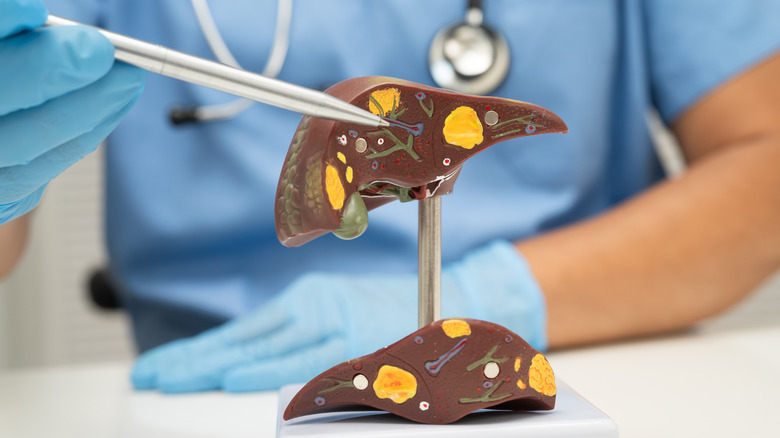
Outside of donating a kidney, it's also possible to donate portions of other important organs. The first is your liver. While you cannot live without a liver, it's possible to donate a portion of this organ. This has to do with the fact that this vital human organ can miraculously regenerate. When you donate a section of your liver, not only will yours grow back to its original size, but the donated portion will also eventually become a full-sized liver in the recipient.
While far less common, it's also possible to donate certain parts of your lungs or small intestine. A lung transplant from living donors must involve at least two donors. Rather than donating one lung, such transplants involve donating one or two lobes from donor lungs to help form a functioning organ for the recipient so the lung can fulfill its vital roles .
A similar theory applies to small intestine transplants, which can be life-saving procedures in those experiencing intestinal failure. Rather than donating the entire small intestine, living donors provide partial sections only. Also, just as simultaneous kidney-pancreas transplants involve two organ transplants at once, intestinal transplants are often done in conjunction with liver transplants.
Living organ donation risks and considerations

Becoming a living organ donor can literally be a life-saving endeavor for recipients in need. Yet there are also some factors to consider before making such an important decision. First, in order to be a living organ donor, you must be in good health overall to help ensure the safety of both you and the recipient. Not only must you be a non-smoker, but you might not be eligible if you have certain chronic medical conditions, such as uncontrolled diabetes or hypertension. There may be additional health requirements based on the type of organ being donated. Also, while many transplant centers require that you must be 18 years of age or older to become a living donor, some only work with adults over the age of 21.
Even if you're a good match for a recipient, there are still some risks associated with the organ donation process. These mostly involve the surgery itself, and can include postoperative infections or bleeding. It may take up to several weeks to recover from the process. There can also be some risks specific to the organ being donated. For example, hypertension is one noted long-term risk associated with kidney donation. With these caveats aside, also know that the majority of living organ donors go on to lead healthy lives after the process without any long-term complications.