

This Dark Energy Mapping Technology Is More Impressive Than Scientists Expected
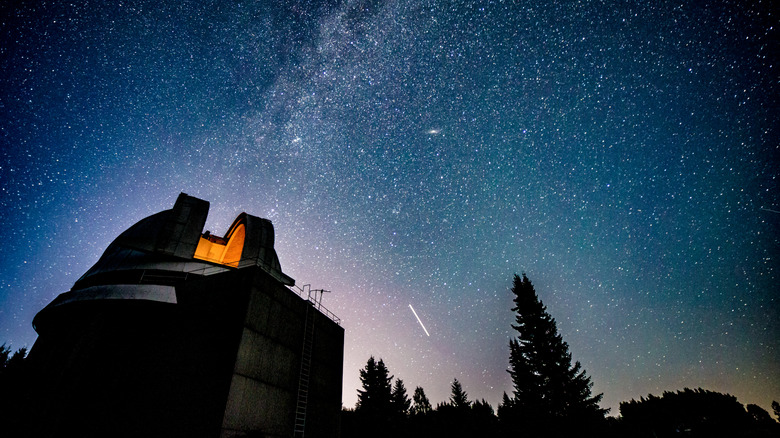
For ages humanity has looked to the night sky with a sense of awe and wonder. The invention of the telescope expanded our view of the universe and advanced technologies developed over the past several decades are allowing us to dig deeper into the cosmos. However, one recent project aimed at refining our understanding of the universe by mapping dark energy impressed even the scientists working on it.
The Dark Energy Spectroscopic Instrument, or DESI, was built to observe light coming from distant celestial bodies. These observations are being used to build a high-resolution 3D map of the universe that will allow scientists to better understand dark energy. The instrument consists of 5,000 fiber optic eyes mounted on a telescope at Kitt Peak National Observatory in Arizona, a great place to stargaze. DESI was designed to observe 34 million galaxies over more than two-thirds of the northern sky over a five-year period. However, DESI mapped more than 47 million distant galaxies along with 20 million stars in our own galaxy, exceeding expectations.
The Search for Dark Energy
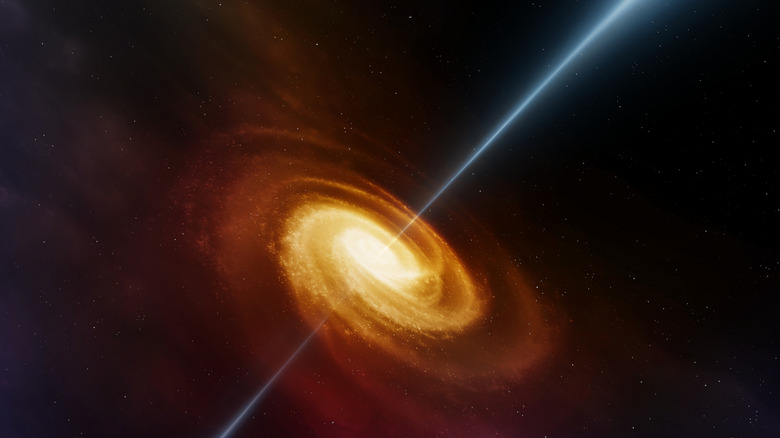
Dark energy is the term scientists use to describe the mysterious force that started making the universe expand at an accelerating rate around 9 billion years after the Big Bang. This is counter to expectations because gravity should be slowing the expansion of the universe. By splitting the light from distant stars and galaxies with a spectrograph, scientists can observe different wavelengths of light from those bodies. Light from an object moving away from us would have a longer wavelength, shifting toward the red end of the electromagnetic spectrum. This phenomenon is known as redshift and can tell us how quickly an object is moving relative to Earth.
In 1998, astronomers studying distant supernovae found that the explosions were dimmer than they expected them to be. The scientists used the apparent brightness and redshifts of these supernovae to calculate their distance and found that they were farther away than they initially thought. This meant that the universe must be expanding over time, thanks to a mysterious force scientists call dark energy.
However, what dark energy actually is remains unclear. Some ideas are that it's an energy field or background energy that's not been directly observed. Other thoughts are that dark energy could be defects in the fabric of the universe or that there's a flaw in Einstein's theory of general relativity and how we think gravity works at the scale of the universe.
Mapping Dark Energy
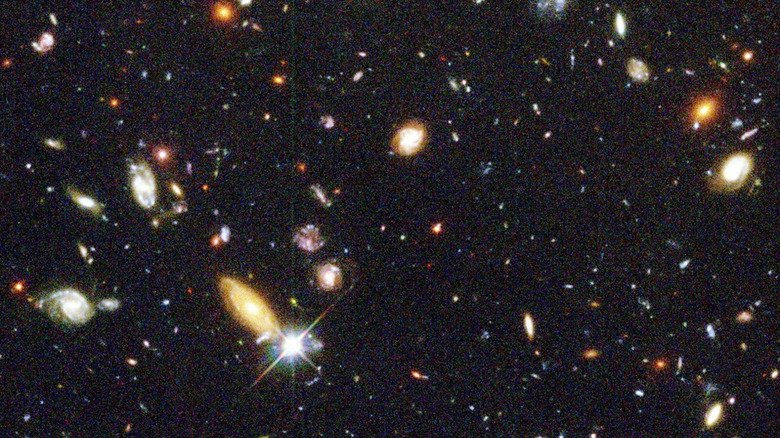
To better understand the nature of the universe, DESI collects redshift data from distant galaxies and quasars, galaxies with extremely bright cores due to superheated gases caused by forces from supermassive black holes. Obtaining detailed redshift measurements of millions of distant galaxies and quasars will allow scientists to build extremely detailed maps of the universe and its expansion. DESI's success largely comes down to its ability to quickly survey distant objects. It can measure a set of 5,000 objects at one time and move to observing another set of 5,000 in a different region of the sky within a couple of minutes.
The DESI team, which consists of more than 900 researchers from around the world, plans to continue their observations through 2028 to bring the total number of observed redshifts to 63 million. Their ongoing work will cover areas near the plane of the Milky Way and around bright stars where its more difficult to observe distant galaxies.
DESI exceeded its expectations despite interruptions to the project such as a 2022 wildfire that shut down the observatory and disrupted electrical and communications infrastructure for months. Analysis of the first three years of data from DESI show that acceleration may not be uniform and constant, but rather changes over time. More observations with this groundbreaking instrument may yield further details on the nature of the universe and continue to impress the research community.