

The Blood Type That May Have Led To The Neanderthals' Demise
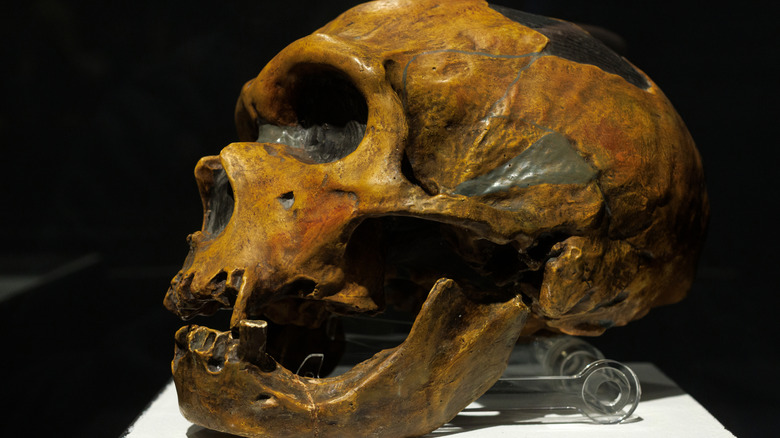
The Neanderthals (Homo neanderthalensis) are recognized as humans' closest relatives, and a lot has been uncovered about this ancient species since their discovery and official naming in the mid-1800s. We know that Neanderthals lived in parts of Europe and Asia between 40,000 and 400,000 years ago. Additionally, archaeologists have gathered enough fossil evidence to determine that Neanderthals had longer skulls and stockier, muscular bodies compared with humans. At the same time, Neanderthals and humans (Homo sapiens) share a common ancestor. Yet despite all that scientists know about Neanderthals, there's still many factors that remain a mystery. One common area of debate is the exact reason why Neanderthals went extinct around 40,000 years ago. There are many hypotheses for Neanderthal extinction, but more recent research points to changes in the species' blood type as yet another possible explanation.
Since 1997, scientists have been able to extract DNA from Neanderthal fossils. This has not only led to the reconstruction of complete genomes related to the ancient species, but researchers have also been able to garner other related data as well. Such is the case in early 2025, when a team of researchers published their findings regarding Neanderthal red cell blood groups (which play different roles than white blood cells) in the journal Scientific Reports. Here, the authors sought to understand more variations in these cells and how they compared to those of ancient humans. They discovered that Neanderthals developed a rare Rhesus (Rh) factor variant within RhD blood cells, which may have created harmful antibodies in fetuses.
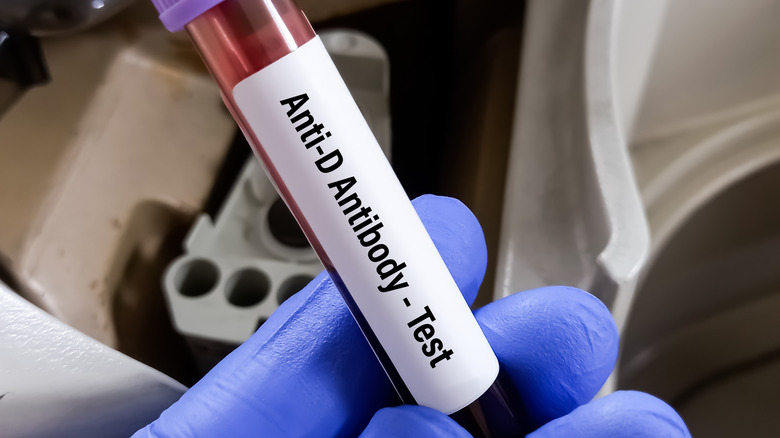
Anti-D antibodies likely led to fatal complications attributed to Rh incompatibility in fetuses and newborns, which may have been the result of Neanderthal parents interbreeding with ancient humans or other species carrying different Rh factors. While Rh incompatibility can now be diagnosed with a simple blood test during pregnancy and treated accordingly, obviously these types of modern medical technologies were unavailable 40,000 years ago.
Other possible theories about Neanderthal extinction
Neanderthals and humans coexisted for thousands of years before the former eventually went extinct. But rather than being attributed to a mass extinction event, scientists believe it was a more gradual process that affected smaller groups at a time. Fatal Rh incompatibility is certainly one aspect that could explain Neanderthals' demise. Aside from RhD variants passed on to their young, there may have been other problems that developed when Neanderthals interbred with humans, including fertility issues in males. Separately, a study published in 2019 also noted a gradual decrease in fertility rates among female Neanderthals.
Over the years, researchers have pointed to other factors that could have contributed to Neanderthal extinction outside of reproduction. First, it's possible that humans started settling into primarily Neanderthal territories in Europe, where the two species likely competed for resources (and sometimes experienced violent encounters). Also, similar to the impacts of global warming and the repercussions modern humans face today, Neanderthals may have also experienced a lack of food and shelter related to rapidly cold temperatures from climate change. Without the required resources needed to survive, many Neanderthals likely could not adapt to these significant climate disruptions.
Despite Neanderthals no longer existing on Earth as we know it, the species' DNA still lives on in some modern humans. In fact, according to Medline Plus, humans with either Asian or European ancestry have between 1% and 2% Neanderthal DNA! It's also worth noting that Neanderthals weren't the only extinct species that mated with humans.