

How A Vinyl Record Actually Makes Music, According To Science

In this era of digital downloads and online streaming, the popularity of vinyl records might seem puzzling. Records are bulky and require careful handling and storage to avoid damage. Choosing what music to listen to on vinyl also takes more time and effort than tapping a screen, and you can't exactly put a record on while you go for a run. However, 19 years of growth in record sales in the United States and annual sales of more than $1 billion in 2025 testify to vinyl's popularity. But how do these vinyl discs make music? In a word, vibration.
A quick look at a record will reveal tiny grooves on its surface. Actually, this is one continuous, spiral-shaped groove that runs from the outside of the record to the inside. Sound exists inside this groove. Inside the tiny groove are microscopic bumps and valleys that get translated into sound by a record player, a device built on one of Edison's inventions, the phonograph. However, while this sounds simple, the methods and materials used to make records is the result of years of refinement and innovation.
From wax cylinders to vinyl discs
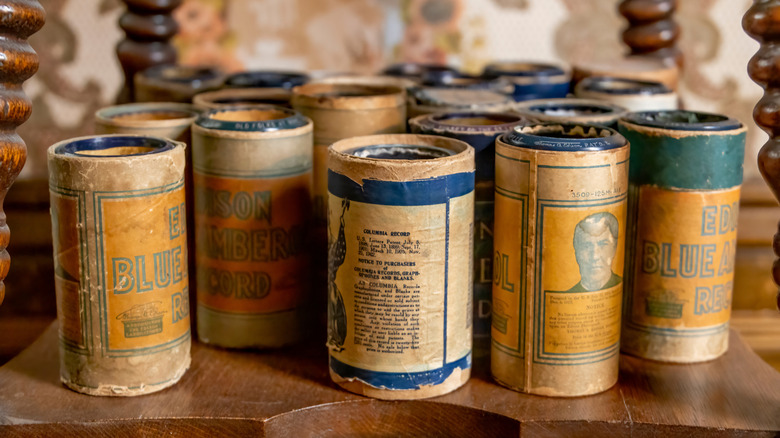
People started using grooves cut into a physical medium to record sound in the late 1800s. Unlike the vinyl discs we're so familiar with, people used wax cylinders. In the early days each wax cylinder had grooves cut into it using a stylus. Scientists worked to find a better kind of wax that would allow records to be mass produced and that would last a long time. For example, some types of wax were too sensitive to heat and humidity.
Over time the music industry shifted away from wax cylinders to flat discs that would be more familiar to our modern eyes. Starting around 1890 these discs were made of hard rubber or a type of plastic known as celluloid. Material choice shifted to shellac a few years later, making records less expensive to produce. However, shellac records were brittle and thus easily broken. In the 1940s, a new material hit the record scene: polyvinyl chloride, or PVC plastic. This material is far less fragile than shellac and allowed record makers to produce records that can hold more music. Even today records are made of PVC, which is why they're known as vinyl records.
Carving grooves into grooves
While the materials have changed over the years, the basic principles behind how records make music has stayed essentially the same. Getting music on a record is a multi-step process that begins with a master disc made of aluminum that is covered in lacquer. A stylus cuts a spiral, V-shaped groove into the lacquer, with vibrations from the sound recording showing up as bumps and dips in the groove. For stereo records, sound for the right channel is in the side of the groove closest to the outside of the disc and left channel audio goes on the other side. This master disc is then used to create negative castings of each side. These castings, known as stampers, are loaded into a press where melted PVC flows in and solidifies to form a record.
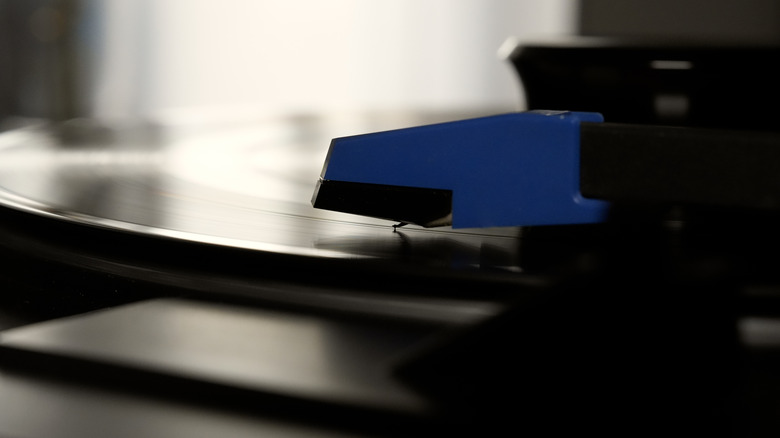
When you play a record, a needle rides inside the groove. The needle vibrates as it passes over the bumps in the groove. The record player uses magnets to turn these vibrations into electrical signals that feed through an amplifier and out to the speakers as music.
Although what's going on inside the grooves of a record is too small to see without a microscope, the science behind how they store music is fairly simple. They'll never be able to match digital music in terms of number of songs and portability, but vinyl records have a tangible quality that has led to growth in sales over the past two decades.