

Eight People Sealed Themselves Into An Artificial Ecosystem In 1991, Then Something Went Very Wrong
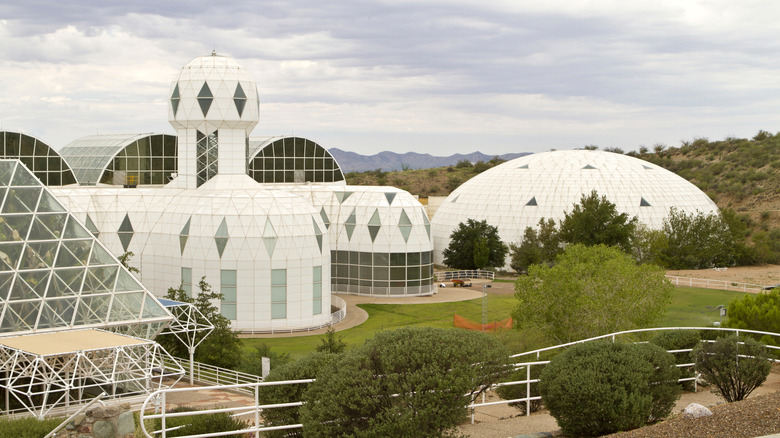
On September 26, 1991, four men and four women stepped into the airlock of an ambitious research facility in Arizona. For the next two years they would live and work inside a sealed artificial ecosystem called Biosphere 2. This facility contained representations of different biomes on Earth and was built to improve our understanding of Earth's systems. However, not long after closing the airlock hatch, things started going very wrong.
Biosphere 2 was intended to be self-sustaining, with water recycling equipment and plants to produce oxygen. But over the first 16 months of the experiment the concentration of oxygen inside Biosphere 2 dropped from the normal 21% we see at sea level to 14%, a level found at elevations of 11,000 feet. Over the same time, the levels of carbon dioxide inside the facility dropped lower than anticipated and pollinating insect populations plummeted. By January 1993 the project team had to add oxygen to compensate for low oxygen levels that were having the same effects on people as living at high altitude. Two years after passing through that airlock the researchers finally stepped outside again. While seen by some as a failure, Biosphere 2 has revealed a great deal about the inner workings of the natural world.
The dirt on dropping oxygen levels
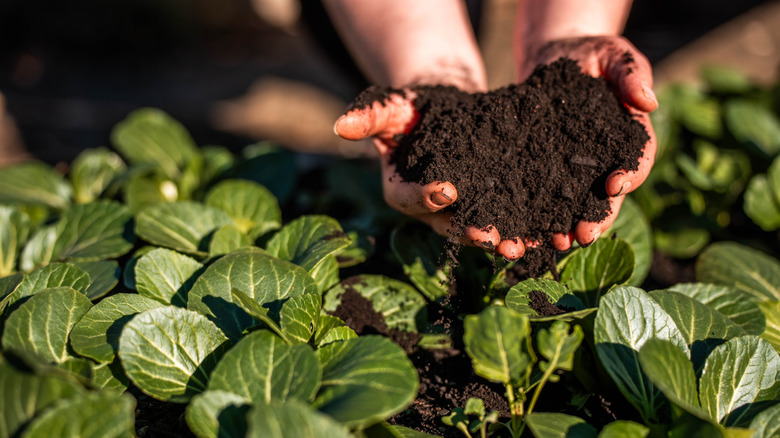
Biosphere 2 contains miniature versions of a desert, savanna, tropical rainforest, mangrove wetland, and an ocean with a living coral reef. The facility also featured agricultural land for residents to grow their own food during their two-year mission. With so much plant life, the drop in oxygen levels was a surprise to the project team. However, the reason behind it was simple. Researchers had amended soils inside Biosphere 2 with large amounts of organic matter to ensure healthy plant growth. While plants flourished in this soil, so did soil microbes that consumed large amounts of oxygen and produced carbon dioxide.
At the same time, the carbon dioxide levels inside Biosphere 2 also went out of balance. Instead of being absorbed by plants during photosynthesis, carbon dioxide reacted with compounds in the facility's concrete structure, forming calcium carbonate. Biosphere 2 residents tried planting fast-growing plants and creating a bed of algae to help release more oxygen, but they were not able to keep up with microbial consumption. Researchers also found that carbon dioxide levels varied widely over a 24-hour period. Plants would absorb carbon dioxide during the day, but levels would swing 600 parts per million upward after sunset.
Learning about complex interactions
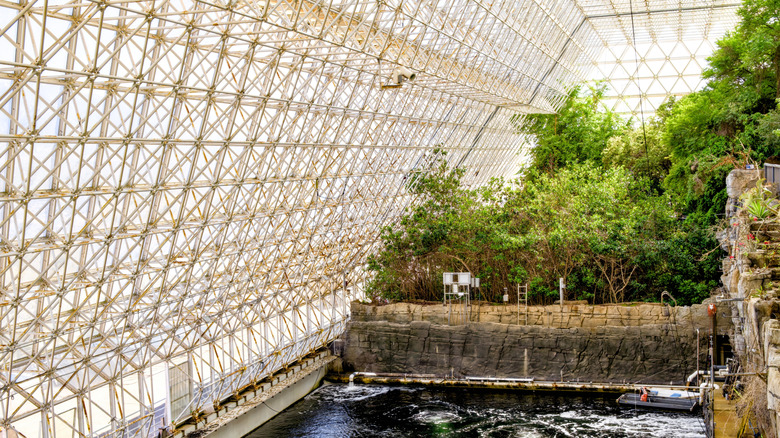
While the human residents of Biosphere 2 struggled with decreasing oxygen levels, other organisms inside the facility also faced troubles. Biosphere 2 was stocked with a variety of animals, including insects that pollinate flowers to help grow crops. But the pollinator population fell rapidly soon after the doors were sealed. Researchers suspect this was either due to a massive uptick in the number of predatory ants or because the glass walls of the facility blocked ultraviolet light that some pollinators need to find flowers. Additionally, trees inside Biosphere 2 became weak and more likely to break. This is likely because in natural environments, trees become stronger in response to mechanical forces from wind, which was lacking inside the facility.
While media coverage painted the two-year mission as a failure, it succeeded in revealing the complex interactions between different parts of the environment. The experiment also showed just how hard it would be to create a self-sustaining artificial environment like a space colony. This, by extension, also shows how important it is to protect the natural world.
Biosphere 2 is still in operation today. Researchers are running experiments such as how coral reefs might respond to warming oceans and the ways higher temperatures and changing rainfall will affect rainforests in the future. Biosphere 2 was built to help us understand the natural world, and the surprising events of 1991 did just that.