

Scientists Say This BMI Range May Explain Why You're Always Cold
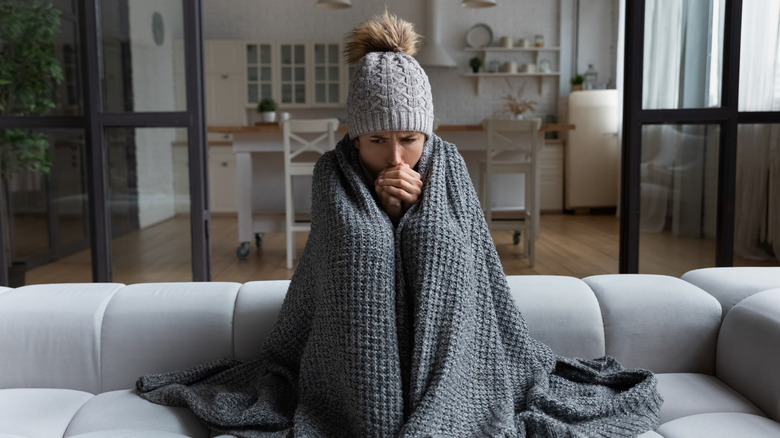
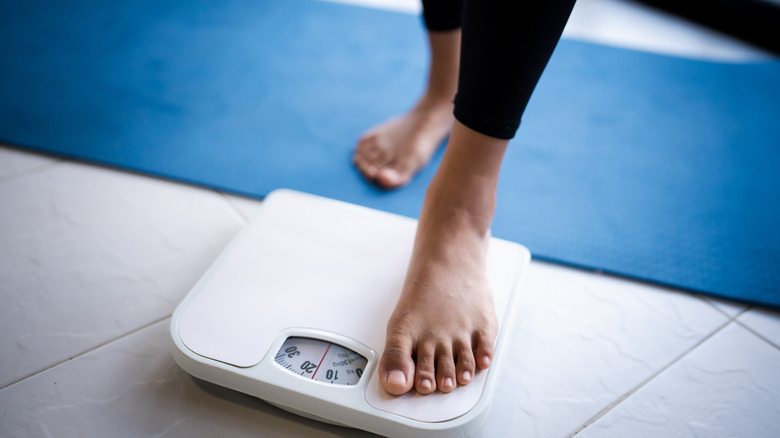
Body mass index (BMI) is a common (although sometimes controversial and incomplete) tool to measure a person's health. BMI and body weight are not the only indicators of your health, but they are affordable and widely-used tools that can be starting points. To figure out your BMI, you first need to determine your weight in kilograms, and then divide this number by the square of your height in meters. The resulting number (kg/m2) are further grouped into different ranges to help determine whether your own body weight is considered low, normal, or high for your height (alternatively, here's how to calculate BMI using pounds and inches). While the primary purpose of BMI is to help detect issues with body weight, this common screening tool may even indirectly explain a person's intolerance to cold. There are a number of reasons why you might have cold intolerance, but a low (underweight) BMI range could be one possible explanation to consider.
While the BMI index can be wide-ranging, there are five primary groups. These include less than 17 kg/m2 (moderately to severely underweight), less than 18.5 (underweight), 18.5 to 24.9 ("normal" weight), 25 to 29.9 (overweight), and above 30 (obesity). Higher BMI ranges have arguably garnered much more attention in recent years, but there's also possible dangers of low BMI to consider. Aside from being at an increased risk for illness and extreme fatigue, having a lower body mass can also lead to the development of cold intolerance. It's worth noting that not all individuals with low BMIs have cold intolerance, and vice-versa, but there is still a strong link between these two features that might be worth considering.
The connection between a low BMI and cold intolerance
Cold intolerance is a term that describes a heightened sensitivity to colder temperatures or environments that may be considered abnormal. In such cases, you might feel noticeably colder than others experiencing the same temperatures. These experiences may sometimes be attributed to low amount of body fat, which is a necessary component of the human body to help keep you insulated. With a below-normal BMI, it's possible to also have less body fat that might otherwise keep you warm. Additionally, some people with a lower BMI have reduced muscle mass. Since muscles can generate body heat when active, it makes sense that too little muscle can contribute to feeling cold. Adults also lose muscle faster after a certain age, which can further contribute to low BMI in some cases.
While technically anyone can have low fat mass, such cases are more common in older females. Still, low body fat mass and BMI can also go beyond age and gender. In some cases, malnutrition-induced low BMI can result in reduced body fat stores, and it can also interfere with your metabolism. Such health markers may also be seen in certain eating disorders, particularly anorexia nervosa. Malnourishment or restricted dieting can place your body into starvation mode, as it relies on fat and muscles for sources of energy. It's also possible to develop cold intolerance when your body doesn't obtain enough nutrients, such as vitamin B12.
Why cold intolerance risks may go beyond BMI measurement

Despite the connections between a low BMI and cold intolerance, this certainly doesn't mean that every person who falls within a below-normal BMI range gets cold easily. Part of this reason harkens back to a key limitation of BMI: It cannot measure exact fat mass or lean muscle mass. Some people may have a lower body weight for their height due to lower muscle mass, but they might still have more body fat that could otherwise keep them warm.
On the flipside, it's also possible to have cold intolerance despite having a "normal" or high BMI. This could again be attributed to differences in body fat and lean muscle mass. Yet there are also underlying medical conditions that are linked with feeling cold, too. Anemia is one such condition that can contribute to feelings of cold. Poor blood circulation – including instances related to Raynaud's phenomenon — can make you feel cold, especially in your hands and feet. An underactive thyroid gland (hypothyroidism) is yet another possible cause, as this condition slows down your metabolism and lowers your body temperature.
If you tend to run colder than others around you without any obvious explanation, consider talking with a healthcare professional. They can determine whether your cold intolerance is linked with low muscle or fat masses, and also run blood tests to determine other possible causes. Possibilities include a complete blood count (CBC), thyroid function tests, and a comprehensive metabolic panel (CMP). Specific nutritional deficiencies might also be measured via separate blood testing. Aside from BMI, a doctor can also gain some key insights on your overall health based on your personal and known family medical histories, nutrition, blood pressure readings, and overall lifestyle habits.