

Why Deadly Tornadoes Are So Rare In China
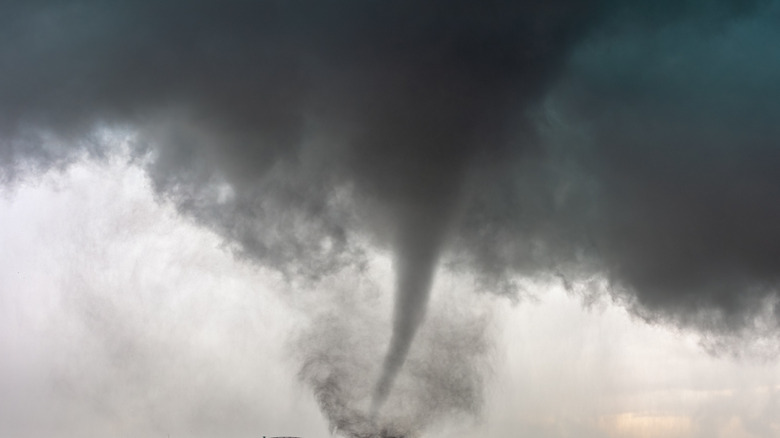
On July 6, two intense tornadoes swept through central China in the province of Hubei. Thus far, 11 people are known to have died, more than 330 people have been injured, and 4,855 houses have been damaged. In the city of Huanggang, one man who is currently in critical condition was torn from his apartment on the 12th floor while winds reportedly reached up to 93 miles per hour, although some articles have stated that wind speeds reached as high as 160 miles per hour. This has been declared the deadliest tornado in China since 2016. Although intense tornadoes are rare in China, particularly in the central region, extreme weather events have been on the rise as we bear witness to a rapidly changing climate. These events overcome the factors that generally prevent these tornadoes from occurring, such as the kinematic conditions, which are typically less favorable for tornado formation compared to regions like the United States.
Tornadoes are classified based on the wind speeds they produce and the amount of damage caused by that tornado according to the Enhanced Fujita (EF) scale, where the lowest intensity storm has an EF rating of zero, and the highest has a rating of five. The tornado that swept across Huanggang this week has been classified as EF2, which means that gusts of wind — lasting for at least 3 seconds — were between 111 and 135 miles per hour. For reference, China generally averages only 3.3 tornadoes at EF2 or higher annually.
Thermodynamics and kinematics: the perfect storm
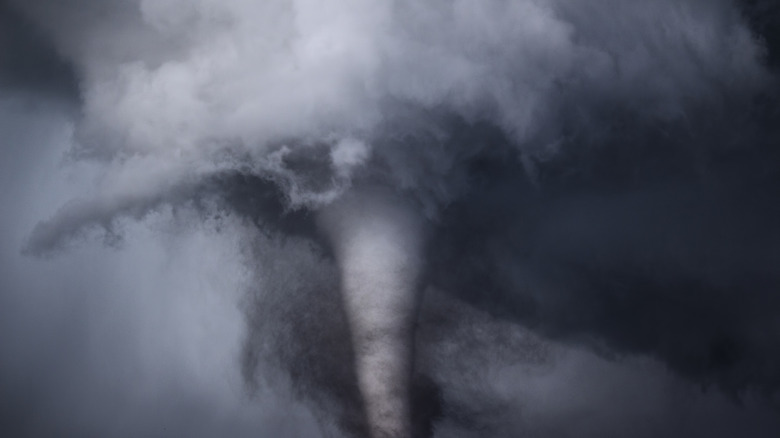
While there are some mysteries that underlie the exact cause of tornadoes, scientists have uncovered the basic ingredients. Tornadoes occur during thunderstorms, which are facilitated by the instability of warm, wet air rising to meet colder air above. This element of mixing temperatures is largely governed by the principles of thermodynamics. However, there is another ingredient that is present in shifting thunderstorms into tornado territory: wind shear.
When a change occurs in the speed and/or direction of wind based on its altitude, this generates what is known as wind shear. In milder rain conditions, the rising warm air (updraft) is cooled by the falling rain (downdraft). But high wind shear creates a tilt, such that the falling rain and rising warm air are shifted away from one another, and the downdraft not does effectively quell the updraft. Additionally, the wind shear can cause the updraft to rotate, allowing a supercell to develop: the basis of a tornado. The changes in speed and direction of the wind are kinematic factors. Ideal conditions for tornadoes are an interplay of both kinematic and thermodynamic components.
There are many topographic and climatological similarities between the United States and China. For instance, both countries are within the same latitudinal zone and have mountainous terrain in their western areas, which can increase tornado probability as these mountains cause the air overhead to dry and cool as it moves eastward. However, the United States sees significantly more tornadoes than China.
The missing piece
The United States is hit by more tornadoes than any other nation, experiencing about 1,000 tornadoes each year. In contrast, there are roughly 108 annual tornadoes in China. Even with some topographical similarities and a shared existence on the same latitudinal plane, the United States sees nearly 10 times the amount of tornadoes as China. Studies are still being conducted to determine the exact underlying cause of such a stark contrast, but some extensive analyses have created a strong argument for the missing piece.
There are many thermodynamic consistencies between the two countries, as far as the ideal ingredients for a tornado. For instance, China generally has a convective available potential energy (CAPE) that ranges from moderate to high. This metric indicates the instability of the atmosphere and, thus, the potential severity of a thunderstorm. However, China seems to have less tornado-friendly kinematic conditions, particularly with lower wind shear and speed.
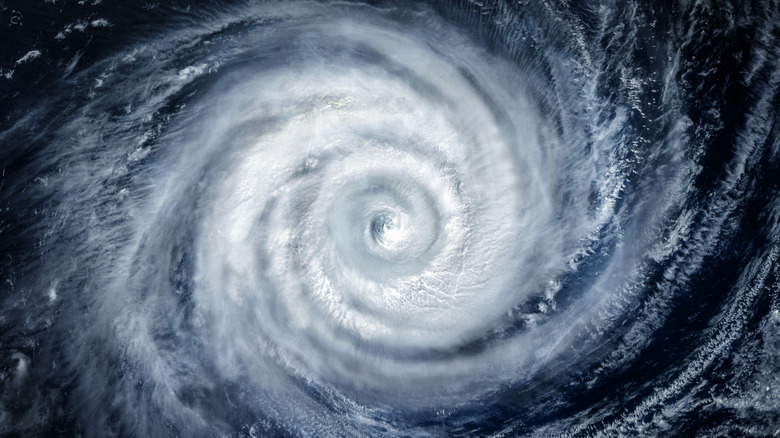
So, what circumstances led to the tornadoes that spread through Hubei this week? Typhoon Maysak swept over China, leading to devastating storms and floods. A typhoon is the regional term for a tropical cyclone, which occurs when strong, circular storms form over the ocean. Typhoon Maysak has brought strong winds, leading to the wind shear necessary to fulfill the generally left-out kinematic piece of the tornado puzzle. Experts suggest that climate change will only increase the frequency of such events. Unfortunately, Super Typhoon Bavi is also on course to hit China this week.