

The Common 'Phantom Phone' Phenomenon Is Easily Explained By Science
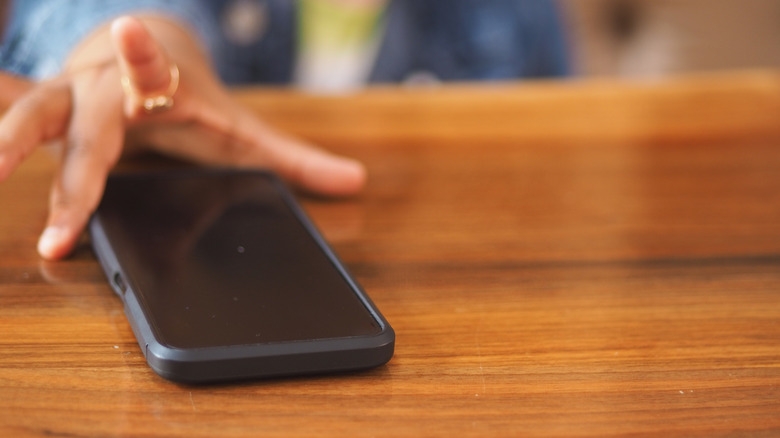
With smartphone usage more prevalent than ever before, there are of course many health and well-being concerns that go along with it. Not only is excessive phone use linked with physical ailments, such as vision problems, neck pain, and trigger thumb, but research has also noted a connection between too much smartphone time and an increased risk of anxiety and depression, as well as worsening memory due to increased screentime. Thanks to social media, phone usage has increased in older adults, too, with this unhealthy habit spreading among baby boomers, too. Another common, although less well-known side effect is "phantom vibration syndrome," which is a phenomenon that describes a person perceiving that their phone is vibrating or ringing when it is not.
Have you felt your phone in your pocket or heard a notification from across the room, only to find it didn't actually happen? Unless it's a repeated, frequent occurrence, you probably shrugged it off. It turns out that your experience may be classified as phantom vibration syndrome. Also sometimes called "phantom ringing syndrome," phantom vibration syndrome is not a medical condition. Like other types of syndromes, this phenomenon is technically classified based on specific signs and symptoms that point to an abnormality. At the same time, it's not a true syndrome — it is technically a hallucination. The exact causes and risk factors are unclear, but scientists believe such experiences stem from misinterpretations within a major part of the brain called the cerebral cortex, due to excessive stimuli exposure.
Prevalence of phantom vibration syndrome, and when to be concerned

While this phenomenon seems relatively modern alongside smartphones, the underlying hallucinations are not so novel. In fact, auditory and tactile hallucinations have been previously reported with other forms of technology, such as doorbells and pagers. What makes phantom vibration syndrome arguably more commonplace and frequent is modern-day humans' reliance on their smartphones. In some cases, smartphone use can also be addictive.
The exact causes of phantom vibration syndrome are not known, but the addictive and stress-provoking qualities associated with smartphones are what makes the situation especially concerning for researchers. Indeed, while some hallucinations could possibly be connected with certain mental health disorders or psychosis, excessive phone use remains a more likely indicator of phantom vibration syndrome. (That said, it's worth noting that previous research on medical students also suggests that phantom phone vibrations were separate entities of depression and anxiety.) Another possible – though less likely — cause points to skin sensor misperceptions. The precise prevalence rate is also wide-ranging, with BrainFacts reporting that anywhere between 27% and 89% of people experience phantom phone signals.
Constantly hearing or feeling your phone ring or vibrate in a single day can understandably cause anxiety itself, and it's certainly worth talking such experiences over with a medical or mental health professional. Since scientists are still working on understanding the exact causes of phantom vibration syndrome, there isn't a single treatment modality available. Addressing constant sensations of your phone going off will likely be addressed with therapies as well as phone use modifications and lifestyle changes. On the other hand, if you are among the many people who experience such phantom signals on an occasional basis only, chances are that it is not a serious issue.