

These Are The Two Organs Most Likely To Burst (And How It Happens)

Organ ruptures are arguably among the most frightening medical emergencies. Not only can these events cause significant pain, but they can also be life-threatening. Internal organs are susceptible to bursting when placed under internal or external force. Some of the most common organ ruptures occur within the abdominal area though, with the spleen and liver impacted most frequently. While there are different causes of splenic and hepatic ruptures to consider, blunt force trauma remains the number one cause.
Blunt force trauma around the abdominal area is the most common reason why the spleen and liver can rupture. Car accidents are the most common form of blunt force trauma, but these types of injuries are also sometimes caused by contact sports injuries. Other possibilities include puncture wounds, gunshots, or other violent events like fistfights. Blunt force trauma injuries are also frequently fatal in the abdominal area. What makes the situation even more dangerous is the fact that these types of internal injuries are often missed at first due to a lack of obvious signs. This underscores the importance of medical exams after car accidents and other types of traumatic injuries to help minimize the impacts of internal bleeding and other potentially fatal complications.
The spleen may burst due to trauma or from underlying conditions
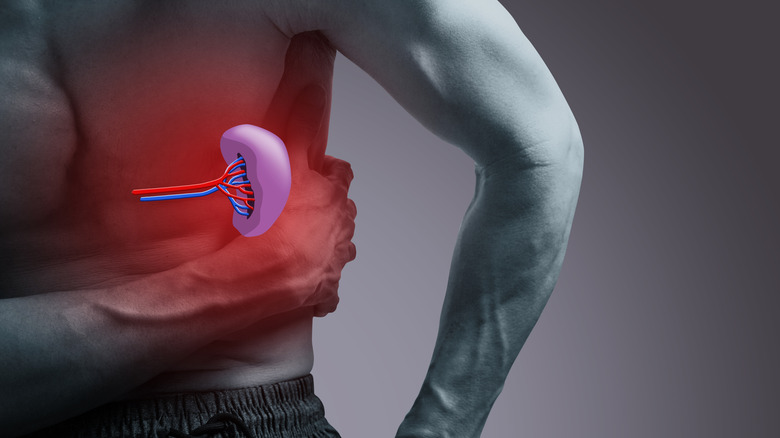
The spleen is a small organ located in the upper-left of the abdominal wall beneath your ribs, and it helps to store and filter blood cells. While considered one of the organs with a "useless" reputation because you can live without it, the spleen still serves as an important part of your immune system. Compared with other abdominal organs, the spleen is among the most vulnerable to rupturing. A splenic rupture quickly leads to internal bleeding, which can also be life-threatening when left untreated, sometimes within just hours of the event.
Depending on the underlying cause, the spleen may burst immediately after an injury. In fact, according to the Cleveland Clinic, blunt force trauma is the cause of between 50% and 75% of all splenic ruptures. The spleen may also rupture due to chronic swelling. Also called a spontaneous splenic rupture, this situation is considered rare, nevertheless, it is possible for certain blood cancers, chronic inflammatory conditions, and infections to contribute to a spontaneous splenic rupture. A small subset of about 7% of spontaneous splenic ruptures have unknown causes, per the National Library of Medicine.
Internal bleeding from a ruptured spleen can lead to pain or tenderness around the left side of your abdomen, pale skin, dizziness, fainting, and other signs and symptoms attributed to a significant decrease in blood pressure and loss of blood. In the case of a suspected burst spleen, a doctor will order emergency imaging tests for confirmation. Emergency medical care can involve embolization to stop the bleeding or surgical repair to the site of rupture. In severe cases though, complete removal of the spleen (splenectomy) may be necessary.
Why the liver may also be susceptible to rupturing
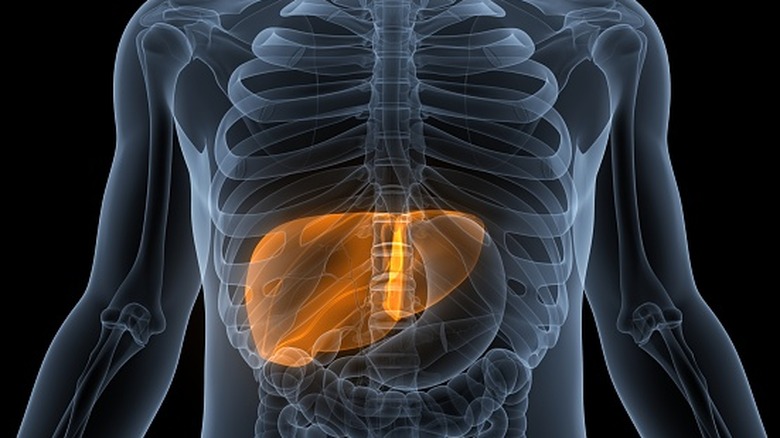
The liver is another vital organ in the abdominal area. This large football-shaped organ is located on the opposite side of the body from the spleen, wrapping around the right side under the ribs. The liver is also considered the most commonly affected organ stemming from traumatic injuries in the abdominal area. In severe cases, this can include a hepatic rupture. Though vulnerable to injuries, the liver also has the reputation of being able to miraculously regenerate itself.
Despite its different location and functions in the human body, the liver shares many similar circumstances with the spleen in terms of rupturing. First, the most common cause of a burst liver is blunt abdominal trauma, including car accidents and other serious injuries. Also like splenic rupture, a burst liver can sometimes be spontaneous, but still rare. In this case, pre-existing liver diseases, as well as HELLP (hemolysis, elevated liver enzymes, and a low platelet count) syndrome in pregnant women are thought to be linked with nontraumatic cases of liver rupture. It can also be caused by liver tumors, and certain infections like malaria. However, this type of liver rupture is not typical in otherwise healthy adults.
Abdominal distention and pain on the right side of the body are two common symptoms of a ruptured liver. Like a burst spleen, hepatic ruptures can also cause internal bleeding. Emergency imaging is critical in properly diagnosing this potentially life-threatening condition. When detected early, a ruptured liver may be treated with surgery or removal. However, while you can technically survive without a spleen, this is not the case with a liver. As such, any liver removal surgery is immediately followed with an organ transplant.