

Why Space Travel Can Make The Human Body Age Faster
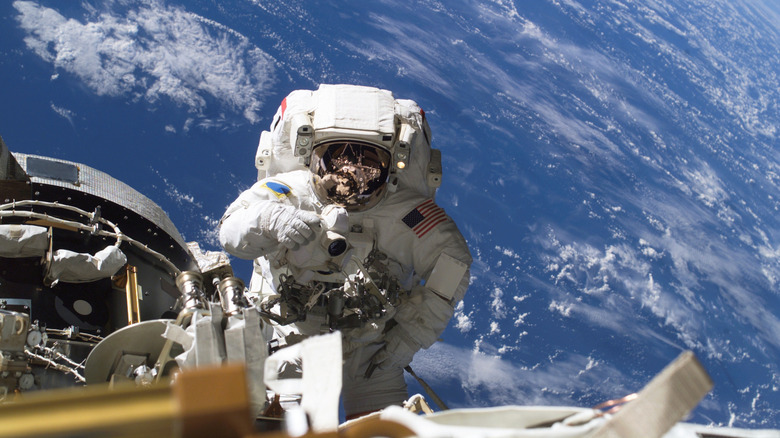
On July 9, 2026, Wally Funk, a leader in aviation and spaceflight and the oldest woman to fly into space, died at the age of 87. During her career, Funk set records and paved the way for women in aviation, including being part of a group of women who completed NASA's astronaut training program in the 1960s. Astronaut training prepares people for the intense demands of space flight; however, training can only do so much when space travel itself can make the human body age faster.
Even during the early days of the space program, scientists have observed unusual changes in the human body caused by space flight. Many of these changes are temporary and resolve after returning to terra firma, but in some cases space can permanently damage astronauts. Several of these changes resemble normal human aging, so scientists are using the unique environment of space to gain a better understanding of how the body reacts to its stressors. By doing so, they hope to prepare humans for long-term space flight, such as traveling to Mars, and bring benefits to ordinary people living on Earth.
Low gravity and high radiation
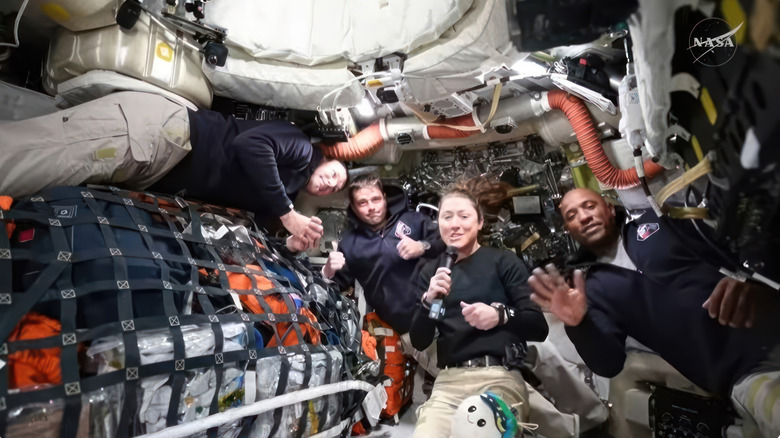
One of the problems astronauts face when they travel in space is loss of bone and muscle mass. In space, astronauts aren't subject to the normal forces of gravity, and microgravity affects astronauts' bones and muscles. Muscles don't have to work as hard, and bones don't experience the same mechanical load that they do on Earth. In fact, weight-bearing bones like those in the legs lose an average of 1% to 1.5% of mineral density per month. Upon returning to Earth, bone and muscle mass typically return to their previous states. To counteract these effects, astronauts follow strict aerobic and strength training exercise programs. Cardiovascular exercise is also important because being in microgravity can weaken hearts.
Another health risk that astronauts face when in space is a dramatically higher exposure to radiation than they would experience on the ground. Earth's atmosphere and magnetic field block a good deal of radiation like solar particles and cosmic rays from stars throughout the galaxy. Radiation can damage cells and lead to a variety of health problems depending on the strength and duration of the exposure. People on Earth who have been exposed to radiation are at higher risk of developing heart disease, cataracts, and some types of cancers. Radiation can also damage DNA, potentially causing long-term health problems.
Space as a laboratory
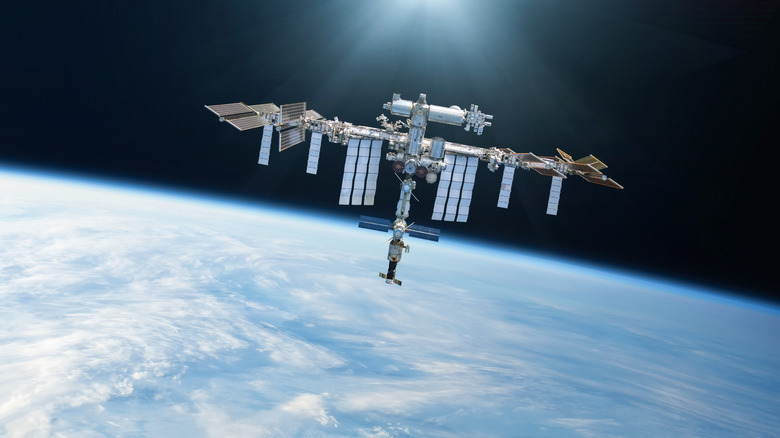
Having a better understanding of these bodily changes could help keep astronauts healthier on long-term space flight missions and shed light on aging processes on Earth. There are several similarities between muscle loss in space and age-related muscle loss on Earth, which about 10% of people over the age of 60 experience due to sarcopenia. Researchers at Stanford University sent samples of muscle tissue to the International Space Station to study changes caused by exposure to the space environment. They found that normal muscle tissue deteriorated, but samples treated with drugs such as insulin-like growth factor-1, which promotes regeneration of muscle, were less affected.
Another experiment focused on space-related changes to the body was NASA's Twins Study. In that experiment researchers analyzed changes in astronaut Scott Kelly while he spent months in space and compared them to his twin brother — and fellow astronaut — Mark Kelly who stayed on Earth. Scientists found that Scott's telomeres (segments of DNA at the end of chromosomes that prevent genes from being damaged) lengthened while in space but quickly shortened on Earth. Telomeres shorten with age, and rapid changes to telomere length are associated with health problems.
There is a need for more research into the ways space essentially ages the body. Knowing how radiation exposure, microgravity, and other aspects of space travel affect physiology will be beneficial as humanity sets its sights beyond Earth orbit. At the same time, learning more about these processes could also help people on Earth live healthier lives.