

The Reason Giant Sloths Went Extinct Is More Depressing Than You Thought
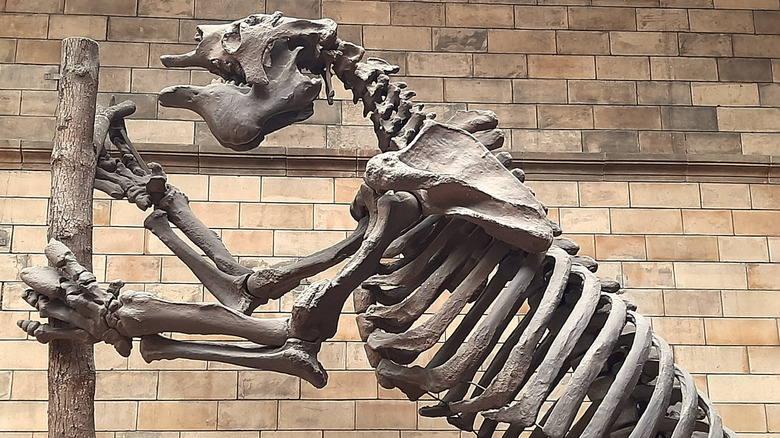
Giant sloths are among the most famous of the megafauna, living alongside wooly mammoths and saber-toothed cats. While a changing climate and habitat transformation would have played a part in their extinction, their disappearance coincides with one pretty significant development — the arrival of early humans.
Modern tree sloths have managed to cement themselves as a beloved member of the animal kingdom, their sleepy vibe and cute faces making them unexpected internet sensations. Their ancestors however, have a different reputation entirely, standing at up to 12 feet tall on their hind legs, and having more resemblance to an enormous grizzly bear than their cute modern counterparts.
Ground sloths are thought to have first appeared as far back as 35 million years ago, and modern tree sloths are relatives of these enormous creatures. There have been many theories as to exactly what caused the extinction of these megafauna toward the end of the last ice age, but researchers now believe that climate was only one factor in their eventual demise.
Their large size benefited ground sloths for millions of years
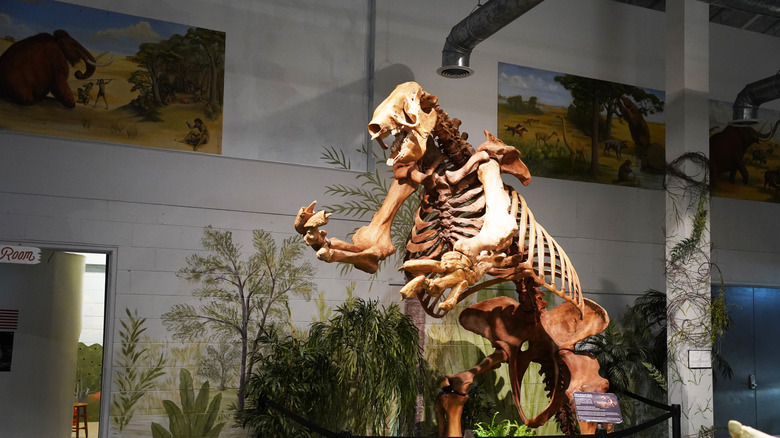
Prehistoric ground sloths came in a variety of shapes and sizes, from the enormous upright Megatherium that weighed in at a massive 4 tons, to the comparatively small Shasta ground sloth, walking on all fours and weighing only 400 pounds, a mere 5% of the terrifying Megatherium. Sloths that chose to live in trees were significantly smaller, weighing a fraction of the ground sloths, at an average of 14 pounds. As animals that live high in the canopy, their growth was limited, with tree branches unable to cope with the weight of their huge relatives.
Their larger size may have given the ground sloths evolutionary advantages, allowing them to reach food high up in trees, and helping them to keep warm in cold conditions. The changing climate as the ice age ended nearly 12,000 years ago has always been assumed to be the major cause of the disappearance of megafauna, including the giant sloth, but recent research suggests otherwise.
Humans may have played a significant part in the giant sloth's demise

A 2025 study published in Science found that although giant sloths in North America became extinct around the same time as the ice age ended, some sloths living on the Caribbean West Indies islands survived until fewer than 5,000 years ago. This is compelling evidence that the changing climate was not the main factor in the demise of the North American sloths, especially when early man had just appeared on the continent at that time.
The authors of the Science study examined both sloth fossils and early human tools using carbon dating, and found that the invention of spears and other weapons overlapped conveniently with the extinction of the ground sloths. Consistently, when humans appeared in a certain spot on the globe, the giant sloths disappeared soon after. Their enormous size was now their Achilles' heel, rather than the protection it had previously been, as early Homo sapiens hunted the huge beasts for food and fur.
This latest research strongly suggests that humans played a significant role in the demise of the giant sloth, just as they did with the extinction of the dodo in the 17th century. The unassuming ground sloths were taken by surprise by early Homo sapiens and their tools, and as the humans fed their families and built shelters, the enormous megafauna paid the ultimate price.