

The Reason Aluminum Foil Only Has One Shiny Side
We may receive a commission on purchases made from links.
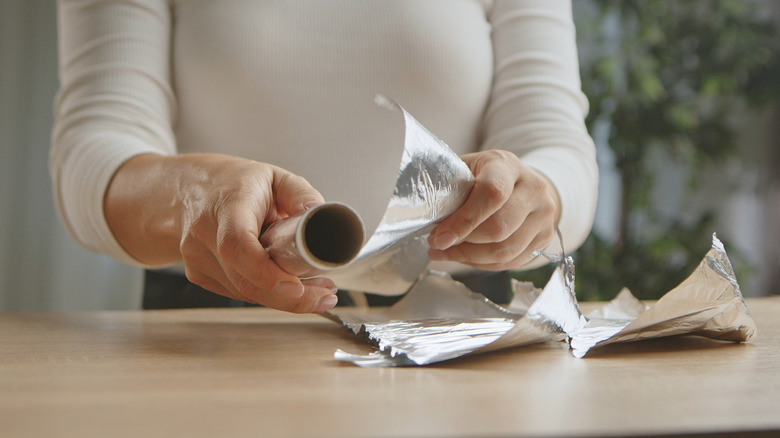
Aluminum foil is undoubtedly a common staple to have on hand in kitchens. Aside from its uses in cooking, the product is also sometimes used for other purposes such as cleaning and protecting certain outdoor items from extreme weather. There's even logical reasons why people wrap their car keys in aluminum foil. Whatever your own needs for aluminum foil, you've likely noticed the dual-sided nature of the product each time you tear off a sheet from the roll. The shiny side of aluminum foil has nothing to do with aesthetics or food safety, though: It has everything to do with the manufacturing process.
True to its name, aluminum foil is manufactured from alloyed aluminum that's broken down into thin sheets for easy consumer use. It is a widely abundant element that's directly extracted from the earth's crust. Scientists have long experimented with heating and bending aluminum to create a variety of products, including foil. Since its introduction on the market in 1913, aluminum foil was gradually included into numerous types of commercial candy and gum products. According to the Reference Module in Food Science, aluminum foil later appeared in homes in the 1920s and has become a cooking staple ever since.
Due to its widespread use in prepping, cooking, and storing foods, there's also been misinformation over the decades that foods should only touch one side of the foil or the other. Another common misconception is that the shiny side might retain more heat, and should then be faced towards a certain direction to ensure that foods cook properly. Yet it generally doesn't matter which side of the sheet faces outward or touches the food, and you should be aware of some of the real dangers of aluminum foil instead.
Why aluminum foil is produced with only one shiny side
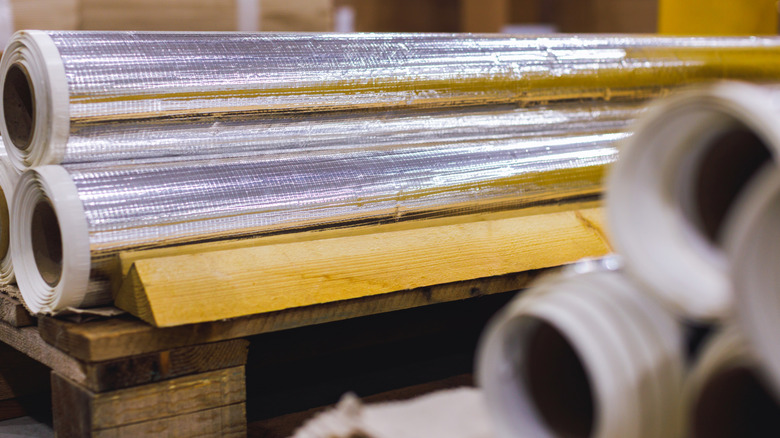
Now that you know that the shiny side of aluminum foil doesn't make much of a difference, you might rightly ask yourself why one side is shinier to begin with. Contrary to popular belief, these products are not intentionally designed with one shinier side for any food purposes whatsoever. It just so happens that the manufacturing process naturally creates a two different looking sides to a sheet of aluminum foil, in which one side is shiny and the other has a matte finish.
The process of creating aluminum foil begins with large metal slabs. These are then placed in a milling machine that rolls the aluminum down to a thin foil that's usable for commercial purposes. Needless to say, the aluminum must be worked several times through the rolling machines in order to get to the necessary thickness. It's the exposure to the rollers that directly gives foil its shiny appearance and smoother texture. You might then wonder why only one side is dull. It just so happens that manufacturers use two sheets in one through a technique called double-rolling to help the product maintain its integrity. The duller looking side never comes into contact with the rollers.
The next time you find yourself questioning over which side of foil should touch foods, you now know that there isn't a real difference between the shiny and dull sides of a sheet of aluminum foil. The only exception to this rule is the use of non-stick foil – in these cases, the dull side is usually the one equipped with non-stick features. If you're uncertain about which type of foil you're dealing with, simply refer to the product package, such as Reynold's Wrap Non-Stick Aluminum Foil.