

This Giant Prehistoric Lizard Is Pure Nightmare Fuel – And We're Glad It's Extinct
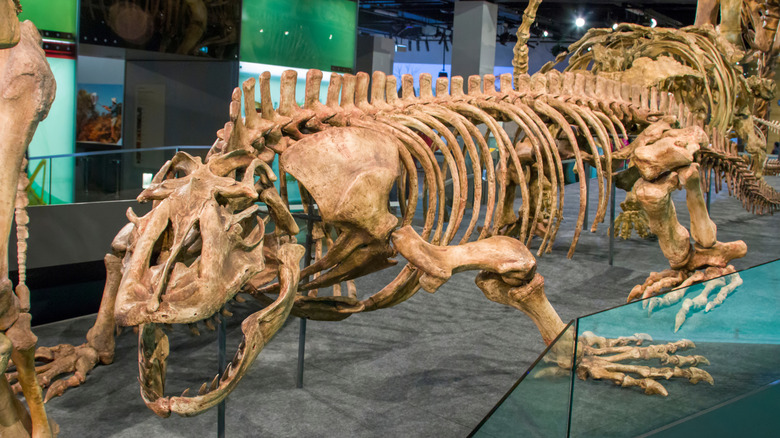
Tens of thousands of years ago the world was covered by giant animals known as megafauna, many of which are now extinct. These animals that used to be way bigger include mammoths, a giant armadillo-like mammal known as the glyptodon, and the largest-ever land-dwelling lizard, megalania. This giant reptile was likely a venomous ambush hunter that lived in forests and grasslands. And its size and appearance would have been the thing of nightmares for any ancient humans who may have encountered one.
Megalania is thought to have lived in parts of what is modern-day Australia between 500,000 and 40,000 years ago. Like other megafauna of the time, such as the large snakes and giant horned turtles that called Australia home, megalania is extinct. The giant lizard was first described in the 1850s, though no complete skeletons or intact skulls have been found. Researchers have reconstructed the megalania from fossils found throughout Australia, and a complete reconstructed skeleton can be found at the Museum of Victoria. Fossil evidence points to megalania being related to modern monitor lizards like the Komodo dragon of Indonesia.
A large and fearsome lizard
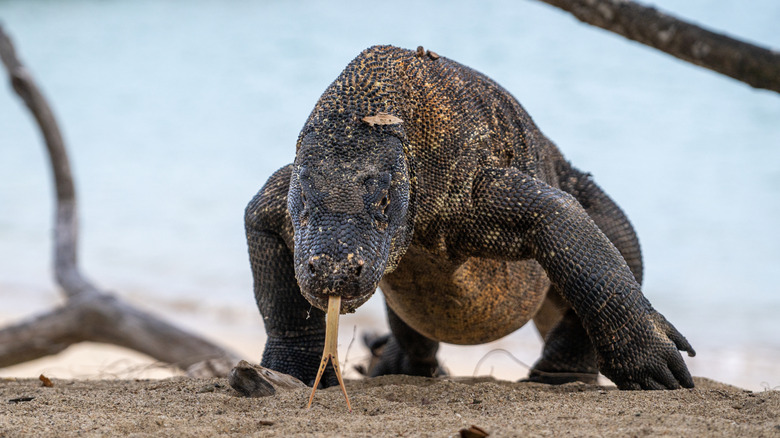
The Komodo dragon is a tough species, and anyone who has seen one can vouch for their unnerving appearance, but the megalania is a clear winner in the size department. Komodo dragons can grow to reach 10 feet in length and the largest specimens can weigh up to 350 pounds. Megalania, on the other hand, may have grown up to 23 feet long and weigh more than 4,000 pounds.
Megalania had a crest on its snout, sharp, curved teeth, and small bones embedded in the skin around its face and neck. Additionally, like the Komodo dragon, megalania is thought to have had venomous saliva that helped it hunt. The saliva acted as an anticoagulant, and would have caused infection and death in its prey. If megalania was indeed venomous, it would be the largest known venomous vertebrate. The giant lizard is thought to have preyed upon birds, other reptiles, and large mammals like the now-extinct pygmy elephant that once roamed Australia.
While megalania is now extinct, it's thought that humans encountered them when they first arrived in Australia tens of thousands of years ago. In fact, despite megalania's massive size and venomous saliva, it's possible that human activity helped drive the giant lizard to extinction.
Did humans drive megalania to extinction?
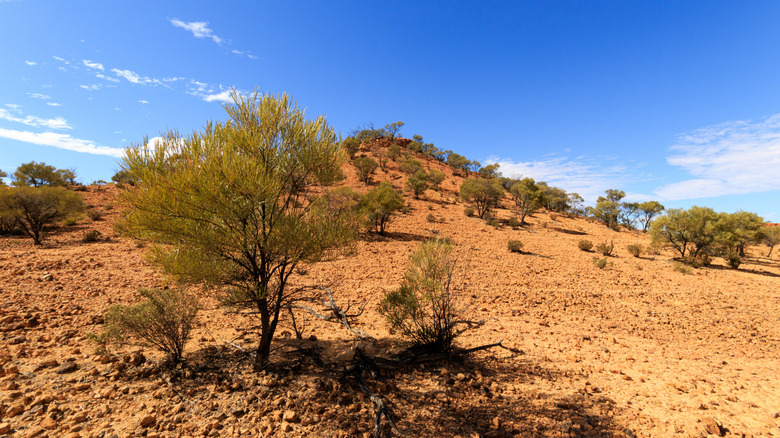
While modern day human activities threaten many species, humanity has been a driving force behind extinctions of plants and animals in the past. Many of the megafauna species that have gone extinct saw their populations start dropping like a rock as soon as humans moved into the proverbial neighborhood. Land cover changes and hunting are two human-related pressures that can be blamed for megafuana extinctions. However, while humans have been blamed for megalania's fate, it's only within the last 10 years or so that it became clear that the two species lived in Australia at the same time.
A 2015 study in the journal Quaternary Science Reviews looked at fossils in the central eastern part of the Australian state of Queensland. Humans are thought to have first arrived in Australia around 50,000 years ago. The researchers used radiometric dating methods to get an accurate age for megalania fossils and surrounding materials. Their analysis found that the fossils were at least 30,000 years younger than the youngest reliably dated fossils at the time. This meant that humans and megalania both lived in Australia at the same time. Thus humanity may have helped drive megalania to extinction. However, given the nightmarish qualities of the giant lizard, that might have been a blessing in disguise for modern humans.