

Scientists Didn't Expect This Parasitic Plant To Steal DNA From Its Hosts
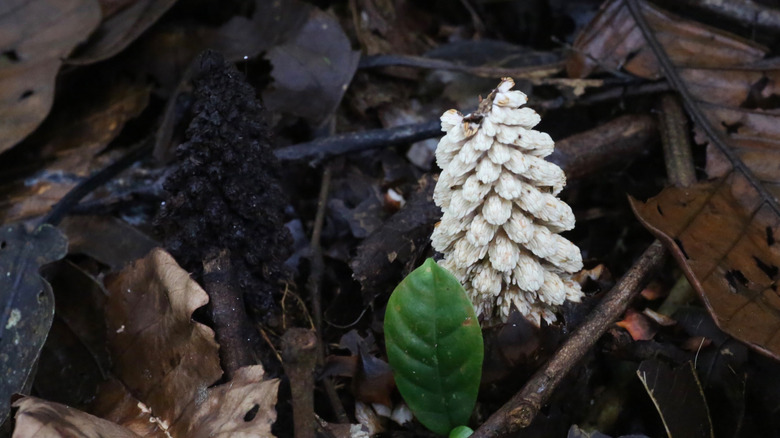
In the jungles of South America lives a plant that breaks nature's rules. Instead of using photosynthesis to create energy, it attaches to a host plant and leaches nutrients from it. While we've seen parasitism in plants before, including some that smell like rotting flesh, plants in the genus Lophophytum do something scientists never considered a plant could do: steal their host's DNA and use it as their own.
To be clear, we've known about Lophophytums for a while; the genus was officially named back in 1832. And we've also known that some species use a process called horizontal gene transfer to pull genetic material from other species — it just ends up getting trashed. What we didn't know, however, was that it was possible for plant to replace its genes with ones taken from another. A study published in Proceedings of the Royal Society B found that L. mirabile and L. pyramidale species could take mitochondrial DNA from a host plant, add it to their genomes, then turn that trait on. Another study found that L. mirabile siphoned so much genetic material that a majority of its mitochondria was from its host and had become critical for the parasitic plant's cellular respiration.
Once the genes were transferred, the researchers found that swapped DNA wouldn't even need to connect with the host plant to work anymore, either. It's like a right-handed person having a blood transfusion from a left-handed person and suddenly they're left-handed, too.
How could a plant siphon another plant's DNA?

What makes this so weird is that Lophophytum was breaking the rules of genetics, like some flora-based "Island of Doctor Moreau." While optimizing genetics with favorable traits has kind of been the point ofevolution, as far as we knew genes would typically stay in their respective species; taking genes from a dog that give them such a sensitive sense of smell and adding them to a human didn't mean that person became a super smeller. So what made plants in this genus able to use what was assumed to be incompatible genetic material and why would it do that?
It seems there's a three-part system to it. The first is selecting chimeric genes, or genes that looked native to Lophophytum on the front-end, so to speak, but were host material on the back-end. Lophophytum would then "see" the native material and begin reading that code, assuming — and we're using that liberally — the rest of the gene was native, too.
Part two is that Lophophytum's mitochondria seemed to be particularly flexible, allowing it to cope with that unknown backend and adapt. And that worked well with the third part, which was that it also acted like a filter and answers the "why." Lophophytum's machinery would filter out incompatible pieces and keep ones that fit, giving it all of the benefits without needing the host to run those favorable traits on its behalf.
The host plant benefits from the relationship, too.
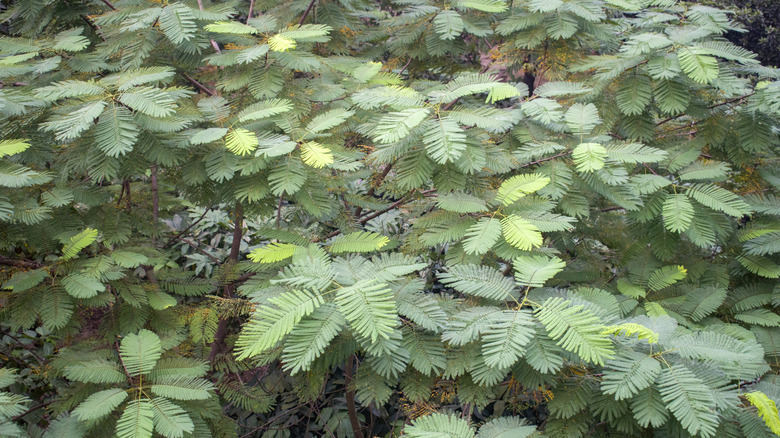
But what about the host plant, did having its DNA siphoned off weaken it? In the study, the researchers focused on one specific host plant for L. mirabile, Anadenanthera colubrina. L. mirabile attaches to the host's roots via small point on its tuber called a "woodrose." Once the parasitic plant attaches, the root it's connected to stops growing and its cells begin to mix with the parasite.
From there, the host plant's tissues begin to get replaced with tissues that mimic the original ones, but are designed specifically for cellular respiration. This is when the DNA swap begins to happen and it continues throughout the life cycle of L. mirabile. As A. colubrina enters its reproductive cycle, its seeds end up germinating on the parasites flowers, to the point that its seeds now require scarification before developing, and a decaying Lophophytum delivers the perfect environment to break the seed coat. Consequently, the seedlings sprout in full contact of the parasite, and the relationship continues. The parasite needs its host to live and the host has developed a need for its parasite, too.