

Scientists Say There May Be A Link Between High BMI And Extreme Weather
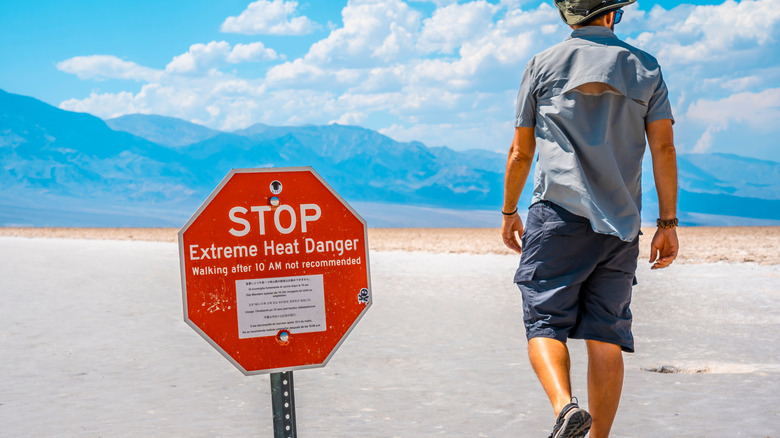
As climate change affects biodiversity and fuels extreme weather events across the globe, humans are undoubtedly experiencing an increase in extreme temperatures, flooding, wildfires, and other consequences. Yet there's also a growing concern over the way such events can impact human health. Extreme temperatures — both hot and cold — can be deadly, and these numbers are expected to climb as heat waves and brutal winters become more frequent. Scientists are also looking at other ways these types of extreme weather events might impact human health, including body mass index (BMI). While there are different factors being considered, current research suggests that extreme temperatures might influence a high BMI due to decreased physical activity.
Your individual BMI falls within four main ranges: underweight, normal weight, overweight, and obesity. A "high" BMI refers to both overweight (BMI of 25 to 29.9) and obese (30 or more) ranges. While a BMI calculation undoubtedly has limitations in differentiating between body fat and high muscle mass contributing to a higher BMI, this common screening tool may nevertheless be implemented as a starting point for determining whether a person's weight may be healthy for their height. Aside from eating a healthy diet, physical activity is also essential to maintaining a healthy BMI, and it can help preserve muscle and bone. While the general recommendation is to exercise at a moderate intensity for at least 150 minutes per week, the American Heart Association says that only 1 in 5 teens and adults achieve this amount. Researchers are also beginning to understand how BMI changes are additional ways the weather may affect us and our exercise habits, too.
The possible link between high BMI and extreme temperatures

Extreme heat can certainly make getting enough exercise challenging, especially when your body is trying to cope with a heat wave. To this end, researchers have studied whether extreme temperatures might have a correlation with higher BMIs due to extended sedentary days. One such study published in 2025 in Economics & Human Biology found a connection between hot temperatures exceeding 30 degrees Celsius (86 degrees Fahrenheit) and an increased risk of obesity. Based on survey data in Australia, the authors concluded that being subjected to such temperatures was directly associated with a BMI increase of 0.02 percent per day. This was due in part to a decrease in physical activity on hot days, as well as cravings for high-calorie foods and drinks for cooling purposes.
While both men and women were at risk, researchers also noted that older adults were especially prone to such effects. Such behavioral changes that occur in response to extremely hot weather were also noted in an analysis published in Global Food Security in 2021. Here, researchers focused on the relationship between climate change and obesity in developing countries and found that such impacts particularly affected women and children.
It's not just extreme heat that might be connected with high BMIs, though. As another study published in 2025 in the Journal of Environmental Economics and Management reported, adults may be less likely to try to lose weight via diet and exercise when average temperatures drop below 68 to 77 degrees Fahrenheit. However, the authors did not find strong evidence of a direct link between behavioral modifications and temperature changes overall. Another disadvantage with extreme cold is that humans tend to burn fewer calories overall.
Is it possible to stay active during extreme temperatures?

While there may be a link between high BMI and extreme temperatures, the current research suggests the associations may be much more complex than physical activity and other behaviors alone. Yet it's also understandable that a heat wave or cold wave may be more likely to keep people indoors as they try to stay safe during abnormally high or low temperatures. The inability to engage in outdoor activities can mean you may not burn as many calories compared with days when outdoor temperatures are safer. In fact, more recent research from 2026 in the Journal of Public Economics confirmed that adults are less physically active on both exceptionally cold and hot days. These findings were based on wearable fitness trackers that measured less physical activity during extreme temperatures.
Since climate change is a persistent issue impacting human health, the next challenge arguably involves helping humans adapt to extreme temperatures so they can stay safe while maintaining active lifestyles. It's always best to talk with a healthcare professional about ways to start exercising or for tips on how to keep active all year round. For example, the American Heart Association recommends heading outdoors early in the morning on hot days, and to give yourself a week or two to adapt to warming temperatures. Lightweight, loose-fitting clothes are ideal for warm temperatures, while wearing several layers is best in the cold. No matter what the temperature, you shouldn't head outdoors without a bottle of water to keep yourself hydrated. Finally, if local public health officials recommend staying indoors on certain days, it's best to follow their advice and try to move around as much as possible.