

The Concerning Data Center Side Effect That Might Affect Millions

There are over 12,000 data centers across the globe today. As artificial intelligence (AI) demand intensifies, more data centers are projected to be built, and the demand for data centers is expected to increase three times its current amount by 2030. The United States leads the world in data center locations, with over 4,600 around the country. But emerging research has revealed very concerning trends that could affect more than 340 million people. Data centers raise surface temperatures an average of 3.6 degrees Fahrenheit and as much as 16.2 degrees Fahrenheit. With global warming already driving an increase in natural disasters, these findings are deeply troubling.
Recently, Andrea Marinoni and colleagues released a preprint (not yet peer-reviewed) study on arXiv. Their findings have garnered international interest and driven home the real-world effects resulting from AI. Marinoni and her team analyzed 20 years' worth of land surface temperature data from 2004 to 2024 in areas where AI hyperscalers — large data centers that have at least 5,000 servers — have been built. They analyzed what these temperatures looked like before and after the data centers were introduced, and found a stark increase. This phenomenon has been termed the "data heat island effect" and has concerning implications for data center locations and surrounding areas. The researchers found that land surface temperatures rise as far as 10 kilometers (6.2 miles) away from the data center.
The new heat island
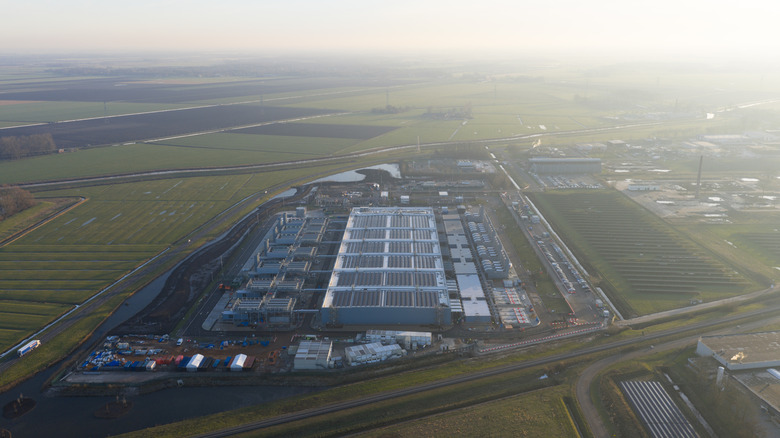
A similar pattern has previously been identified in densely populated areas and is called the "urban heat island effect." A combination of many factors causes urban areas to have higher temperatures than nearby rural regions, including building materials, construction, and energy consumption in cities. New York City becomes hotter than nearby spaces by 7 degrees Fahrenheit during the summer months.
Given that urban areas are known to introduce additional factors that contribute to surface temperature increases, Marinoni and colleagues specifically looked at data centers outside of cities. Nonetheless, they found a stark rise in temperatures and emphasized that this trend could be detrimental for well-being, healthcare, and energy systems in these areas. Most data centers so far have been built in urban areas. According to an article from the Pew Research Center published in April 2026, 87% of data centers in the United States are found in cities. But that pattern is expected to dramatically change, with 67% of planned data centers set to undergo construction in rural parts of the country.
As mentioned above, the data heat island effect was recorded to reach 6.2 miles beyond the actual data center. Currently, 38% of people in the United States are located 5 miles or less from a data center. If the data centers that have been planned are completed, that number will increase to 42%. According to Marinoni's research, 343 million people worldwide will experience an increase in temperatures due to a data center.
We kind of did start the fire

An AI data center contains advanced computer capabilities and data storage. These computers process AI requests such as questions people ask in ChatGPT or Claude. Such complicated tasks require substantial electric power that generates a lot of heat, which then requires advanced cooling systems that use millions of gallons of water each year. The electricity demands of AI are expected to increase by 165% before 2030. The high use of energy sources and complicated cooling systems releases a significant amount of heat, and the effects are tangible.
The rise in global temperatures has considerable effects on the planet. Rising sea levels, enormous wildfires, and the risk of endangering various species vital for biodiversity all accompany such shifts. Although we have witnessed these effects with climate change, Marinoni's study shows that AI data centers could exacerbate them. Moreover, higher temperatures increase the risk of many health issues, such as heatstroke, and pose risks to people with cardiovascular and respiratory conditions. Importantly, heat stress is the primary cause of deaths connected with weather. As we witness the effects of climate change, it is important to consider measures to reduce its progression as opposed to worsening it.