

Scientists Finally Solved The Mystery Behind Why Your Molecules Are Right- Or Left-Handed
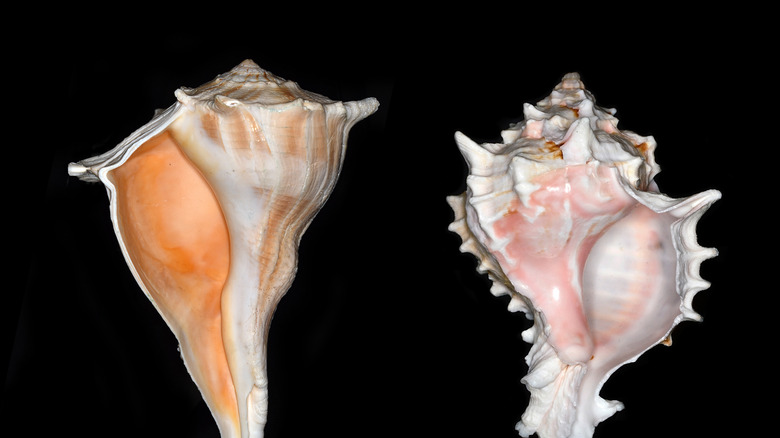
At first glance it might seem strange to refer to a molecule as being either left-handed or right-handed. In humans one hand is dominant, with 90% of people being right-handed. However, handedness in molecules refers to the arrangement of atoms in something called chiral molecules. A chiral molecule is one that is not identical to its flipped mirror image, kind of like a glove. However, while having the same atoms and same bonds, chiral molecules often behave differently. This means that left-handed molecules are dominant in some cases while right-handed ones are dominant in others. Now scientists have figured out why molecules are either right-handed or left-handed: magnets.
The distinction between left-handed and right-handed symmetry in molecules has to do with they way they interact with linearly polarized light. Molecules that turn light to the left are left-handed, or have L symmetry. Those that turn light to the right have D symmetry, or are right-handed.
Biology is full of examples of chiral molecules, also known as enantiomers. Despite being chemically identical, enantiomers often have different properties. One example is a molecule known as carvone. The right-handed enantiomer of carvone smells like spearmint while its left-handed version smells like caraway. Handedness can also effect how efficient a molecule is at a given task. This is why amino acids are almost all left-handed while sugars are right-handed.
You spin me right round

These differences in behavior between left and right enantiomers explains why different symmetries have become dominant in biology. But why do chemically identical molecules behave so differently? With the same atoms and bonds one might expect left and right enantiomers to behave the same way. To understand the reasons for this scientists have looked beyond molecular structures to the electrons within the atoms making up the molecule.
In a recent study, scientists looked into something called chirality-induced spin selectivity. The electrons that make up atoms have angular momentum, known as spin. Spin is a key concept in quantum mechanics and influences how particles interact. For instance, spin interacts with the nucleus of an atom as they orbit, something known as spin-orbit coupling. Spin and its effects are what influence the behavior of enantiomers. One spin direction tends to be more effective than the other, and this is especially notable in enantiomers that are in motion like transport molecules. To better understand why enantiomers work the way they do in biology, the researchers looked at the influence of magnetic rocks on ancient Earth.
Opposites attract
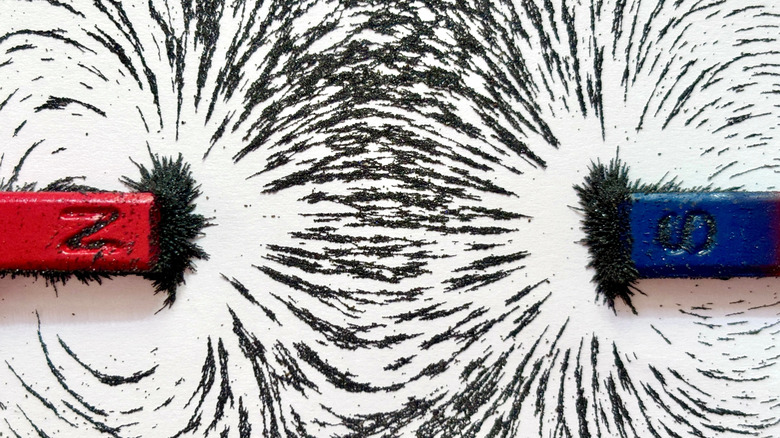
Before DNA and even RNA there was a compound called ribose aminooxazoline, or RAO. This probable precursor to RNA may have interacted with magnetic rocks on Earth's surface like magnetite. Scientists think that magnetic forces could have influenced how life favors one enantiomer over another. A north magnetic pole in a rock facing upward would grab on to one enantiomer while repelling the other, while a south magnetic pole would do the opposite. This is because an enantiomer's electrical charge and electron spin becomes polarized as it closes in on a magnetic surface.
The researchers used RAO to test this notion and found that magnetic fields affected the spin-orbit coupling in the molecules they tested. These kinds of influences by magnetic rocks, which were common on Earth's surface in the distant past, could be what led the first lifeforms on the planet to favor left-handed and right-handed enantiomers in different processes.
Chirality is an interesting property found in nature. Scientists have long known that left-handed and right-handed molecules have different properties despite being chemically identical. And now researchers are beginning to understand why they have these different properties and what this means in the field of biology.