

Scientists Found 2 New Ways To Break Down PFAS 'Forever Chemicals' In Water
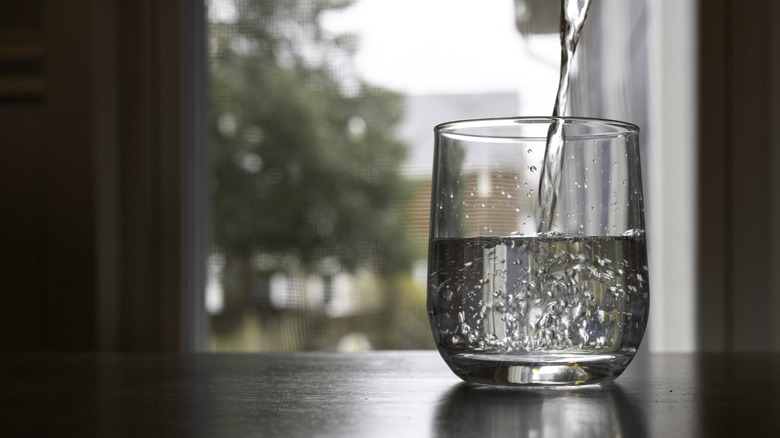
When they first hit the scene around the 1950s, per- and polyfluoroalkyl substances, more commonly known as PFAS, found use in a wide range of consumer products. PFAS are used to keep food from sticking to packages and make cookware nonstick. They are what make carpets, upholstery, and clothing stain-resistant. And these chemicals are even used to make firefighting foams more effective. The problem is that these so-called "forever chemicals" don't break down in the environment and some have been linked to health problems in humans and animals. But recently scientists developed two new methods for breaking down PFAS in water.
There are more than 10,000 chemicals in the PFAS family, some consisting of short chains of atoms and others made up of longer chains. The key feature in PFAS is their highly stable carbon-fluorine bonds. These strong bonds make PFAS stable, but also make them highly resistant to being broken down. PFAS enters rivers and oceans after passing through wastewater treatment plants unchanged. People are exposed to PFAS through water, food exposed to PFAS during packaging or cooking, and even air containing PFAS molecules. Because they don't break down, PFAS levels can build over time, accumulating in blood and tissues and potentially leading to health problems including an increased risk of cancer.
Breaking down PFAS with heat and plasma
The first method developed by researchers at Helmholtz-Zentrum Dresden-Rossendorf in Germany relies on a phenomenon known as hydrodynamic cavitation. The scientists pushed water contaminated with PFAS through a narrow passage at high speed. The sudden drop in pressure after leaving the passage causes cavitation, the formation of millions of microscopic vapor bubbles. PFAS molecules in the water attach to the surfaces of these bubbles and continue downstream where the water pressure quickly increases. This causes the tiny bubbles to rapidly collapse, which creates sudden and intense temperature increases at the site of collapse and leads to the generation of highly reactive hydroxyl radicals. These radicals and high heat break apart the carbon-fluorine bonds in PFAS.
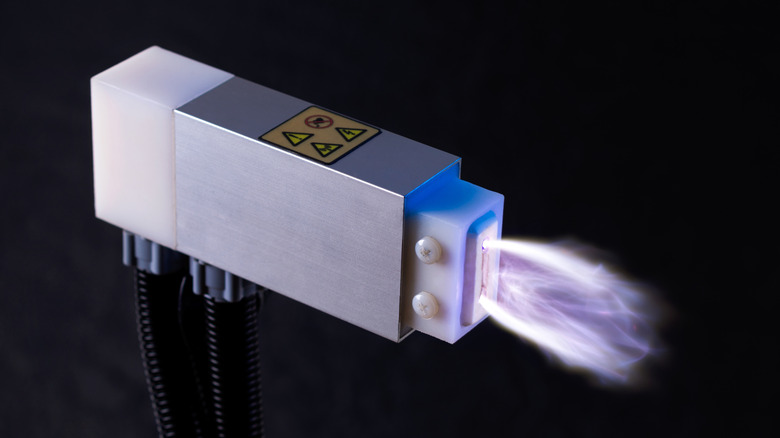
The second method for breaking down PFAS uses cold atmospheric plasma and gas dispersion. The treatment apparatus generates plasma with low temperature and reactive characteristics at the surface of the water. A collection of injectors at the bottom of the container pumps tiny gas bubbles upward through the water. As with the cavitation method, PFAS adhere to the surfaces of these bubbles. The bubbles, and adsorbed PFAS, then rise to the surface where the reactive plasma lies in wait, ripping apart the PFAS molecules.
Next steps to eliminate forever chemicals
Both of these methods proved effective at breaking down PFAS in contaminated water. The cavitation method eliminated around 37% of the PFAS in the test sample, while the plasma technique removed roughly 35%. Additionally, both methods worked without the need for chemical additives or expensive catalyst materials. The plasma method worked faster than cavitation, but required more energy to run and the reaction produced substances that need further investigation.
The researchers are working to refine their methods, with a target of more than 80% removal for the cavitation method. They also plan to examine the gases released during the plasma reaction to determine whether they could be harmful and find possible ways to avoid their production. The researchers are planning to scale up their methods to increase the reaction volume. Additionally, there is a possibility of combining both methods to further enhance their effectiveness. While a great deal of work remains, these studies show it is possible to break down PFAS in water, making these forever chemicals less permanent.