

The Eating Habit That Could Increase Your Early Death Risk

You cannot control every variable that might impact your lifespan, but diet is one lifestyle choice that is considered modifiable. So while you may not be able to change your genes, you can make better nutrition choices. Processed items rightfully deserve a spot in the list of items you should limit, as these are some of the unhealthiest foods for your heart. These aren't the only types of foods that ought to be eaten in moderation, though. Eating too much red meat is recognized by scientists as an eating habit that may increase the risk of early death.
First, it's important to know that "red meat" is an umbrella term that includes beef, pork, lamb, and goat. While red meat does contain essential nutrients, such as protein and iron, it is not a required food item if you're wanting to eat a healthy diet. Small, moderate amounts may be safe for many people, but researchers have found that large quantities of red meat are more harm than good.
What's more, a 2019 study in The BMJ found that adults who also increased their intake of other whole foods along with limiting red meat over an eight-year time period had a decreased risk of premature death over the following eight years. Notably, these food items included fish, skinless poultry, eggs, and plant foods. Furthermore, a systematic review published by the USDA in 2020 noted that eating lower levels of red meat, refined carbs, and high-fat dairy products was associated with a lower risk of death in adults who also ate the whole foods mentioned in the BMJ study. Previous research also confirmed that replacing red meat with healthier sources of protein may reduce premature mortality risk overall.
Eating too much red meat is associated with numerous health risks

There are a few reasons why red meat may contribute to disease and premature death. Not only is red meat high in saturated fat, but it might also contain potentially cancer-promoting heterocyclic amines and polycyclic aromatic hydrocarbons when cooked at high temperatures (such as during grilling and frying). It also contains a chemical called trimethylamine N-oxide, which may be associated with heart disease.
Red meat has in fact long been connected with an increased risk of chronic diseases, including heart disease, certain cancers, and type 2 diabetes. The colon is one of the organs most likely to develop cancer, and it just so happens that eating too much red meat increases your risk of colorectal cancer. On top of this, as one previous study published in 2012 in JAMA Internal Medicine found, red meat intake was also associated with an increased risk of total, or all-cause mortality. Here, researchers focused on prospective data collected between 1980 and 2008 and concluded that decreasing red meat intake could directly influence mortality. High red meat consumption is also considered a dietary risk factor for early onset cancer, per research published in BMJ Oncology in 2023.
Recommendations for moderate red meat consumption
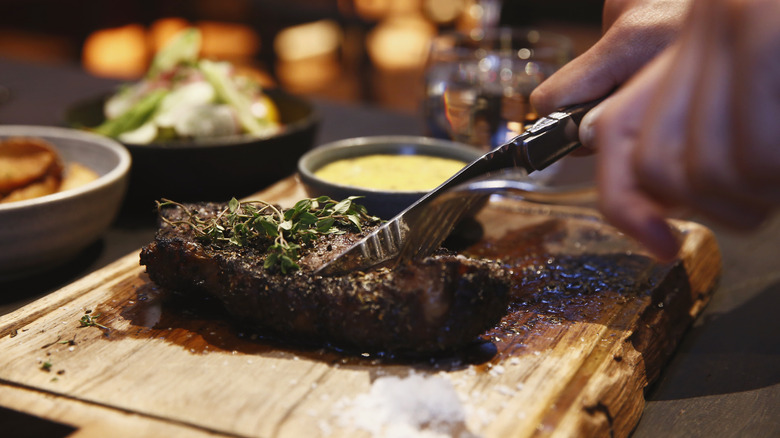
If you do want to eat red meat, there are some recommendations to help reduce your risk. As a starting point, try to limit your intake of red meat to 12 to 18 ounces total per week. Ideally, this should be divided into smaller servings over the course of the week. Choosing leaner cuts of red meat and cooking it at lower temperatures (such as through baking) can also help minimize long-term risks of chronic diseases that contribute to early mortality. As a bonus, eating less red meat may reduce demand, and hopefully decrease the effects of land clearing used for cattle and other livestock.
Concerns raised about red meat in the aforementioned studies might also seem at odds with the most recent Dietary Guidelines for Americans, 2025–2030 from the USDA. These now feature red meat as part of the top portion of the new food pyramid, alongside cheese, poultry, and vegetables. Yet research consistently points to eating too much red meat as being connected with the development of chronic diseases as well as increased mortality risk. Such findings are certainly worth discussing with a doctor or dietitian if you are among the more than 70% of people in the U.S. estimated to regularly eat red meat. Again, moderation appears to be the winning strategy here if you do eat red meat.