

The Baby Boomer Lifestyle Habit That Could Add Years To Your Life
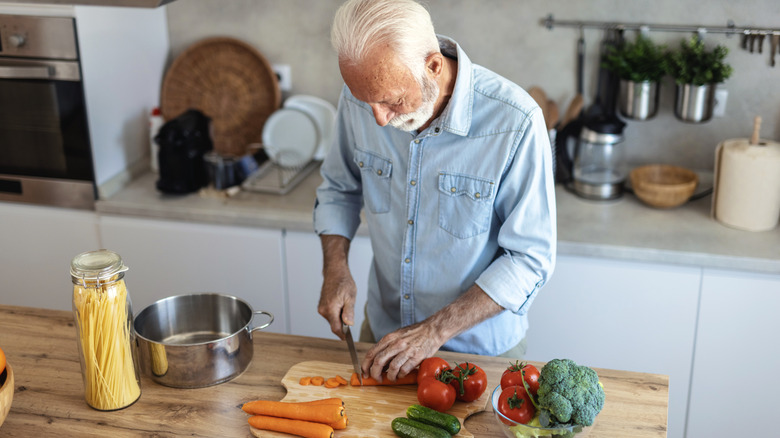
To the boomer generation, learning to cook was a skill that was picked up at an early age, and continued to be used regularly throughout their lives. In the days before microwaves and ready meals, at least one person in the household needed to be able to cook fresh food, and it was often a family affair, with everyone helping out to get dinner on the table. While the advantages of eating home cooked food are well known, the actual process of cooking the food, and learning to cook in the first place, can have significant health benefits.
It may not cross your mind as you multitask in the kitchen preparing a family meal, but there are so many little skills and processes — and even physical activity — that go into home cooking. It often starts days before, when you plan your meals for the week then head out to the grocery store, perhaps carrying bags of groceries home on public transport, or packing them into the car. Once you begin cooking, there is mental math to be done as you time the cooking of multiple ingredients, bending, whisking, and chopping to prepare the food, and problem solving when you realize you have split the sauce.
What seems like a simple daily task is actually working both your body and brain, compared to popping a ready meal in the microwave for four minutes. According to recent studies, these little differences can add up to several more years added on to your life if you are cooking on a regular basis.
Cooking is more than just making dinner
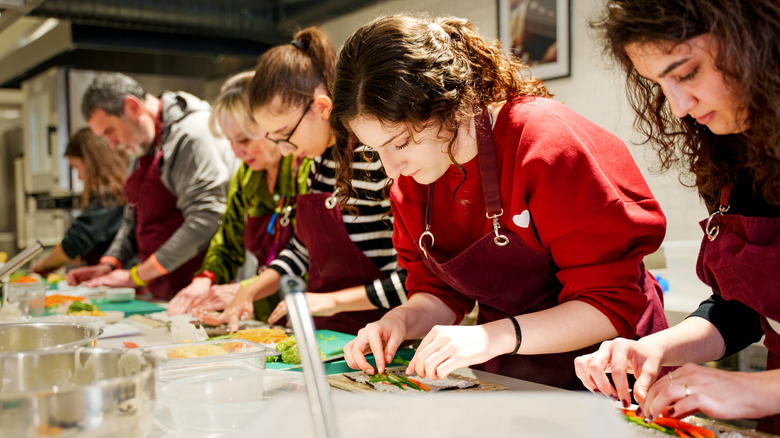
A study published in Public Health Nutrition that was conducted on 1,888 people over the age of 65 living in Taiwan, found a surprising connection between the frequency of home cooking and longevity. Of the participants, who were all over the age of 65 at the beginning of the study, those who cooked from scratch at least five days out of seven were 47% more likely to survive the 10-year period of the study. This was in comparison to those who never cooked.
Keeping the mind stimulated and mentally active is one of the key ways to prevent cognitive decline, according to Alzheimer's UK, and having cooking as a regular daily task can be a contribution toward maintaining brain health. The culture of cooking at home has changed dramatically in the last few decades, and convenience food and eating out have become much more common occurrences than for the Boomer generation. According to the USDA, Americans now spend more eating out than they do eating at home, which represents a huge shift in home cooked food compared to in the 1960s, when eating out was a treat saved for celebrations.
Controlling what you put in your food has significant benefits
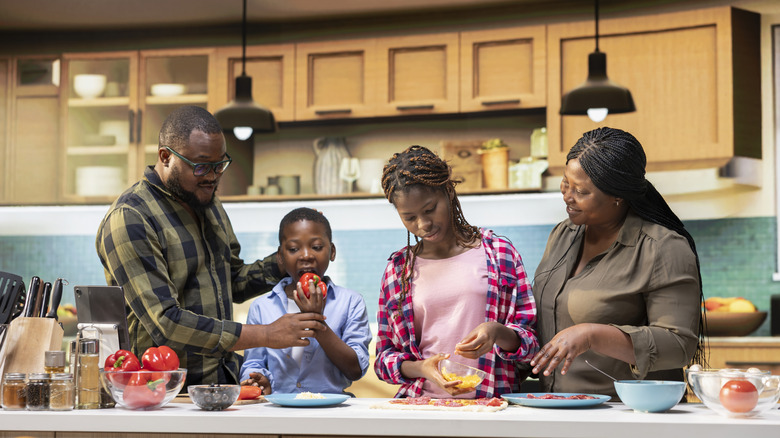
In addition to the benefits of physically cooking in the kitchen, there are some obvious health advantages from eating home cooked food too. One of the conclusions from the Public Health Nutrition study was that those who cooked their own food had a more sound understanding of nutrition than those who did no cooking. This means that they are capable of making better choices overall, even when eating out or choosing pre-prepared food.
One of the big nutritional advantages of cooking from scratch is deciding exactly what goes into your food. A simple pasta sauce, for example, can be made at home from just a few fresh ingredients, whereas a shelf stable store-bought version may have a long list of ingredients, including added sugar and salt. Without the need for preservatives, a freshly cooked meal can contain more nutrients and subsequently be better for health overall.
Although the studies done on the benefits of cooking at home involved adult participants, a 2015 study published in the Journal of Pediatrics showed a clear benefit to children from eating family meals. The results showed a correlation between those who ate home cooked meals at least once a week, and a reduction in the chances of being overweight or obese in later life. In the parts of the world labeled as Blue Zones – which are areas that people tend to live long, healthy lives and are more likely to reach the age of 100 — the family meal is a standard part of daily life. Moving away from our fast-paced way of living and back to a more balanced approach to meal times could be a crucial step in the science of living longer.