

The 'Self-Digestion' Phenomenon That Happens To The Human Body After Death
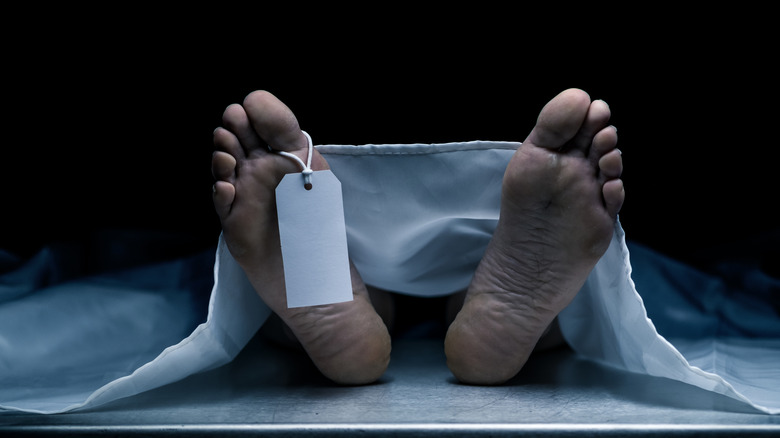
For those with a morbid fascination about death — and let's be honest, that's secretly most of us — finding out about the strange and creepy things that happen to the body post mortem can be oddly thrilling. To add to the list is another process that sounds like it belongs in a horror movie: Your body starts to digest itself shortly after you take your last breath.
While alive, the cells in your body are constantly going about their vital business, using oxygen to release energy from nutrients during cellular respiration, and keeping tight control of digestive enzymes, ensuring they stay where they should be. Their usual place of residence is inside lysosomes, where they break down things that our bodies don't need. After death, there is no blood flow to provide oxygen to cells, and cell membranes begin to lose their structural integrity, allowing the digestive enzymes to escape from the safety of the lysosomes and get to work on surrounding tissues. This process is known as autolysis, from the Greek for "self" (auto) and "splitting" (lysis), and it is essentially the body starting to "eat" itself from within.
This is not the same process as the body decaying due to bacteria, which is known as putrefaction, although the two processes can overlap. Instead, autolysis is the process of the components of your cells running amok after you've checked out.
Autolysis happens at different rates across the body
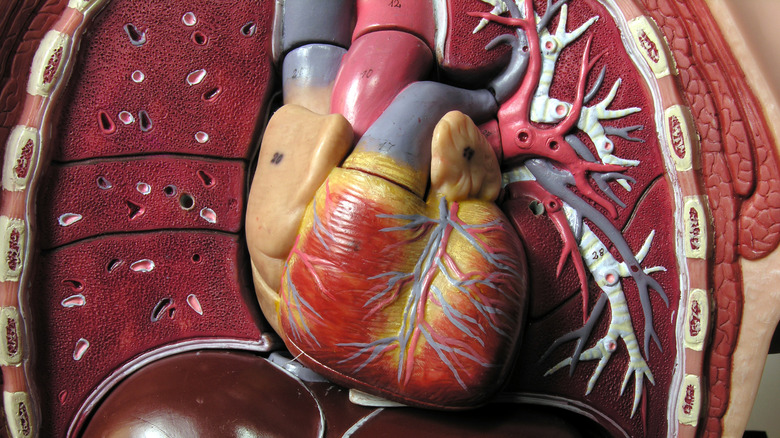
Once your body starts to digest itself after death, it doesn't happen evenly across all tissue and organs. Organs which have a higher proportion of digestive enzymes and an abundance of lysosomes are more vulnerable to a quick autolysis. These include the liver, pancreas, and kidneys. Muscles and bones digest much more slowly due to the relatively low numbers of hydrolytic enzymes.
Like many chemical reactions, heat speeds up the rate, so a hot cadaver will go through autolysis at a faster rate than a colder one. For this reason, freezing a body — which can be done if there is a long delay anticipated for an autopsy — can dramatically slow or even halt autolysis altogether, and prevent a body from decomposing. However, the process of freezing and defrosting a corpse can cause tissue damage that would affect the accuracy of a post mortem examination, so refrigeration is usually preferred.
An early sign on the body that autolysis has taken place is usually the cornea of the eye turning white. As the cells break down, the appearance of the eye will change, and if the eyelids are open at the time of death, a particularly bizarre phenomenon can happen to the eye after death: a black band across the eye, known as tache noir, can also occur as it dries out. As autolysis takes place across the body, multiple organs and structures will begin to soften as the digestive enzymes do their worst.
Autolysis can provide clues to help estimate a time of death
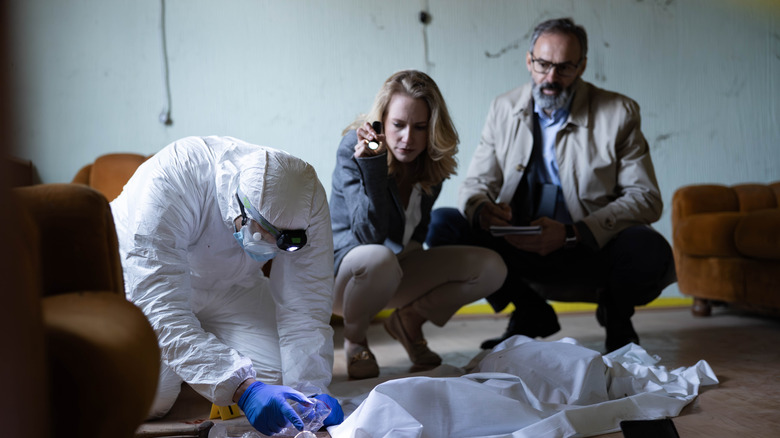
Fans of "CSI" or any other forensic-style TV shows will know that calculating the time of death is crucial in working out the circumstances in which someone has died. Corpses give plenty of clues as to how long they have been dead, and autolysis plays a part in this.
Calculating the post mortem interval (PMI) involves lots of factors, and it's more of an educated guess than a firm time. Autolysis overlaps with putrefaction, and between them, they contribute to decomposition of the body, and the extent of decay within certain organs allows forensic investigators and pathologists to work out an estimation of the time of death.
Many factors affect time of death calculations, however, and bodies that have been in a hot environment after death will be further along the autolysis timeline than those in a cooler environment. Pathologists therefore take the rate of autolysis into consideration alongside other evidence to estimate a time of death. These include rigor mortis, which is the stiffening of the muscles; algor mortis, which is the process of the body cooling after death; and livor mortis, which is the pooling of blood. If maggots or other necrophagous insects are present, the species and stage of the life cycle can also help pathologists to estimate a minimum post mortem interval. Autolysis may only be one piece of the puzzle when determining time of death, but it is an important part of the final process our bodies go through once our life has come to an end.