

This Common Household Décor Could Have An Unexpected Effect On Your Health And Focus
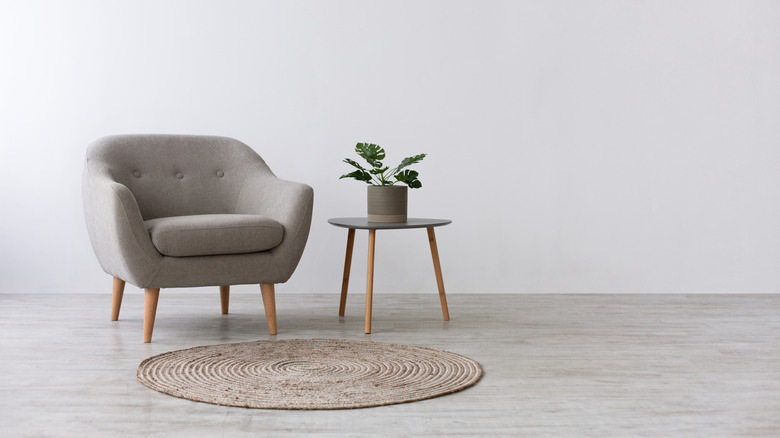
There are many theories about how home décor can make us feel. Feng shui is the practice of placing objects in harmony and is meant to improve well-being. Hygge is a Danish philosophy that prioritizes comfort and encourages dim, warm lights and soft textures. But science may back certain décor choices, primarily the incorporation of a house plant. If you've ever referred to your succulent as an emotional support plant, you might not be too far off. There is evidence to suggest that introducing a simple element of nature, like a plant, into your living space can boost your mood and help you focus while you work or study.
We spend a significant amount of time in our homes. A study published in Environmental Research examining the indoor and outdoor activities of Canadians found that people who commute to work spend roughly 58% of their time in their home each year. For those who work from home, the percentage is even higher at nearly 81%. It seems increasingly important to curate a comfortable and healthy space.
Some psychologists theorize that humans possess an innate drive to commune with nature. The term biophilia is often used to explain such a phenomenon. Erich Fromm was the first to put forth this term in 1973. At that time, Fromm defined biophilia as a love for anything that is alive. The biophilia hypothesis was further developed by the biologist E.O. Wilson as an evolutionary adaptation and suggested that genetics predisposed humans for this desire to connect with nature.
Biophilia

From an evolutionary perspective, roughly 95% of our history has been spent as hunter-gatherers. Thus, it makes sense that we would be drawn to elements of our environment that might provide resources and shelter. By introducing natural elements into our living space, some research suggests this could provide a sense of calm and reduce stress.
In addition to stress relief, plants potentially improve focus. One study revealed that plants in the workplace improved self-perceived productivity by 15%. Some suggest this is due to the stimulating visual elements, like vibrant colors, and aromas of plants. Certain theories assert that it's the absorption of carbon dioxide and release of oxygen from plants that optimize neurological function. Because the brain uses 20% of the oxygen in our body, maintaining proper atmospheric oxygen levels is important for cognition. Moreover, carbon dioxide can build up in a home, but by absorbing this gas, plants can prevent accumulation that might otherwise interfere with oxygen availability.
Some studies have suggested that plants can improve air quality, but these remain somewhat controversial. The debate surrounding indoor plants and air quality actually begins with a study from NASA. As you can imagine, the air can get a bit stuffy in a spacecraft. So, researchers observed how house plants that require minimal light and a carbon filter might improve air quality. Indeed, the house plants in this study did reduce the presence of volatile organic compounds (VOCs) in the air. However, these experiments were performed under strict laboratory conditions, and the translation of these results in real life may not be as consistent.
The air quality debate
Some studies conducted since the NASA experiments have supported the conclusion that house plants improve indoor air quality. But a meta-analysis from 2019 seemed to throw a wrench in this hypothesis. Laboratory conditions generally introduce a VOC to an airtight chamber containing the plant. It's important for accuracy that the results can be properly analyzed under incredibly controlled conditions. Of course, our actual living environments are far less controlled. Not only are our rooms much bigger than these chambers, but there is ongoing air circulation through ventilation and windows and doors that are not fully sealed.
With this in mind, the authors of the 2019 meta-analysis examined the results of previous studies against an indoor air circulation formula that can be adjusted based on the volume of the space. To remove VOCs at the same rate as general ventilation, you would need 10 to 1,000 plants per square meter (roughly 0.09 to 93 plants per square foot).
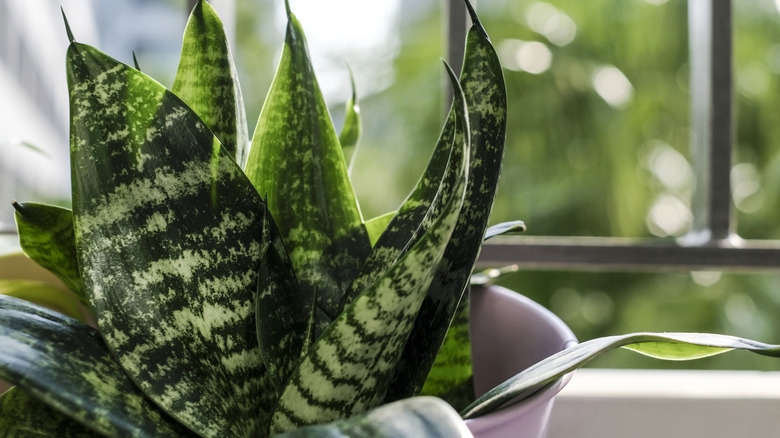
Unless you let your plants become moldy or they harbor certain pests, they won't cause any harm to the air quality. Additionally, some plants seem to benefit air quality more than others. These include Epipremnum aureum (commonly known as pothos), Ficus elastica (rubber plant), and Dracaena trifasciata (snake plant). Therefore, if you want to pair biophilic benefits with air quality improvement, the above plants are your best bet.