

You Should Think Twice Before Pouring The Liquid Off Your Yogurt

It's a common scenario. You collect ingredients for a protein packed yogurt bowl for breakfast. But when you open the container of yogurt, what you see stops you in your tracks: a pool of liquid on the top of the yogurt. Some people might think that the yogurt has gone bad and that their breakfast plans are ruined. Others might decide to pour the liquid off. But you should think twice about pouring that liquid away because doing so will just send valuable nutrients down the drain.
The layer of liquid sometimes found on top of yogurt doesn't mean the yogurt is spoiled. It's a normal part of the yogurt that separated during storage. The liquid is actually whey protein, an easily digested protein that contains all of the essential amino acids your body needs but can't produce. Liquid separation, known as syneresis, occurs when the yogurt cools in the refrigerator. Plant-based yogurts made with coconut or almond milk can also undergo syneresis, though the liquid separation is mostly water in those cases. Much like the oil that sits at the top of a jar of natural peanut butter, your best option is to stir the liquid back in.
Good bacteria at work
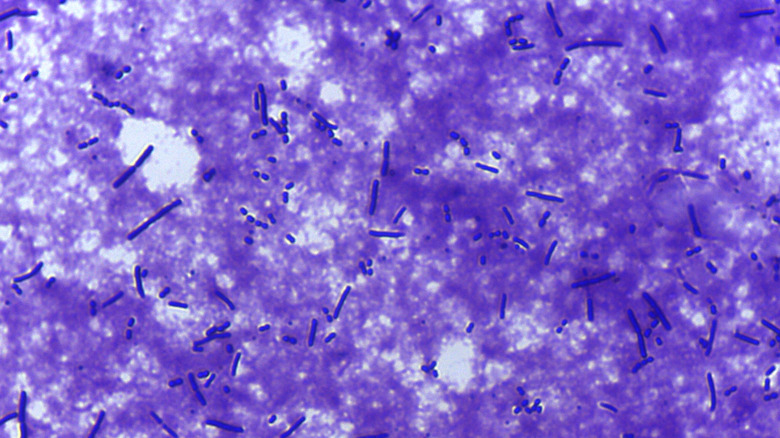
Yogurt is made through fermentation, with microbes playing a role in production under carefully controlled conditions. Bacteria ferment lactose, the sugar found in milk, and produce lactic acid. This is what gives yogurt its characteristic tangy taste and smell. Lactic acid also decreases the pH of the milk to around 4.5, which is where milk starts to coagulate and thicken to form yogurt.
Around 3.5% of milk consists of proteins. Roughly 80% of this is different types of casein proteins, and the remaining 20% or so is whey. Casein proteins form small spherical structures called micelles. Casein micelles bind together under acidic conditions, forming the gel that we know as yogurt.
Whey protein, fats (if any are present), and nutrients like calcium are mixed into this casein protein structure. However, whey that separates from the gel over time will float to the top because it's less dense. The amount of liquid that separates varies between types of yogurts. For example, Greek yogurt has some of the whey strained out to make it thicker. This means Greek yogurt would have less whey on top than regular yogurt. But even though syneresis is normal, manufacturers will sometimes add stabilizers like pectin or starch to reduce liquid separation.
How to tell if yogurt is spoiled
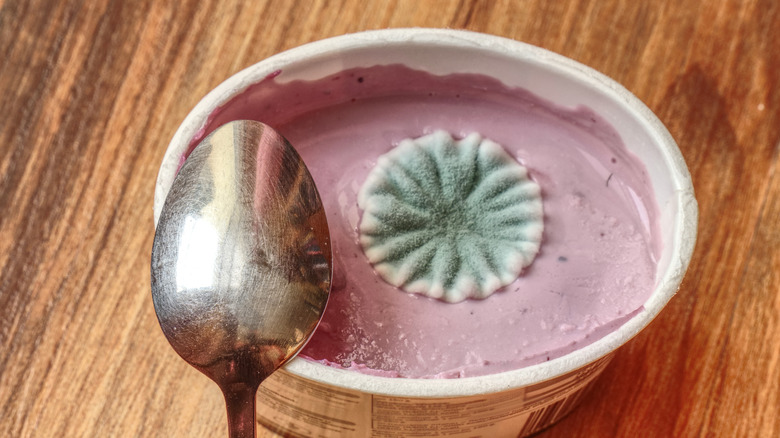
While syneresis is something normal that shouldn't cause any concern, it's helpful to know the difference between normal liquid separation and spoilage. Manufacturers typically pasteurize milk before making yogurt to keep competing microbes from hindering fermentation, but this doesn't keep yogurt from going bad. Generally speaking, if yogurt is past its best by date, it's probably best to throw it out. There are also several signs of spoilage that you can watch for.
The first thing to check is the container itself. A swelling or bloated container could mean that there's spoiled yogurt inside. Next, yogurt should be relatively smooth, without curdling or excessive clumping, and not slimy. It should also be a normal color. Pink, yellow, or green could mean growth of mold or bacteria. Smell and taste are other properties to check. Yogurt should have a mild and tangy smell and taste. An offensive smell or very sour flavor are signs of spoilage.
Overall, yogurt can be a helpful source of protein, vitamins, and probiotics, making it a good addition to a balanced diet. Seeing liquid on the top of your tub of yogurt might be a little unsettling at first glance, but that liquid contains valuable nutrients. If the yogurt hasn't reached its best by date and smells and looks normal, it's likely okay to stir it up and carry on with your breakfast plans.