

Scientists Say The Black Fungi Feeding On Chernobyl's Ruins Could Solve An Important Problem For Space Travel
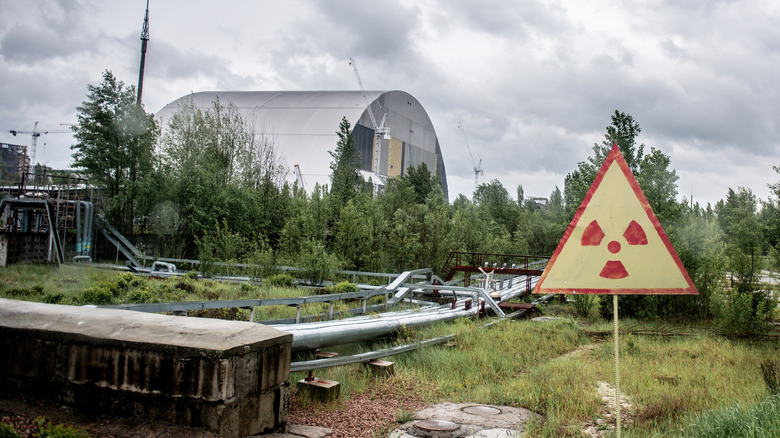
The city of Chernobyl has been decimated by severe radiation, and much of it is uninhabitable to this day. But amidst the quiet rubble, some organisms manage to survive — even thrive. Fungi are eukaryotic organisms that lack chlorophyll, which allow plants to photosynthesize, instead obtaining their nutrients through digesting organic material. When researchers found fungi growing in some of the most radioactive portions of Chernobyl, they marveled at their vitality under such extreme conditions. Not only could this fungus be used to reduce pollutants in the atmosphere, but it could potentially be harnessed as a protective agent for astronauts traveling through the highly radioactive environment of space.
While performing a field survey in the 1990s, scientist Nelli Zhdanova found dark-pigmented fungi in the contained area of the exploded reactor. While 37 different species were documented, one in particular predominated this dangerously radioactive site: Cladosporium sphaerospermum. The black fungus had flourished among ionising radiation that would generally shred through DNA. Not only were C. sphaerospermum and other fungal species growing through the radiation, but they seemed to reach towards it. This characteristic was termed radiotropism. But to understand the remarkable nature of such unexpected survival, we have to know what made Chernobyl a hotbed of such unique adaptations.
The Chernobyl disaster
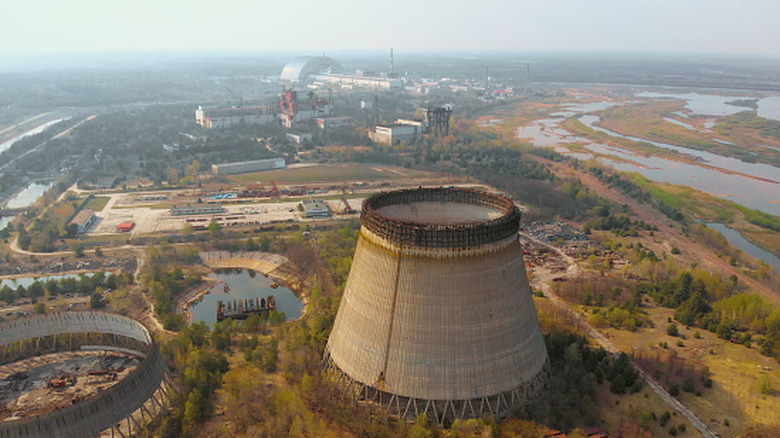
In the early hours of April 26, 1986, technicians at the Chernobyl nuclear power plant carried out a poorly designed test. The test was meant to analyze how long after losing power the turbines of the Unit 4 reactor would continue spinning in order to operate its cooling system. During the experiment, the operators disabled the Unit 4 reactor's automatic shutdown system, allowing the reactor to become highly unstable. The control rods that had been problematically removed during the test were re-inserted, leading to a power surge. As a result, the building pressure of the reactor dislodged the cover plate, which jammed the control rods and damaged the fuel channels. Subsequently, the emergency cooling system was damaged and dumped water onto the hot core, generating a steam explosion. This was shortly followed by a second explosion, and approximately 5% of the radioactive reactor core was released into the surrounding environment.
Over the course of the disaster, between 50 and 185 million curies of radioactive material entered the air. For perspective, that is up to 40 times more radionuclides than the atomic bomb generated in Hiroshima, making it the worst nuclear disaster to ever occur. An exclusion zone was created around the plant with a radius of nearly 30 kilometers (18.6 miles). Because radiation is one of the greatest risks to astronauts traveling through space, Chernobyl unexpectedly facilitated an area of study that could provide insight into how organisms continue to live in a highly radioactive environment.
The power of melanin
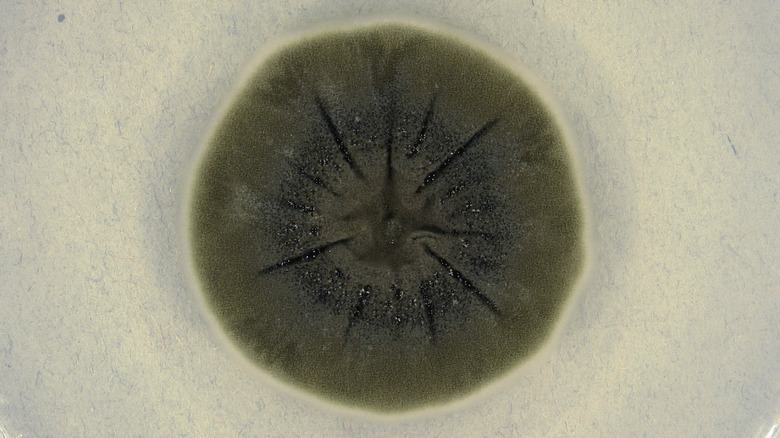
As mentioned above, the fungi found at the reactor site over a decade after the explosion were very dark. Interestingly, this is true of other life in the area, as tree frogs near the plant also tend to have darker skin. Melanin is a pigment that contributes to hair, eye, and skin color, but it also has a remarkable ability to absorb radiation. The fungi found in Chernobyl were rich in melanin. In fact, a study published in PLOS One revealed that the growth of melanized C. sphaerospermum increased with radiation. With this in mind, some researchers, including Zhdanova, believe that these fungi are feeding off of the radiation. Similar to how the pigment chlorophyll in plants generates energy from sunlight, they hypothesize that the melanin in these fungi converts radiation into energy.
In 2018, C. sphaerospermum samples would take a trip into outer space. The results published in Frontiers in Microbiology revealed that the fungus grew approximately 1.2 times faster aboard the International Space Station than on Earth. Researchers are now wondering whether a fungus that thrives in such radioactive conditions could provide a layer of protection for humans in space. The same study found that radiation sensors placed beneath a petri dish upon which C. sphaerospermum was growing detected less radiation than a sensor only covered by an empty petri dish. Other protective elements against radiation are often cumbersome and heavy, presenting challenges for the restricted spacecraft. So fungus might just be the key.