

In The Early 2000s, NASA Sent Salmonella Into Space. They Didn't Expect What Happened Next.
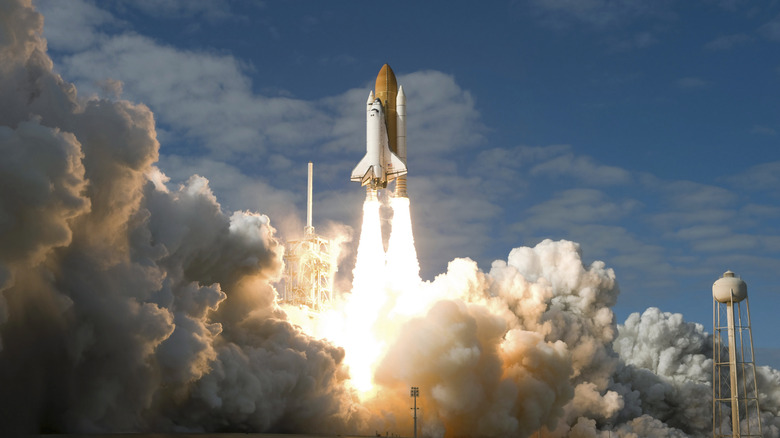
Salmonella in Space. It sounds like the title of a bad sci-fi B-movie, but it was actually a real experiment that turned up some pretty shocking results. In 2007, a research team led by Arizona State University biologist Cheryl Nickerson in cooperation with NASA and other educational institutions, set out to study the effects of spaceflight on salmonella bacteria. They loaded samples of salmonella onto the Space Shuttle Atlantis, which, to protect the astronauts aboard, were sealed in tubes and three layers of containment. Once in space, astronaut Heide Stefanyshyn-Piper initiated the experiment by submerging the samples in a nutritious solution to feed them. As soon as the shuttle returned to Earth, the samples were rushed to a lab, and what Nickerson's team found was highly concerning. The bacteria hadn't just grown, it had flourished.
While Atlantis was in space, the team back on Earth had performed the exact same experiment, and when all the samples had been collected, they were injected into laboratory mice. The mice infected with the spaceborne salmonella got much sicker than the ones infected with the salmonella cultures from Earth. This is a disturbing revelation, for while these bacteria flourished in space, human bodies do not. Space flight causes long-term damage to astronauts' bodies, including weakening their immune systems. If salmonella bacteria was accidentally carried aboard a spacecraft, it would become stronger while its potential victims become weaker. This has massive, and frightening, implications for the future of space exploration and the potential of colonization.
Continuing the research on spaceborne salmonella
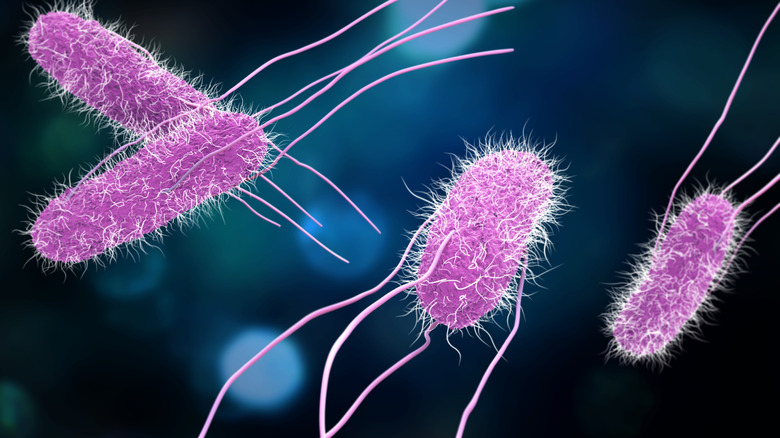
The salmonella that travelled to space became more virulent through a series of mutations (Mutant Salmonella From Space; there's an even better B-movie). When researchers compared the samples to the salmonella genome sequence, they found that 167 different genes had mutated from the standard. On top of that, 73 proteins in the genome had changed. This resulted in bacteria that were more resistant to heat, acidity, and most concerningly from an immunology standpoint, white blood cells. Although the size and shape of the bacteria didn't change in space, they started clumping together to form masses called biofilms, supercharging the disease's power.
Nickerson and her team followed up their research with another study, published in 2021 in npj Microgravity. This time, salmonella took a ride aboard Space Shuttle mission STS-131, which launched in 2010 on a round trip to the International Space Station. This time, the bacteria were injected into samples of human intestinal cells, and once again, they flourished. The researchers also observed uninfected intestinal cells as controls, and found that space flight alone causes changes in major proteins. This means that in space, a strengthened salmonella infection would collide with weakened intestinal cells. We can all imagine how unfortunate the results of that would be, especially with how complicated space toilets are.