

How To Tell The Difference Between A Spider Bite And Mosquito Bite
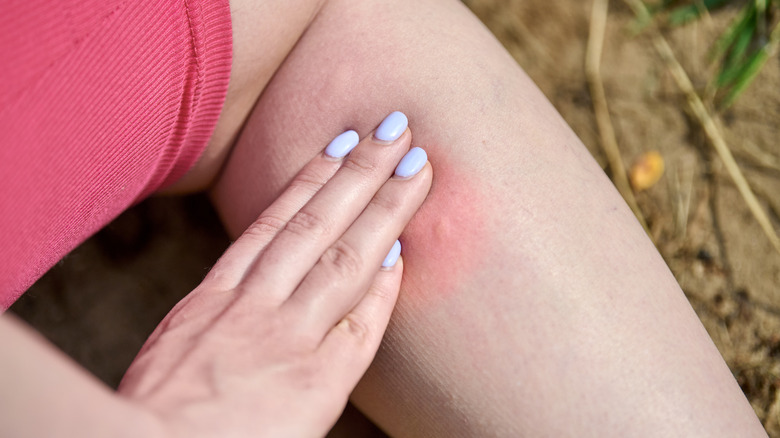
Most spider and mosquito bites result in a raised, reddish bump on the skin that goes away after a couple of days. In rare cases, either creature can kill. The mosquito's bite is responsible for over 700,000 deaths per year due to the diseases it carries, and death by mosquito is a hellish experience. Spiders, in comparison, kill only a handful of unlucky people per year, though species like the Brazilian wandering spider can inflict lifelong suffering with a single bite. It's important to be able to distinguish between the two bites, so you can decide on the appropriate course of treatment.
More often than not, mosquito bites come in groups. A single mosquito may bite multiple times, resulting in clusters of welts. Each bite results in a raised, red or pink bump, though adjoining bites may join into a single welt. Most telling of all, however, is the itch. The body treats mosquito saliva as a foreign invader and increases histamine production resulting in the iconic mosquito-bite itch, which typically appears within minutes.
At first, spider bites can appear similar to mosquito bites, with raised, red welts at the bite site, but they soon produce several distinguishing signs. For one, spider bites typically feel like a sting, burn, or pinch at first. They may itch later, after the immune system's repair response kicks in, but the initial sensation of a spider bite is more painful than it is irritating. They also don't appear in clusters, nor do spider bites look like two side-by-side puncture holes as is commonly believed.
The chemical differences between spiders and mosquito bites
When a mosquito injects its specialized needle into an animal's skin to suck up its blood, it also releases saliva into the surrounding tissue. This saliva contains special chemicals that act as numbing and anticoagulant agents, ensuring the host doesn't realize they're being bitten and preventing its blood from clotting. Once it's had its fill, the mosquito flies off, leaving behind these chemicals. The human body treats these chemical leftovers as a threat and activates an histamine response to fight off the invaders. The result is local inflammation and an itch that takes a few days to fade.
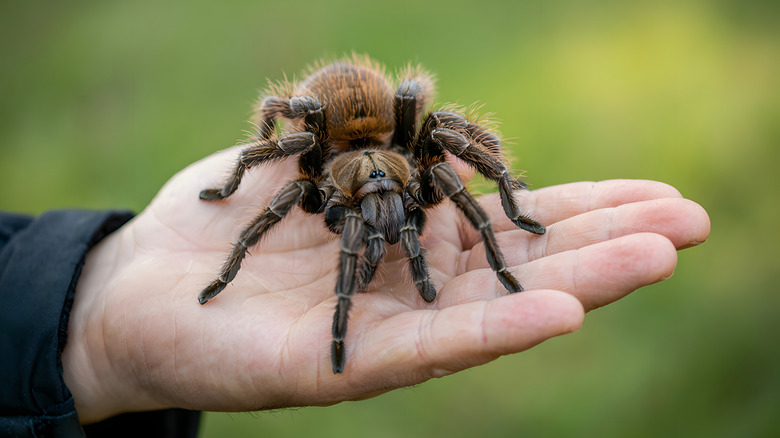
The severity of a spider bite, however, depends entirely on the species. Virtually all spiders are hunters, and their main weapon is their venomous fangs. Adapted for taking down prey far smaller than a human being, spider venom comes in an array of different chemical cocktails tailored to the specific species' prey of choice. However, a few species possess venom that's designed for self-defense against large vertebrates, such as humans. The funnel web spider, for example, preys on large insects, snails, and worms, yet one defensive bite can kill an adult human in less than an hour.
Fortunately, the vast majority of spider bites result in harmless, albeit annoying, bumps that could easily be mistaken for a mosquito bite. Unless they're accompanied by concerning side effects, like a rise in blood pressure or pain, spider bites can be treated at home.
What to do if you're bit

For spider bites, a quick response time is key. Learn to identify dangerous spiders native to your region, since different species require different treatments. For example, the black widow spider can be found in every U.S. state besides Alaska, and the brown recluse is also a common threat in North American homes. Being able to distinguish between the two could save your life, since widow bites are primarily treated with antivenom, while recluse bites are monitored for tissue damage and infection.
Because most spider bites occur out of sight, such as while you're sleeping, you won't always be able to identify the spider that bit you. Fortunately, severe envenomation provides plenty of warning signs. Highly neurotoxic venoms, such as that of the black widow, cause immediate, sharp pain at the bite site. Over the ensuing minutes and hours, victims experience heavy sweating, muscle cramps, stomach pain, nausea, and high blood pressure.
On the other hand, the cytotoxic venom of the brown recluse, which attacks cellular tissues, produces an bull's-eye pattern around the bite and a slow-burning pain. But regardless of the species, spider bites can cause some people to have allergic reactions. If you experience trouble breathing, swelling, hives, or lightheadedness, you may require a shot from an EpiPen (epinephrine).
Mosquito bites also inflame and itch due to an allergic response, which is why some people are more sensitive to bites than others. Usually, however, mosquito bites don't require medical treatment. The danger of mosquitoes comes from the diseases they carry, not the short-term effects of their bites. In any case, getting bit by bugs is part of the human experience, so you might as well know who's doing the biting.