

Smoking Could Have An Unexpected Effect On Your Joints And Bone Health

Due to the way cigarettes are used, smoking has significant impacts on the lungs. In fact, according to the Centers for Disease Control and Prevention (CDC), smoking remains the greatest risk factor for lung cancer development. An estimated 80% of all lung cancer fatalities in the U.S. are also linked with smoking cigarettes, and while lung cancer isn't exclusive to smoking, the lungs are among the most likely to develop cancer. At the same time, you might know that the impacts of smoking may go beyond lung cancer, and are often linked with other lung diseases, cancers, heart disease, stroke, and eye diseases. The musculoskeletal system is another body system that can impacted by smoking, and can particularly affect your bones and joints.
Cigarette smoke contains at least 7,000 chemicals according to the American Lung Association, and these can wreak havoc on the human body in several ways. Once a person inhales cigarette smoke, the substances travel to the lungs and then to the bloodstream. From there, nicotine, arsenic, and other chemicals move to the rest of the body, where they can affect all tissues. It even slows down the flow of blood to body tissues, including major components of the skeletal system like joints and bones. Over time, these effects increase your risk of developing chronic conditions impacting these tissues.
The connection between smoking and osteoporosis
Smoking is considered a risk factor for osteoporosis, which is a disease characterized by bone weakness. Research published in the journal Genes in 2022 calls this phenomenon "cigarette smoking–induced osteoporosis." Nicotine from cigarettes directly blocks the absorption of calcium from foods and beverages. Without calcium, the bones can become weak and brittle over time due to lower bone mineral density.
Nicotine can also slow down the production of bone-forming cells called osteoblasts, which directly impacts new bone formation. What's more, smoking impacts several hormones throughout the body. It doesn't just induce the premature breakdown of estrogen, it also works as an estrogen suppressant. A natural decrease in estrogen is one reason why females are at an increased risk of osteoporosis post-menopause. However, decreased estrogen from smoking impacts bone mass in both females and males.
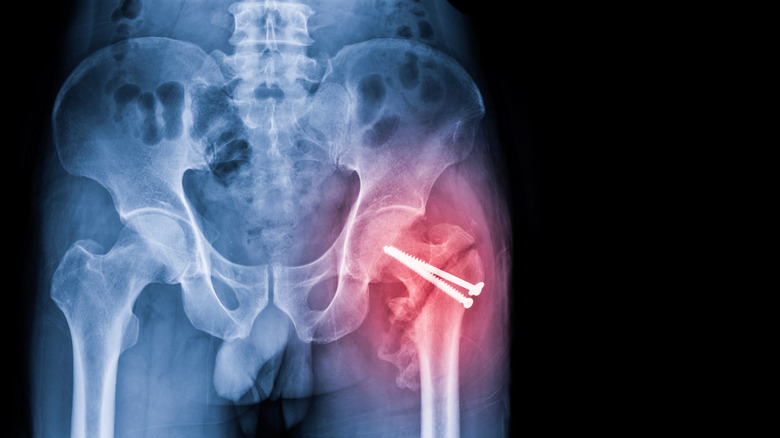
Not only is smoking linked with osteoporosis, but it's been found to increase the risk of related bone fractures, too. According to the American Academy of Orthopedic Surgeons, older adults who smoke are significantly more likely to experience hip fractures compared with non-smokers of the same age. Unfortunately, it's not just smokers who might experience the impacts of cigarette smoking on their bone health. Non-smokers who are regularly subjected to secondhand smoke may be at risk of lower bone mass, too. While researchers are looking at ways to reverse osteoporosis one day, preventive practices such as smoking avoidance and cessation are ways you can protect your bone mass now.
Smoking increases the risk of certain joint diseases

Smoking causes body-wide inflammation, and is linked with many autoimmune disorders and inflammatory conditions including rheumatoid arthritis (RA). While the causes of RA are complex, research has consistently shown that the rate of RA is much higher in smokers, with heavy and long-term smokers more susceptible. If you already have RA, smoking can exacerbate your symptoms and make treatments less effective. Even though quitting smoking can reduce the risk of developing RA, the National Rheumatoid Arthritis Society says that the risk may remain up to 20 years later.
However, a possible link between osteoarthritis (OA) is less certain than RA. Unlike RA, OA is not an autoimmune disease. It is a degenerative disease caused by a loss of cartilage. Like osteoporosis, the risk of OA can increase with age, along with other risk factors such as family history, repetitive activities, and previous injuries. Smoking may damage joints by impacting cartilage metabolism from decreased blood flow, but research on smoking as a possible cause of OA is mixed, as noted in Osteoarthritis and Cartilage. Yet according to the CDC, people who already have OA and also smoke are less likely to engage in regular exercise that might otherwise help to improve symptoms and quality of life.
While research is ongoing in the area of OA and smoking, one thing is certain: Individuals who smoke are still susceptible to musculoskeletal issues in general compared with non-smokers. Quitting smoking will not only benefit your bone and joint health, but can also decrease the risk of other serious complications.