

Scientists Sealed Eight Mice Inside A Rodent Utopia In The '60s And The Result Was Horrifying
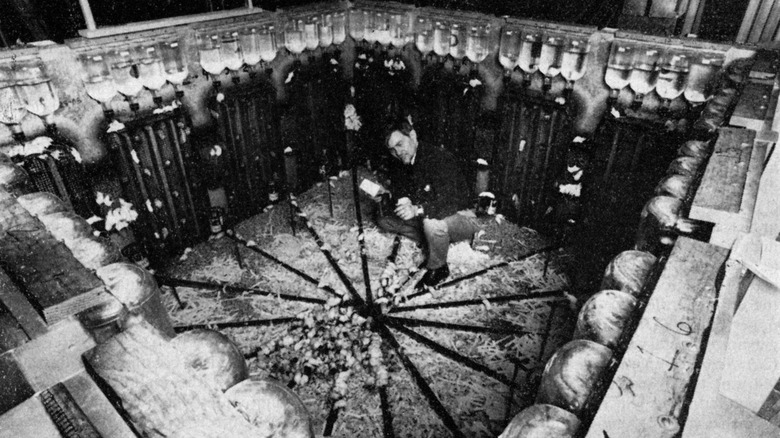
They looked like high-rises in miniature. Mice piled into constructed hollows that resembled apartment complexes. Food and water were readily available, and there were no cats or snakes or any other predators that the mice might otherwise fear in their natural habitat. But something wasn't quite right. Aggression, maternal neglect, and social withdrawal emerged as an unexpected sort of plague, and less than five years after eight mice had been placed in the enclosure, every member of the subsequent generations perished. A fantastical utopian rodent city had descended into chaos.
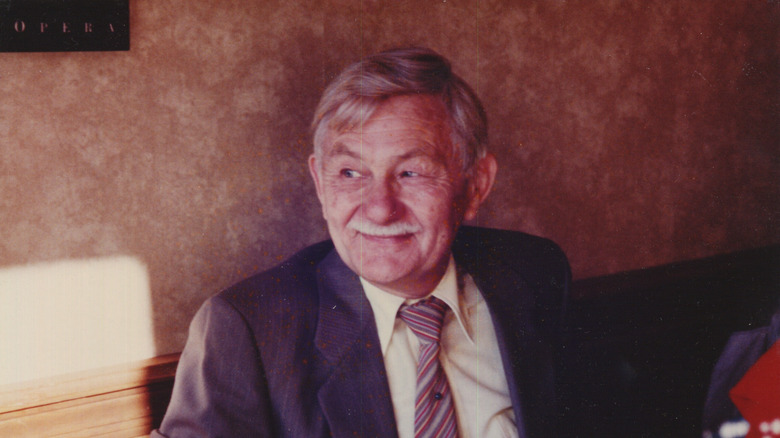
Researcher John Calhoun directed this experiment and determined that the detrimental effects, like mouse-on-mouse aggression, were a product of overpopulation. Over the next decades, he became obsessed with what this could mean for human populations as cities expanded. Were our cities inevitably going to succumb to chaos as neighborhoods became more crowded? Was doomsday a guaranteed byproduct of population growth?
Moving from strange rodent behaviors to human fatalism might seem like a significant leap in logic. After all, while there is a reason that scientists use mice for experiments, the behavioral comparisons are not one-to-one. Yet Calhoun began a speech to the Royal Society of Medicine by saying, "I shall largely speak of mice, but my thoughts are on man." He suggested that, although there are many differences between our species, the possibility of impending doom to humanity was too great to ignore. So, how did such a sense of urgency arise over such a simple experimental idea?
Rat City
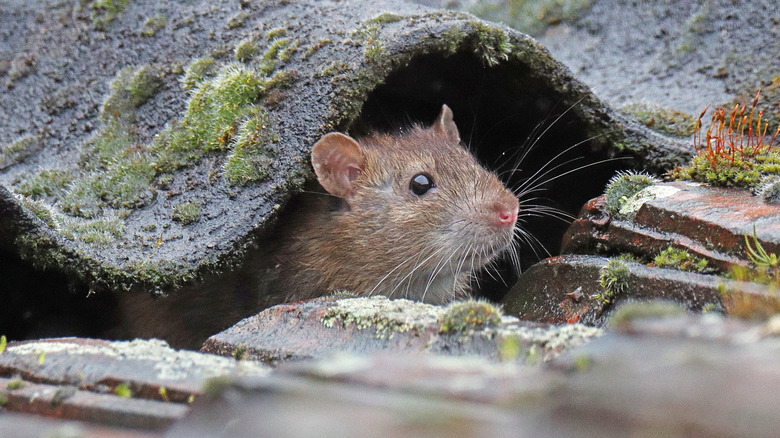
Before his mouse paradise, there was "rat city." Upon completing his doctorate in 1943, Calhoun found work at Johns Hopkins aimed at ridding the cramped corners of Baltimore of their rodent infestations. The project enlisted local Boy Scouts to deposit poisons around the eastern part of the city, and while the rodent populations displayed an initial reduction, the colonies appeared to consistently repopulate to previous amounts. However, what most interested Calhoun was how this total population appeared to plateau around 150 rats per block. He even tested the consistency of this phenomenon by transplanting rats from different blocks into already populated areas — a somewhat counterproductive measure given the project for which he was hired. To his fascination, the area with the new mice would eventually drop back down in numbers to its previous size.
Perplexed by this population ecology pattern, Calhoun elected to take his work home with him. After receiving approval from a seemingly easy-going neighbor, Calhoun built a giant rat enclosure, spanning 10,000 square feet. With only five males and five females in the pen, he estimated that they could proliferate to roughly 5,000 within the confines of the space. But the total population reached nowhere near that number over the next 27 months, expanding to 200 rats at the most, but typically hovering around 150. He also observed that the rats generally segmented themselves into groups of 12 each. With such profound outcomes, Calhoun soon turned his attention towards mice.
Universe 25
At the National Institute of Mental Health, Calhoun found the ideal spot for a new mouse society in a large barn. The perimeter of the new enclosure consisted of vertically stacked nesting boxes, which he referred to as high-rise apartments. Access to food, water, and material with which to build their homes was provided. He named this project Universe 25.
Like the rat city, Calhoun began this utopia with a small number of mice: four females and four males. Although this structure could hypothetically house 3,840, the exponential population growth that characterized the initial 315 days of the experiment significantly slowed when the total population reached 620. Additionally, the social behaviors of the mice also appeared to take a turn. Aggression increased, fertility decreased, and some mice even consumed their pups. Mothers began leaving their young early in development, and infant mortality soared. The enclosure that had begun in 1968 was devoid of life by 1973.
Ahead of publishing his findings, Calhoun attended conferences with the prestige of a renowned researcher and the urgency of a town crier. At a 1972 meeting of the Royal Society of Medicine in London, Calhoun referenced the horses of the Apocalypse and read a passage from the biblical book of Revelation, warning about deaths of the body and spirit. While Calhoun lacked the scientific evidence to warrant such doom, appearing to shout fire from a crowded rodent high-rise, the contemporary fear of rising urbanization stoked the flames of the popular imagination.